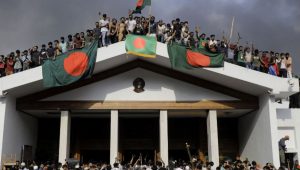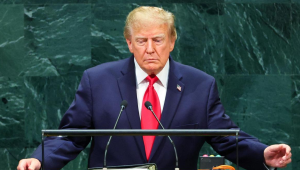



Political defeat is a reality. Equally important is the ability to accept reality after defeat. Yet, in our part of the world, many political actors and their supporters often struggle to come to terms with losing power. Instead, they construct an alternative version of reality – one in which hope outweighs facts and imagination becomes stronger than evidence.
Political history suggests that when influential leaders or powerful groups lose authority, a section of their supporters often refuses to accept the new reality for an extended period. They are naturally drawn toward information that provides psychological comfort rather than factual certainty. No matter how uncomfortable the truth may be, they seek refuge in stories that reinforce their preferred vision of the future.
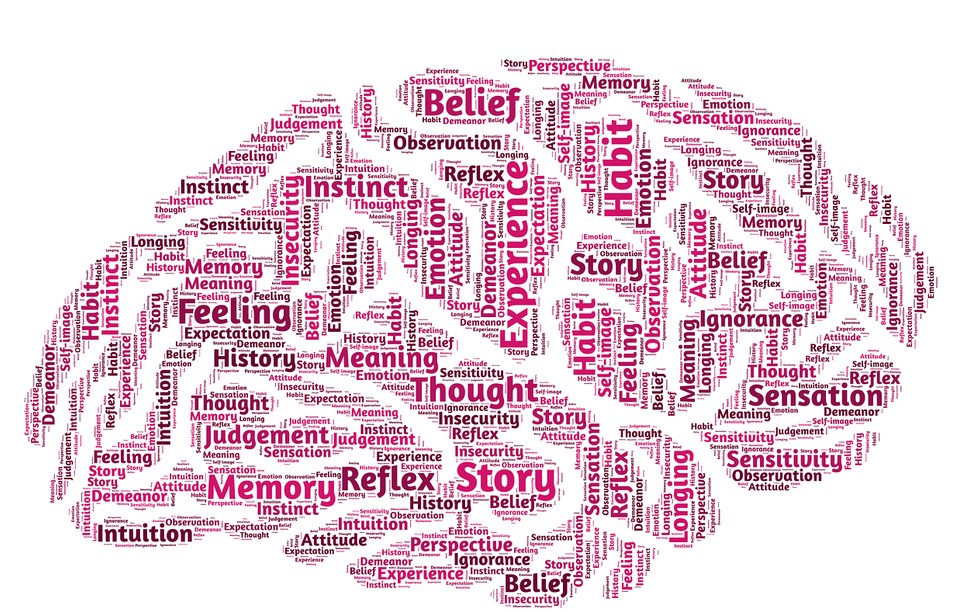
One of the clearest examples of this tendency is the mythology that frequently develops around leaders who have lost power. Rumours begin to circulate that the current situation is only temporary and that the old order will soon be restored. History, however, tells a different story. In politics, the wheel of time rarely turns backward. More often than not, history moves forward rather than returning to the past. Another important factor is the role of emotion during periods of political uncertainty. In such moments, emotions often carry greater influence than facts. Supporters tend to prioritise belief over evidence, making rumours and half-truths spread rapidly. Social media further accelerates this phenomenon, where the impulse to share information that confirms existing beliefs often outweighs the commitment to verifying its accuracy.

Under such circumstances, anyone who publicly challenges the dominant narrative or questions deeply held assumptions is likely to face strong resistance. The truth can become politically uncomfortable, particularly when it conflicts with partisan loyalty. As a result, public attention frequently shifts away from the substance of an argument toward criticism of the individual making it.
Politics offers an enduring lesson: power is never permanent. Those who appear invincible today may find their circumstances transformed tomorrow. For that reason, the greatest strength of any political movement lies not in denying reality but in understanding and adapting to it. Temporary emotional comfort gained through denial cannot serve as the foundation for a sustainable political future. Whether the discussion concerns any controversial public figure, the central issue is not the individual. It is the political culture itself. Are we learning to accept facts as facts, or are we still creating realities that simply reflect our own preferences?



A healthy democracy naturally accommodates disagreement, debate, and political competition. What it cannot sustain is a political culture built upon the denial of reality. History ultimately judge events, not emotions. Those who endure are those who possess the courage to confront reality when it demands recognition.
The most important question today, therefore, is whether we have developed the political courage to accept reality as it is – or whether we remain trapped in the illusion that the past can be restored through wishful thinking.
The views expressed in this article are solely those of the author
The writer is Senior journalist, and former President of the Moulvibazar Press Club.
E-mail: [email protected]