


As one of the world’s most densely populated nations, Bangladesh reflects a complex interplay of socio-political dynamics, within which athletics serves as a mirror to broader societal divisions, class stratification, and collective identity.
Cricket, in particular, offers a compelling case study. Though historically present, the sport’s transformation into a cultural phenomenon accelerated in 1997, catalysed by Bangladesh’s ICC Trophy victory and subsequent qualification for the 1999 ICC Cricket World Cup.
The national narrative reached euphoria following a historic World Cup victory over Pakistan in 1999, which paved the way for Test status in 2000. For a developing nation navigating significant socio-economic hurdles, athletic performance provided a rare platform for international validation and global recognition.
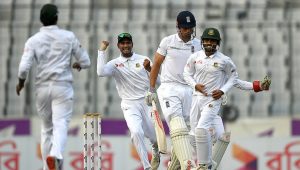
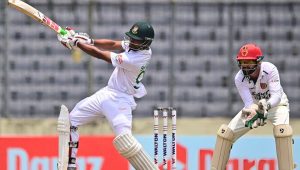
This momentum culminated during the 2015–2019 golden era, marked by unprecedented home series triumphs over established cricketing nations. Consequently, cricket transcended sport to become a high-value asset. Cricketers emerged as central figures across media, corporate and political spheres, shifting public and institutional engagement from mere fandom to an opportunistic bid for cultural and commercial capital.
Supporting a team suddenly became an investment, from which material returns were expected. Sports journalism, too, drifted towards activism, as personnel and institutions alike pursued material gain over genuine coverage. Corporates pounced on every opportunity to flaunt their business finesse, sparking a race for marketability. The glitterati and who’s who of an already divided society began appearing routinely at cricket matches.
Every stakeholder started treating the sport more as a status symbol or high-end commodity than a sustainable pursuit. Securing a matchday pass, or simply featuring in a stadium camera clip, became an obsession for the rich and famous. Fan groups, die-hard fan bases and online cricket communities sprang up like giant fungi, each one trying to prove their passion was greater than the other.
When the national team began to falter, and success started to fade – as is common in any sport, anywhere in the world – these fair-weather fans vanished quicker than a monsoon rainbow. The feebleness with which they abandoned their ‘favourite’ passion was an eye-opener for the aficionados.
Football, similarly, enjoyed unprecedented popularity in the country during the 1970s and 80s. Crowds would swell a 40,000-capacity stadium to 60,000. Fans would stand for hours, legs aching, just to catch a glimpse of their favourite stars. Players like Kazi Salahuddin, Kaiser Hamid, Rummon Bin Wali Sabbir, Sheikh Mohammad Aslam and Monem Munna were megastars, permanently under the public eye.

Even lesser-known players enjoyed a local fame that would have been the envy of footballers almost anywhere else in the world at the time. Storied clubs like Abahani Limited and Mohammedan Sporting Club were adored by fans, media and people from every social stratum alike. Alongside them, locally popular sides such as Arambagh KS, Fokirerpool Youngmen’s Club and Victoria SC played the role of giant-killers, bringing the same jubilation to their own neighbourhoods that the big two brought to the city at large.
Despite sky-high popularity, there was no long-term planning for sustainability, making the clubs financially viable or reaching out to a newer fan base. Clubs, players, organisers and fans alike simply rode the wave without thinking it through. That wave broke in the late 1990s, when European football broadcasts became available in Bangladesh.
Millennials and newer fans were suddenly exposed to a different calibre of football altogether: better venues, sharper broadcasting, deeper analysis, and a higher standard of play, previously visible only during FIFA World Cup broadcasts. Fans realised, almost overnight, that the heroes they had worshipped for so long weren’t quite as good as they’d believed. But most players of the 1980s and 90s era were miles behind what audiences now watched on television daily. As a result, new fans never bothered about following local clubs.
A useful counterpoint to this pattern of fair-weather support lies in the smaller clubs of England and Spain whose fan cultures have grown not because of trophies, but almost despite their absence.
What both clubs demonstrate is a fan culture built on identity, continuity and belonging, rather than on a transactional expectation of success. In both cases, the club functions as an extension of place and community – something Bangladeshi cricket and football, for all their emotional intensity, have rarely been allowed to become.




If any moment captured Bangladeshi sport at its lowest, it was 2019. That September, law enforcement agencies raided several of Dhaka’s most storied sporting clubs – Mohammedan, Arambagh KS, Dilkusha SC, Victoria SC and Young Men’s Club among them – and uncovered illegal casinos operating out of their premises, complete with betting tables, gambling boards and, in one case, thousands of casino chips.
Police seized casino equipment, gambling paraphernalia, liquor and cash from clubs in Dhaka’s Motijheel area, the traditional hub of the country’s sporting institutions. These were not obscure outfits; they were clubs with genuine footballing pedigree, reduced to running gambling dens simply to keep their operations afloat. It was a damning symbol of how far institutional sport had drifted from its original purpose – clubs built to nurture players and communities had, in the absence of sustainable funding models, turned to criminality to survive.
Cricket had its own reckoning around the same period. The Bangladesh Premier League, meant to be the domestic showcase for the sport’s golden era, became a byword for match-fixing suspicion and betting controversy, eroding public trust in the very competition designed to build a cricketing pipeline.
And then came the fall of the country’s biggest sporting name. In October 2019, Shakib Al Hasan was banned by the ICC for two years – one year suspended – after admitting to three separate failures to report corrupt approaches from an alleged bookie, seeking inside information for betting purposes during a 2018 tri-series and that year’s IPL.
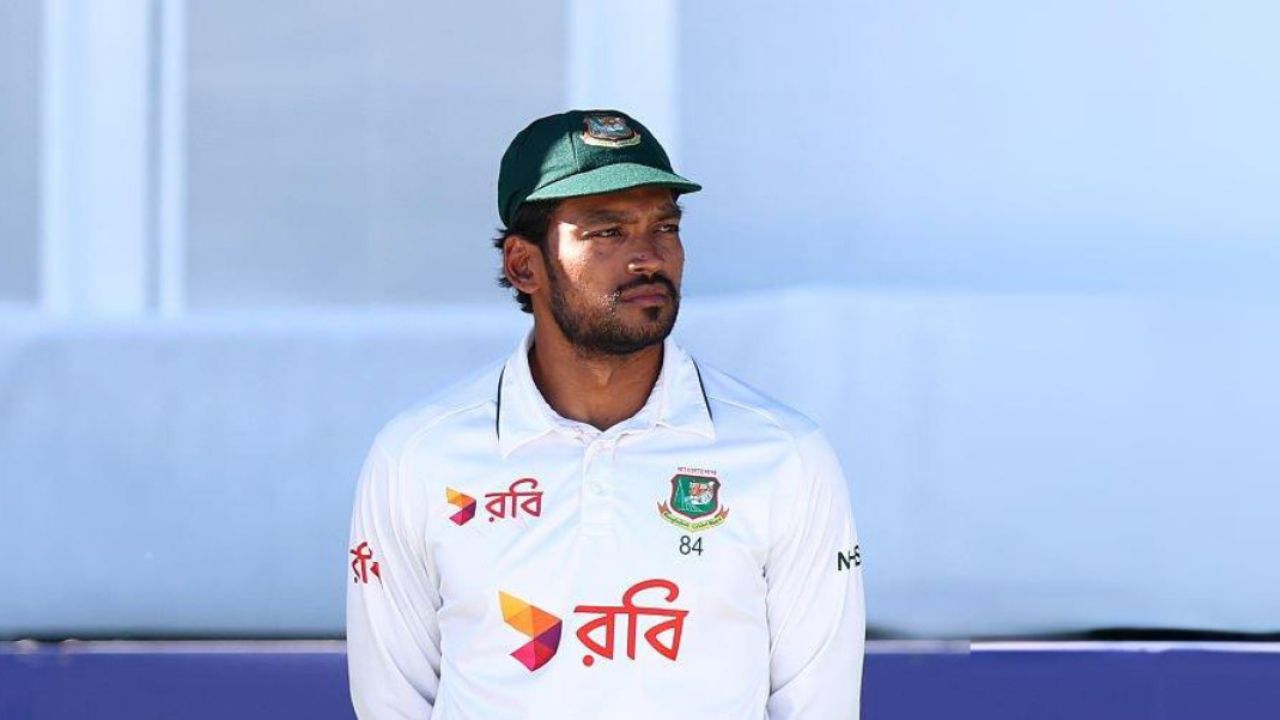
That episode alone dented the aura around Bangladesh’s greatest cricketer. His later entanglement in politics compounded it: elected as an Awami League MP in January 2024, Shakib found himself unable to return home after the government’s fall that August, named in a murder case connected to the crackdown on protesters, and eventually informed by the country’s sports authorities that he would not be permitted to play for Bangladesh again. A career built over nearly two decades ended not with a farewell series, but in exile and controversy.
It was precisely during this period – corruption scandals, casino raids, a fallen idol – that the fair-weather nature of Bangladeshi fandom revealed itself most starkly. Stadiums that had once needed extra crowd barriers stood half-empty. The same fans who had turned matchday tickets into status symbols during the golden years were nowhere to be found when the sport needed them most.
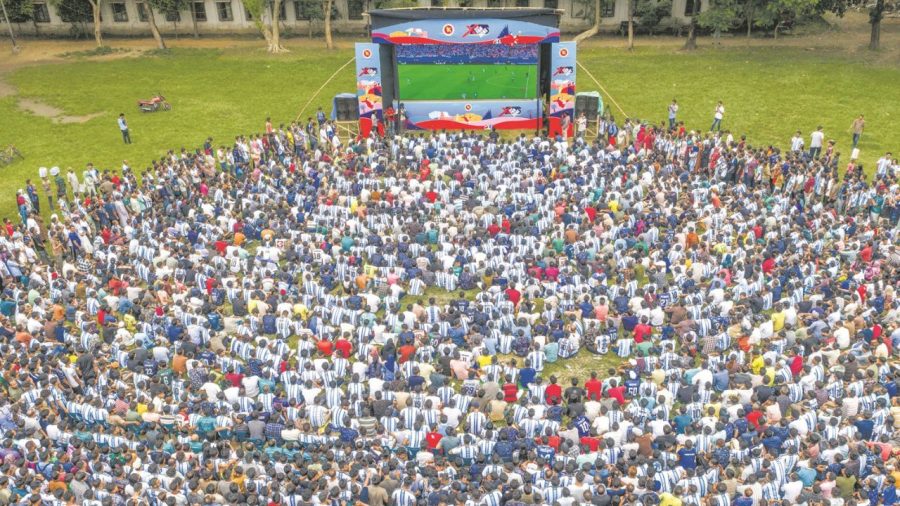
Football, meanwhile, has stumbled into an unlikely revival – not through steady institution-building, but through a single, glamorous recruitment. The arrival of Leicester City (and later Sheffield United) midfielder Hamza Choudhury, the first Premier League player of Bangladeshi heritage to represent the national side, triggered scenes rarely seen in Bangladeshi football for decades. When Choudhury arrived in Dhaka, fans greeted him in the thousands, and his commitment to playing for Bangladesh became a nationwide celebration of identity as much as football.
A sport that had long lost its charm under the weight of corruption and mismanagement suddenly found a new light of hope. His presence has since pulled in a wave of interest from other diaspora footballers hoping to follow him, and – for the first time in years – filled stadiums for national team fixtures.
What connects the emptying cricket grounds of the post-Shakib years to the newly packed football stadiums of the Hamza era is the same underlying psychology: Most of the Bangladeshi fandom, by and large, does not attach itself to a sport, a club or a cause – it attaches itself to whichever offers the most immediate promise of glory.
When cricket was winning, it was fashionable, and being seen at the ground mattered more than understanding the game. When cricket’s institutions collapsed under scandal, the same crowd walked away without a backward glance, because their investment had never really been emotional – it had been transactional, a bet on reflected prestige.
Football’s current surge follows an identical script in a new jersey: it isn’t a decade of grassroots investment or youth-league development driving fans back to the terraces, but the sudden, glamorous possibility that a Premier League name might finally deliver the success cricket can no longer guarantee.
This chase for success and popularity, rather than loyalty to the game itself, is arguably rooted in Bangladesh’s broader relationship with international validation. For a young nation still establishing its place on the world stage, sporting achievement has functioned less as entertainment and more as proof of legitimacy – a marker of ‘arrival’ in a global conversation the country has often felt shut out of.
In a society as sharply stratified as Bangladesh’s, sport also became a rare, visible arena for status performance: being present at the right match, aligned with the winning side, was a form of social capital that had little to do with the sport itself.
A similar pattern can be traced through chess and hockey. Chess became something of a national obsession when Niaz Morshed became Bangladesh’s – and indeed South Asia’s – first Grandmaster in 1987; almost overnight, he was everywhere, from television advertisements to social campaigns to newspaper interviews.
Field hockey enjoyed its own, shorter-lived surge in the mid-1990s, when Abahani and Mohammedan brought in Shahbaz Ahmed, Tahir Zaman and Dhanraj Pillai – three of the finest players the sport has produced – to turn out in the domestic league. In both cases, the pattern held: a single dazzling name, rather than any deeper institutional commitment, was enough to capture the public imagination, and once that name faded from view, so too did the enthusiasm it had inspired.
To sum up, the fans cannot be blamed entirely. It is the clubs that ought to shoulder much of the responsibility, and the federations and associations alongside them. In a country boasting fifty-five official sporting federations and associations, one might expect a deep well of institutional support – yet genuine, sustained fandom remains curiously elusive.
Bangladeshi sport, it would seem, has never quite learned to build for the long term: to invest in youth structures, in community identity, in the sort of quiet, unglamorous loyalty that keeps a Fulham or an Elche alive through decades without silverware.
Instead, it has repeatedly chased the nearest bright light – a World Cup upset, a rebellious all-rounder, a Premier League name walking through the arrivals gate – and mistaken that fleeting glow for a foundation. Until federations, clubs and fans alike learn to value the sport itself over the spectacle it occasionally produces, Bangladesh’s sporting culture will likely remain exactly what it has always been: capable of extraordinary highs, but never quite able to hold on to them.
Author is the In-Charge, Sports Desk at TIMES of Bangladesh