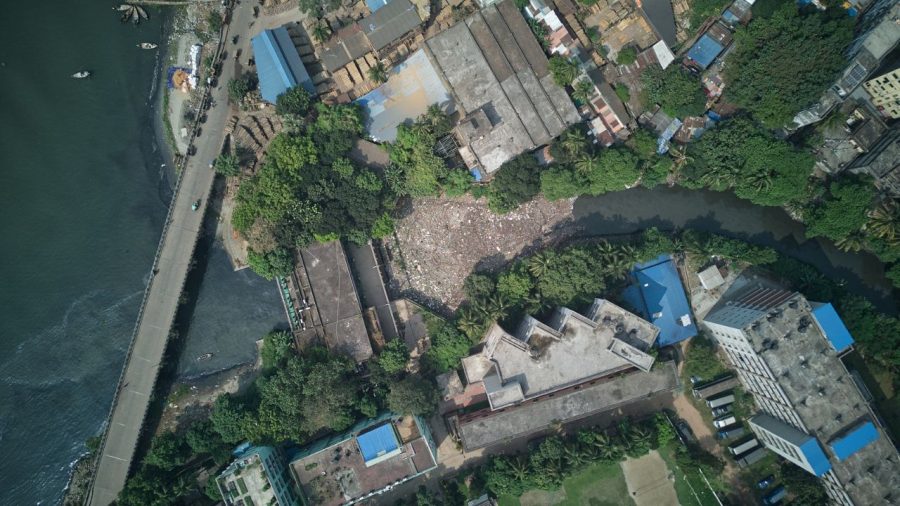



In Farashganj, Old Dhaka, heaps of discarded plastic and other rubbish have accumulated in a waterway near the Buriganga River.
At the canal’s gate, a water-screening machine installed to remove floating waste stands idle, leaving the garbage trapped in the water.
Beside it, an electrical control box hangs open, its cover corroded and wires exposed.
The deteriorating equipment offers a telling picture of the challenges facing efforts to keep the city’s remaining waterways clean: installing machinery is one thing; keeping it operational is another.
For residents of the surrounding neighbourhood, the consequences are part of everyday life.
The waste-filled canal produces an unpleasant smell, while mosquitoes, flies and other insects gather around the accumulated rubbish.

What might appear to be an isolated problem of broken equipment has become a persistent environmental nuisance for people living nearby.

The machine’s failure has also brought renewed attention to the condition of Dhaka’s drainage infrastructure and the difficulties of maintaining the city’s already vulnerable waterways.
Farashganj lies within the historic urban landscape of Old Dhaka, where waterways have been gradually transformed by decades of pollution, encroachment and unplanned development.
Dholai Khal, one of the city’s historic canals, once served important transportation and drainage functions.
Over the years, however, sections of the waterway have been narrowed, filled or absorbed into the expanding urban landscape.
Its present condition reflects the broader struggle to preserve and maintain waterways in an increasingly congested city.





Waste dumped into drainage channels can accumulate at gates and other collection points, where it places additional pressure on infrastructure designed to manage water and remove refuse.
Water-screening machinery is intended to help address this problem by collecting floating waste before it can move further along the drainage system.
But when such equipment breaks down, its intended purpose is lost.
With the machine at Farashganj out of operation, accumulated rubbish remains in the water, while the surrounding environment continues to deteriorate.
The problem is not limited to the appearance of the canal.
The foul smell makes the area uncomfortable, and the presence of insects adds to residents’ concerns about sanitation and cleanliness.

Decomposing organic waste can also create unsanitary conditions, while plastic and other persistent materials contribute to water pollution.
Cleaning campaigns and the installation of waste-removal equipment can help address visible pollution, but their effectiveness depends on regular maintenance and timely repairs.
A machine that remains out of service cannot perform the task for which it was installed.

Meanwhile, rubbish continues to collect, potentially making subsequent cleanup efforts more difficult.
The condition of the canal highlights a challenge that goes beyond a single broken machine or a particular stretch of waterway.
Dhaka’s remaining canals face the combined pressures of waste disposal, encroachment and the demands of an expanding urban population.

Keeping them functional requires more than occasional cleanup drives.
For a city struggling to preserve its waterways, the task is not simply to clean up accumulated waste.
It is to ensure that the systems designed to keep canals clean do not themselves fall into neglect.
The clogged waterway stands as a reminder of the enormous gulf that exists between the needs of ordinary citizens and the infrastructure necessary to ensure those needs are met.
And so, the machine stands idle, residents suffer the consequences, and the arteries that pump the heart of the Buriganga clog up with waste and neglect.