Teachers of private institutions outside the MPO (Monthly Pay Order) system are preparing to launch fresh protests, citing a reality where their salaries are lower than those of domestic workers.
They have given the government a seven-day deadline to bring all private educational institutions – from secondary schools to colleges – under the MPO scheme. Failing that, they warned of a “do or die” movement.
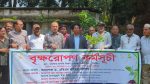
The announcement came on Monday at a rally in front of the National Press Club, organised by the platform “Combined Non-MPO Unity Council”, representing non-MPO educational institutions.
Chief coordinator Selim Mia said,
“Earlier, out of 3,500 MPO applications, 1,720 were finalised after verification. But instead of issuing a gazette notification, the process has been stalled again. If immediate steps are not taken to include all recognised institutions under MPO, teachers will be forced to announce a ‘do or die’ programme.”
Organisational coordinator Monimul Haque said there are around 6,000 non-MPO institutions across the country, though only about 3,000 are currently operational. He expressed hope that the government would initially bring these active institutions under MPO.
Teachers define “active institutions” as those where regular classes and examinations are conducted.

Although private institutions enroll more students than government schools, there is no binding framework for salaries and benefits for their teachers.
Under the MPO system, teachers and staff at eligible institutions – from lower secondary to postgraduate levels – receive a basic salary and some allowances from the government.
However, many teachers even in MPO-listed institutions remain outside the scheme. Meanwhile, thousands of institutions are still not included at all.


There is also no such provision for private primary or kindergarten teachers. In many rural schools, teachers are paid as little as Tk1,000–2,000 per month. Many continue teaching without pay for years in the hope of eventual MPO inclusion.
Private primary teachers have not yet demanded government benefits. But teachers from lower secondary to college levels regularly stage protests in Dhaka over the issue.
At the rally, teachers alleged that MPO inclusion has remained stalled for years despite institutions meeting all required conditions.
Md Abdus Salam, principal of KH Tikor College in Paba upazila of Rajshahi, said that after prolonged protests, the interim government had accepted MPO applications and prepared a list through software-based verification but the list has not been published.
Sharafat Hossain, a history teacher at Kotchandpur Municipal Women’s College in Jhenaidah, said he has been teaching without pay for 11 years. To support his family, he tutors secondary-level students in English and mathematics.
“I am becoming increasingly frustrated due to financial uncertainty. I am living a very inhumane life. If MPO comes through, my family might survive,” he told TIMES of Bangladesh.
A teacher from Patuakhali urged that political considerations should not affect decisions regarding institutional development. He said their college had failed to secure MPO status during the Awami League government because its founder was affiliated with the BNP.
During the interim government period in February 2025, this teachers’ organisation resumed protests demanding MPO inclusion. Amid continuous demonstrations, the government announced the reopening of MPO applications after nearly four years.
The government stated that institutions meeting criteria such as student-teacher ratios, staffing requirements, infrastructure, and continuity of academic activities would be eligible.
However, the applications are yet to be resolved.
Late last year, madrasa teachers held continuous protests in the capital. On 29 October, dozens were injured when police used water cannons and sound grenades.
Following that, a list of 1,089 independent ibtedayi madrasas was sent to the chief adviser for MPO inclusion. Although approval was reportedly signed, the gazette notification has not been issued.
Teachers say that much of the verification process for MPO inclusion is already complete. What remains now, they argue, is political will from the government to bring operational institutions under the scheme.