

In soybean oil samples tested from Dhaka markets, 63% contained trans-fat that was 2-4 times higher than the limit approved by the World Health Organization.
Besides, in tests conducted in 2023, 71% of vegetables in the country were found to contain excessive and internationally banned pesticides, which increase long-term risks of cancer, kidney disease, and neurological problems.
Around three crore people in Bangladesh fall sick every year allegedly due to contaminated food.
Against the harsh reality, Consumers Association of Bangladesh (CAB) organized a seminar titled “Ensuring Safe Food and Consumer Empowerment: Ways and Call for Action” at Farmgate, Dhaka, on Saturday.
Food safety issue has turned into one of the biggest public health risks in the country, BSAFE Foundation Director Mahmud Hasan said at the seminar.

Public awareness about food safety in Bangladesh has become a central question of public health, the economy, and political accountability, he added.
Political parties make various promises ahead of the national election, but the issue of safe food has hardly any place in their agenda, said CAB President AHM Shafiquzzaman at the event.
“Ensuring safe food is not the responsibility of one ministry. It requires combined efforts in research, policy, market management, monitoring, manpower, technology, and political will,” he said.


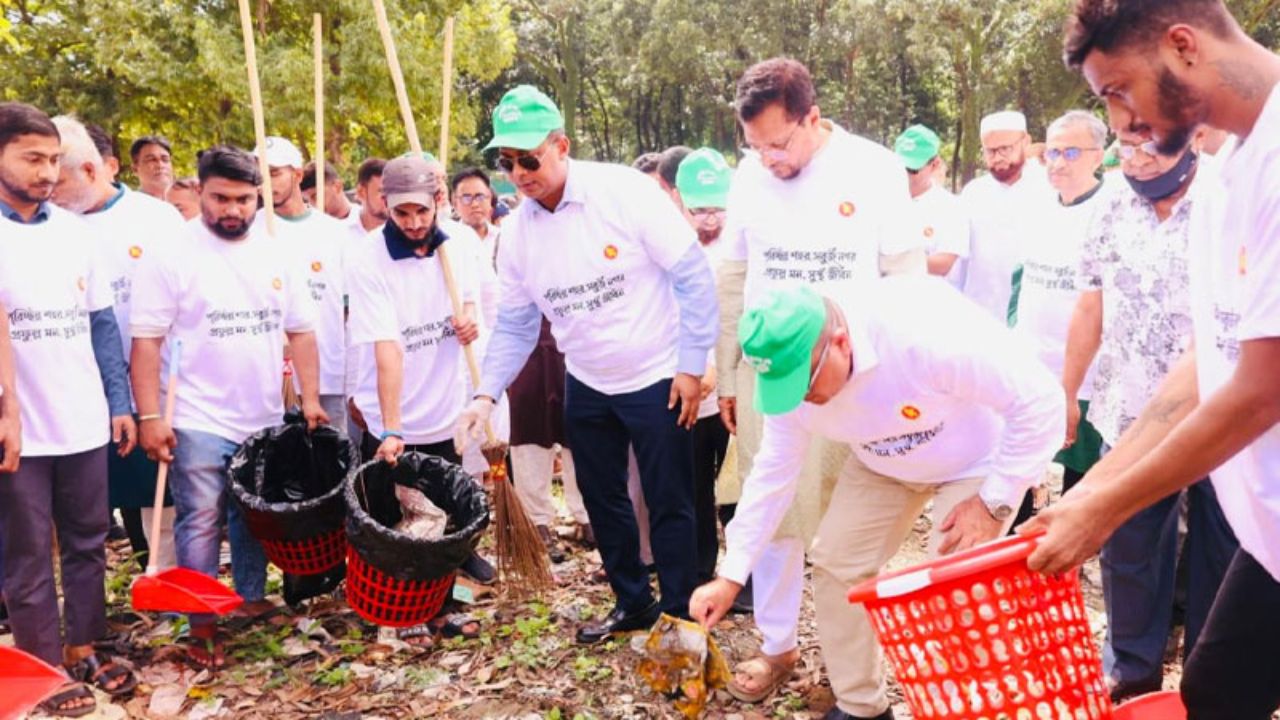
But neither the successive governments nor the opposition parties reflected the basic needs of 18 crore people properly, he said.
Development cannot be sustainable if the food reaching people’s plates is not safe, he said, adding that agriculture, markets, imports, processing, logistics, and retail sales are all directly linked with public health, yet this issue gets very little space in political debates.
The limitations of the monitoring system make the crisis worse. There are 4.3lakh registered food business establishments in the country, but monitoring is far from enough. Many large areas of Dhaka do not even have a single veterinary surgeon, although their role is crucial in ensuring the safety of meat and dairy products. The Bangladesh Food Safety Authority have only 19 officers to manage the entire country’s food risks, which makes it virtually impossible to do any effective monitoring.
If the capacity of monitoring agencies is not increased, adulterators will get even more opportunities, said CAB President Shafiquzzaman.
Along with government infrastructure, pressure and participation from the private sector also become important.
In 2024–25, more than 80 thousand complaints were filed with the National Directorate of Consumer Rights Protection. A large part of these complaints is related to food safety. Wrong labelling, low weight, fake or adulterated products, delivery fraud these are now daily experiences for consumers. Added to this is a lack of legal awareness. Only 22.9 percent of people know about the Food Safety Act, 2013. This increases the chance of fraud and deepens mistrust in the market, affecting the overall economic environment.
Policymakers are often forced to make decisions based on assumptions as there is no updated national databank showing which areas have more food contamination, which products are risky in which season, or which markets face repeated problems. These decisions fail to create realistic and long-term solutions.
In this context, the partnership between BSAFE Foundation and CAB has emerged as a promising model, speakers said at the event. This joint initiative works with research-based policy proposals, digital platforms for real-time complaint management, modern market monitoring methods, ensuring labelling and price transparency, and promoting environmentally friendly food consumption.
Finally, the seminar discussions made it clear that ensuring safe food is a shared duty of the state, the market, researchers, consumers, and civil society.
They emphasized that political parties prioritize food safety and act accordingly to ensure health of 18 crore people of the country.