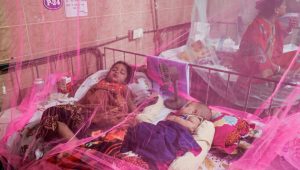
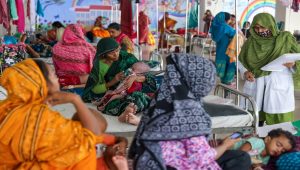
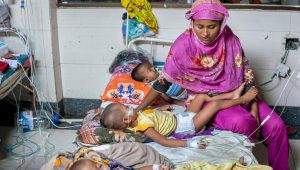
Despite advances in modern medicine, stillbirths remain a persistent and troubling reality in the Sylhet region, with official figures showing that more than 10,000 babies have died in the womb in the division over the past six years before ever seeing the light of day.
That equates to roughly 1,500 fetal deaths each year, most occurring between 26 and 38 to 40 weeks of pregnancy.
A large proportion of the cases are reported in haor wetlands, hilly terrain and other remote areas, where access to healthcare remains limited.
Doctors say that between 25 and 35 per cent of stillbirths have no identifiable cause. Even after medical examinations, the reason for death often remains unknown.
For the remaining cases, physicians point to a combination of factors including superstition, lack of awareness among expectant mothers, poor maternal nutrition and inadequate transport links in hard-to-reach regions.
The impact extends far beyond the loss itself. When a baby dies after at least 30 weeks of pregnancy, mothers often experience profound psychological trauma. Many are left not only grief-stricken but also stigmatised within their communities.
Health professionals warn that such social pressures can compound emotional distress and long-term mental health challenges.
Those working in the sector say the number of stillbirths has continued at an alarming rate for years, yet strong and sustained government action has been limited. Community clinics were established in wards across Sylhet’s districts under the previous administration to improve healthcare access for marginalised populations.

However, a lack of effective monitoring has meant that many of these facilities are not functioning as intended.
In addition, the absence of specialist gynaecologists in many upazila hospitals has left pregnant women without adequate care. As a result, campaigners argue, preventable deaths in the womb continue largely unchecked.
According to the Office of the Divisional Director of Health in Sylhet, a total of 10,188 babies died in the womb across the region’s four districts over the past six years, with the highest number recorded in Sunamganj.
Official data show that between 2020 and the first week of December 2025, 2,437 stillbirths were reported in Sunamganj, 2,379 in Habiganj, 1,446 in Sylhet district and 865 in Moulvibazar.
In addition, Sylhet MAG Osmani Medical College Hospital – the largest public healthcare facility in the division – recorded a further 3,061 stillbirths over the same period. As patients from all four districts seek treatment at the hospital, these figures are counted separately from district statistics.




Health officials acknowledge that these numbers reflect only reported cases. Stillbirths occurring in private hospitals and in homes often go unrecorded and are not included in government data.
Individual cases highlight the human cost behind the statistics.
In December last year, a woman from Karaballa village in Kanaighat upazila – identified here by the pseudonym Tanni Akter – went into labour and was taken to a private NGO-run health centre in neighbouring Zakiganj.
Health workers attempted a normal delivery for nearly 30 hours before advising her to seek care at Sylhet MAG Osmani Medical College Hospital. Fearing a caesarean section, she declined to go. The baby later died in the womb.
In January, another woman, Asia Begum, from the Subidbazar Bonkolapara area of Sylhet city, began experiencing pain at six and a half months of pregnancy. Relatives initially tried to arrange a home delivery with a traditional birth attendant. The landlord, recognising the seriousness of the situation, insisted she be taken quickly to Osmani hospital.
Doctors there found the premature baby in critical condition and recommended an emergency caesarean section. With medical support, she delivered the baby normally. After 20 days of intensive care, the infant stabilised and was discharged.
Health workers say such cases reflect a complex mix of superstition, lack of awareness and fear of medical intervention. The rising rate of caesarean deliveries in Sylhet has led some women to avoid hospitals altogether, opting instead for traditional healers, spiritual remedies or herbal treatments.
In some communities, openly acknowledging a pregnancy is still regarded as shameful or inauspicious. Public health experts warn that such beliefs, combined with delayed or absent medical care, continue to put unborn children at risk.
Kamrul Alam, a private-sector employee from Dirai upazila in Sunamganj, says the lack of specialist care forced his family to make difficult decisions.
“There is no good gynaecologist in my upazila or even in the district town,” he said. “I had to bring my wife to Sylhet city well before her due date. She eventually delivered a baby boy by caesarean section. If we had stayed back home, there could have been a serious complication.”
Health professionals say that while the shortage of doctors is a major concern, a lack of awareness among expectant mothers also plays a significant role in stillbirths.
Professor Rashida Akhtar, a gynaecology specialist in Sylhet, said many women skip routine check-ups because they believe the pregnancy is progressing normally.
“Some think the baby is fine, so they do not seek medical advice,” she said. “By the time complications become severe and they come to hospital, there is often very little doctors can do.”
She added that between 25 and 35 per cent of fetal deaths occur for reasons that remain unknown, underlining the need for further research.
Dr Rashida also pointed to poor maternal nutrition and limited awareness. She said pregnant women should consult a doctor at least four times during pregnancy – a recommendation that is frequently ignored in rural areas.
Reducing stillbirths, she said, requires greater emphasis on both pre-conception care and monitoring during pregnancy, alongside broader public health education.
Dr Md Zahidul Islam, chief health officer of Sylhet City Corporation, said pregnant women should take at least 100 iron and folic acid tablets during pregnancy to reduce the risk of birth defects. “Many mothers do not take them because they are not aware of their importance,” he said.
Dr Jasim Uddin, civil surgeon of Sunamganj, identified the lack of regular antenatal check-ups as one of the leading causes of fetal death.
He said Sylhet division faces an acute shortage of healthcare personnel, with the highest rate of vacant posts for doctors and nurses in the country over the past two to three years.
“Many people from this region tend to seek opportunities abroad, so locals are less interested in working in the health sector,” he said. “Those recruited from outside often use influence to secure transfers elsewhere.”
To improve maternal awareness, he said health workers are conducting door-to-door vaccination campaigns and providing health education. Regular mothers’ gatherings are also being organised to counsel pregnant women and encourage timely medical care.