
Bangladesh will allow semiconductor projects to use state-run laboratories for fabrication, processing and characterisation under agreements signed on Tuesday to accelerate chip research and development.
Bangladesh Atomic Energy Commission (BAEC) and Bangladesh Council of Scientific and Industrial Research (BCSIR) signed separate memorandums of understanding with the Center of Research Excellence in Semiconductor Technology (CREST) and Neural Semiconductor Ltd (NSL), according to a press release.
The agreements establish a framework for CREST-approved projects to conduct physical experiments, wafer processing, device fabrication, characterisation and metrology at designated BAEC and BCSIR facilities.

The move positions BAEC and BCSIR laboratories as shared national research infrastructure for semiconductor research, while operational control and regulatory oversight will remain with the respective agencies.
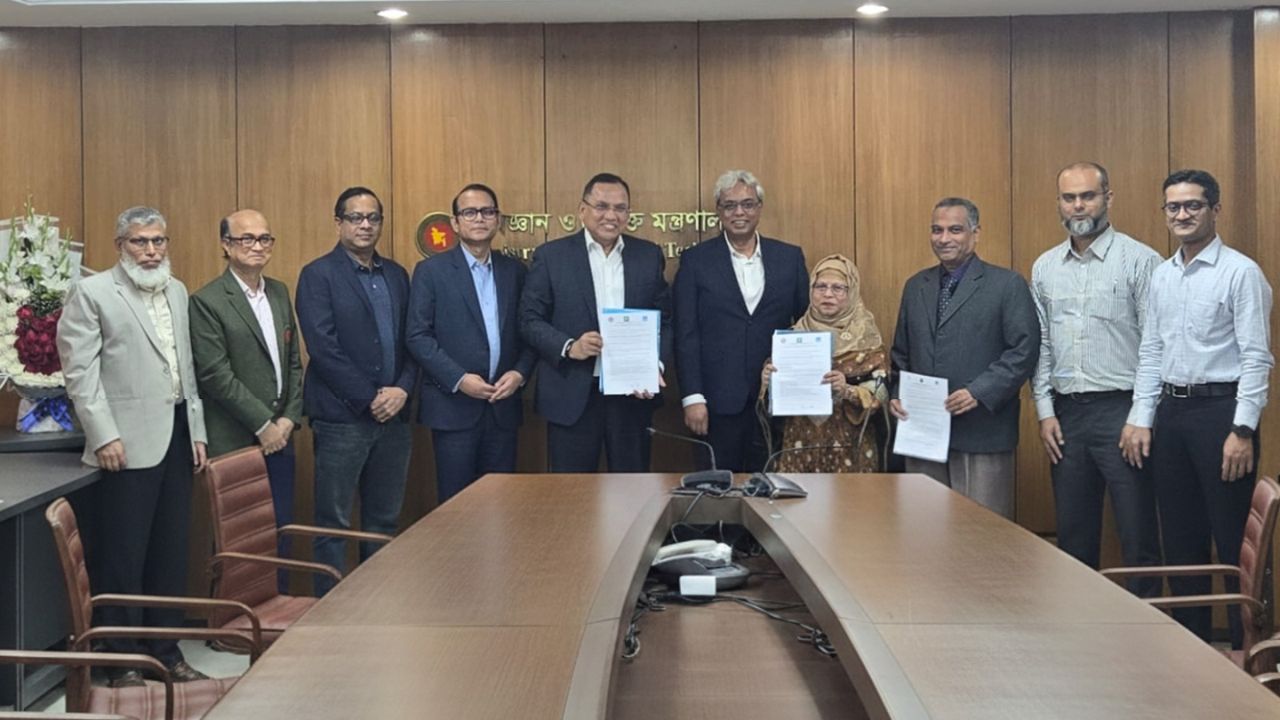
The signing ceremony was held at the Ministry of Science and Technology (MoST) and chaired by MoST Secretary Md Anwar Hossain.




BAEC Chairman M Moinul Islam, BCSIR Chairman Samina Ahmed, Bangladesh Semiconductor Industry Association (BSIA) President and NSL Managing Director M A Jabbar, and CREST Convener Mustafa Hussain signed on behalf of their organisations.
The BAEC agreement also covers joint research, supervised student projects and exploration of cleanroom modernisation, subject to safety and operational protocols.
The BCSIR agreement enables access to its facilities for semiconductor experiments and related research and development activities under CREST-coordinated programmes.
NSL will act as the sole sponsor within the CREST framework but will not interfere in laboratory operations, safety compliance or access decisions, the release said.
MoST Secretary Md Anwar Hossain said the agreements would strengthen collaboration among government, industry and academia in developing the semiconductor sector.