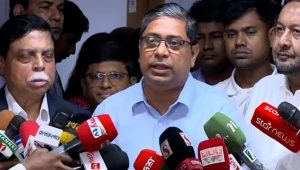
State Minister for Primary and Mass Education Bobby Hajjaj has said the non-formal education system must be made stronger, more effective, and results-oriented to bring a vast population of nearly four crore people under the light of literacy.
He noted that a large portion of this group comprises adults, alongside many primary school-aged children who are still left out of formal schooling.
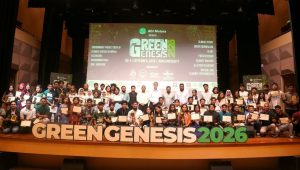
Speaking as the chief guest at am award-giving ceremony marking International Literacy Day 2026 at the Bureau of Non-Formal Education auditorium in Tejgaon on Tuesday, the state minister highlighted that approximately 22 per cent of the country’s population remains outside the purview of literacy and institutional education.

Highlighting the institutional capacity, Bobby Hajjaj said among all education-related ministries and departments, they can work with the largest segment of the population.
Therefore, the Bureau of Non-Formal Education must be transformed into one of the most powerful and empowered institutions in the country.


He underscored the need to make the Bureau’s ongoing activities more results-driven, whilst focusing on rescoping, redesigning, and refocusing of its various projects.
Bobby Hajjaj reiterated that the prime minister’s vision is distinct: no child shall remain out of school, and every child must receive an education rooted in morality and values. He emphasised that children should not merely receive an education, but must also acquire the requisite practical skills to successfully build their future careers.
Regarding fiscal allocations, Bobby Hajjaj said a major portion of the education budget must be directed towards improving the quality of education, bringing children back to classrooms, boosting literacy, and fostering skill development.
He maintained that the education budget should not be spent solely on constructing buildings, but rather every single taka must be utilised to ensure proper education for the people.
Reflecting on the significance of International Literacy Day, he concluded that simply raising the literacy rate is not enough. Instead, the nation must provide the kind of education that elevates living standards, fosters moral values, and builds the necessary capabilities for individuals to contribute effectively to their professional lives.