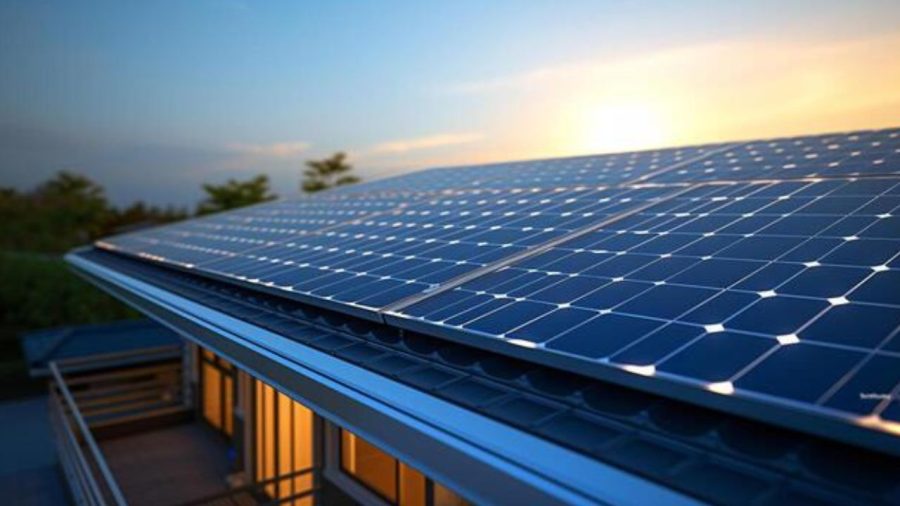

The government’s plan to buy surplus power at Tk10.50 per unit may fail to attract rooftop solar users, as experts and businesses question whether the return is enough to recover the cost of installing and maintaining solar systems.
The main concern is battery storage costs, which can significantly increase investment in rooftop solar systems. Experts say producers who install batteries to store excess power for use at night may find it difficult to make investment financially viable, even after selling surplus electricity to the national grid.
The initiative is not new. After failing to gain significant traction earlier, the government has revived the scheme and started promoting it widely to encourage rooftop solar adoption.
Bangladesh Solar and Renewable Energy Association (BSREA) President Mostafa Al Mahmud told TIMES, “The main objective of the new incentive is to encourage people to invest in solar. However, the government’s cost calculation does not fully match reality when battery-based systems are considered.”
Battery costs raise questions over profitability
A solar equipment trader said an inverter for a 3-kilowatt solar power system costs Tk50,000, while a battery costs Tk115,000. The battery price can be reduced by around Tk5,000 through negotiation. The cost of solar panels, installation and maintenance is additional.
Overall, a battery-based system can cost around Tk300,000, with the cost rising depending on the battery’s storage capacity and the required backup time.

For a 6-kilowatt system, the investment would be almost double, according to traders. Such a system can generate around 27 kilowatt-hours of electricity a day, according to sector insiders.
Backup duration is also a major factor in battery-based systems. A system providing two hours of backup requires significantly less investment than one designed for eight hours.
A Tk600,000 investment could earn Tk7,000 a month
According to calculations provided by sector experts, if a family consumes around 4.5 kilowatt-hours of electricity a day, nearly 23 kilowatt-hours could theoretically be supplied to the grid. At that rate, monthly supply would be around 690 units, generating about Tk7,245 a month at Tk10.50 per unit.
This raises the key question: would spending around Tk600,000 to earn roughly Tk7,000 a month be profitable? Experts said this concern is particularly relevant for residential users; economics could be different for industrial consumers with higher electricity demand.



Another concern is whether such volumes of electricity can actually be supplied through net metering during the winter months, when sunlight is weaker and electricity demand is also lower.
The solar equipment trader said calculating the payback period solely on the basis of savings on electricity bills would not be appropriate.
“If someone calculates how many years it might take to recover the cost of installing panels through savings on electricity bills, that may not be the right approach. This system is mainly meant to ensure a continuous electricity supply,” he said.
Mostafa Al Mahmud said that if a building has a larger rooftop area than it needs, installing additional solar panels without batteries and supplying the surplus electricity to the grid could provide an opportunity to earn a profit.
In such cases, production costs could remain lower. However, the economics change significantly when batteries are added.
Shafiqul Alam, lead analyst at the Institute for Energy Economics and Financial Analysis (IEEFA), told TIMES that there were doubts over how many people could afford solar systems with battery storage.
“When people are away from home, supplying solar-generated electricity to the grid may allow them to benefit to some extent. But installing solar panels with battery storage systems is extremely expensive. The tariff cost could actually go beyond Tk10.52 per unit. Therefore, even though it has been announced as an incentive, there are doubts about how much people will be encouraged to participate,” he said.
The cost of a solar system also rises over its lifetime because some components require replacement. While solar panels can last 20 to 30 years, inverters generally need to be replaced after around a decade. Batteries also need replacement every few years.
As a result, the actual lifetime cost of a project is considerably higher than its initial installation cost.
Rooftop solar scheme failed to gain traction before
The net metering guideline was formally introduced in 2018. In 2023, initiatives were taken to include small residential and single-phase customers. The 2025 guideline expanded eligibility for single-phase customers and allowed solar installations of up to 100 per cent of approved load capacity.
However, the initiative failed to gain significant traction due to limited financial incentives, complicated approval processes, the exclusion of small customers, system capacity limits, high import duties on solar equipment and grid infrastructure constraints. The government received little electricity from rooftop solar systems.
Until 2024, Bangladesh had a total solar power generation capacity of 1,084 megawatts. Of this, net-metered rooftop solar accounted for only 111MW. At the time, there were 2,476 net-metered rooftop solar systems in the country.
Energy sector think tanks have previously said investment in the sector was not attractive because of the absence of clear compensation mechanisms, bureaucratic complications and system limitations.
Mahmud said that the government also needed to clarify whether batteries were mandatory.
He said that they had learned from government officials that battery use was being encouraged to keep solar power supply running during load shedding.