Stagnant water is not a seasonal inconvenience; it is part of everyday life for Mirpur 11’s Bihari camp. Narrow lanes remain waterlogged even on dry days, with broken drains and clogged sewage channels trapping murky water in pools that rarely recede.
When rain falls, the situation worsens, but the real crisis lies in the long-standing failure of the drainage system. Walking through the camp means stepping carefully to avoid puddles filled with garbage and sewage.
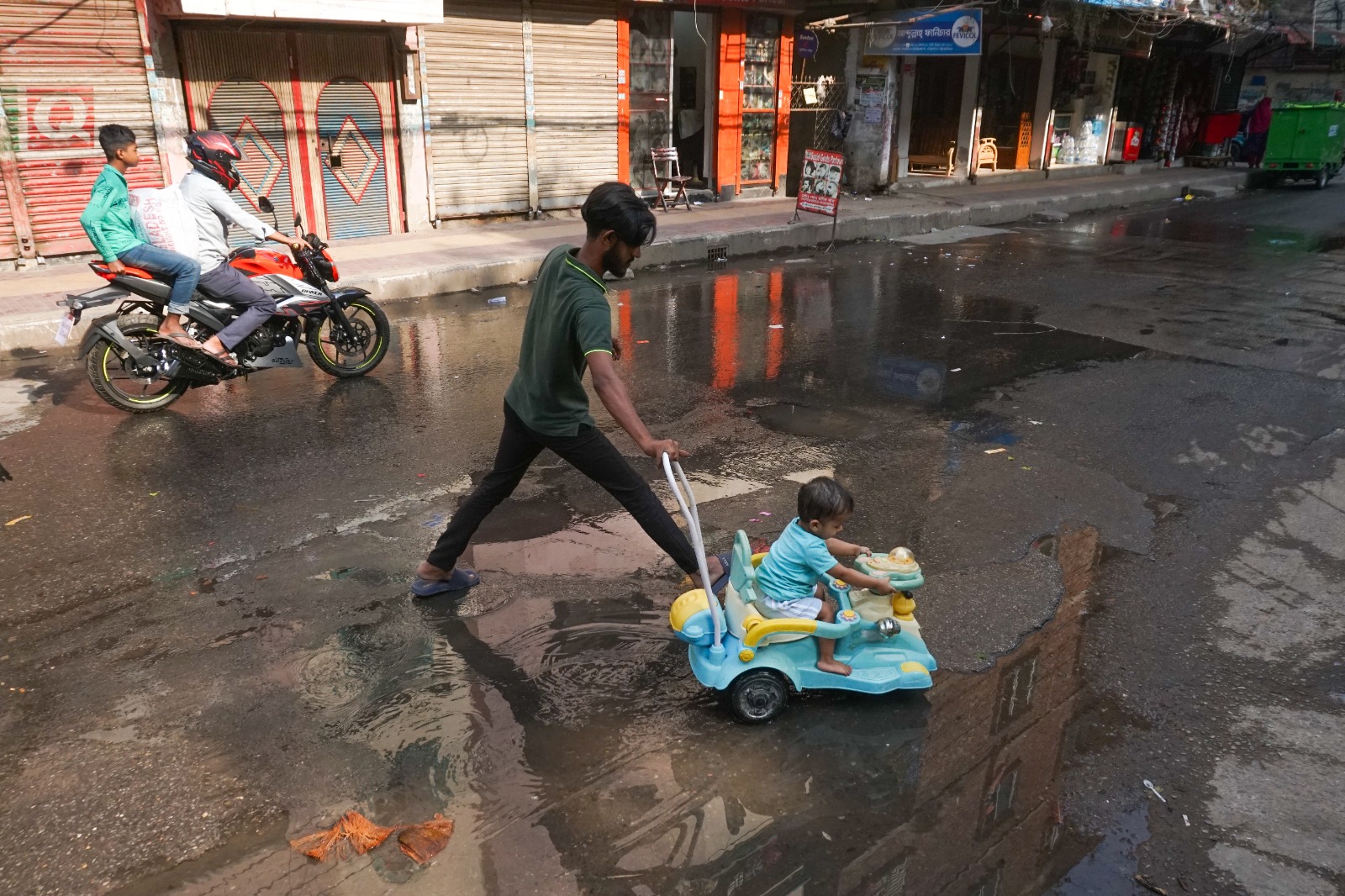
In some alleys, residents place wooden planks to cross over the water. Children run and play along the damp paths, sometimes splashing through the puddles, unaware of the health risks.

Rickshaws struggle to pass through narrow roads where water and waste mix into a foul-smelling stream. Life continues, but always around the water that refuses to go away.
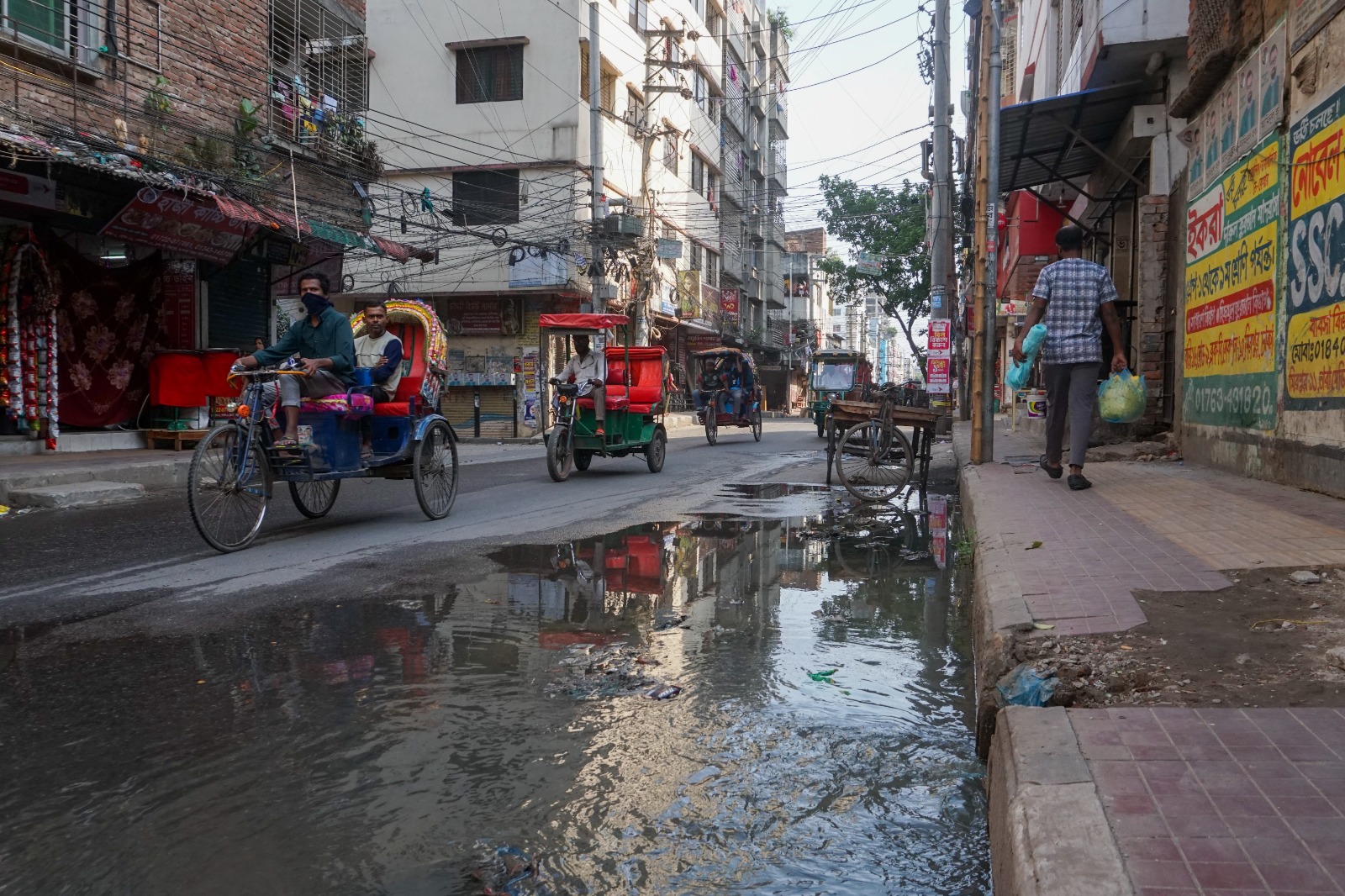
For many families, this condition has become normal. Residents sweep water away from their doorsteps every morning, hoping to keep their small living spaces dry.




Women carrying groceries or returning from work step cautiously along makeshift walkways, while elderly residents find it difficult to move freely through the slippery alleys. The drainage problem not only affects mobility but also shapes daily routines, limiting comfort and safety.
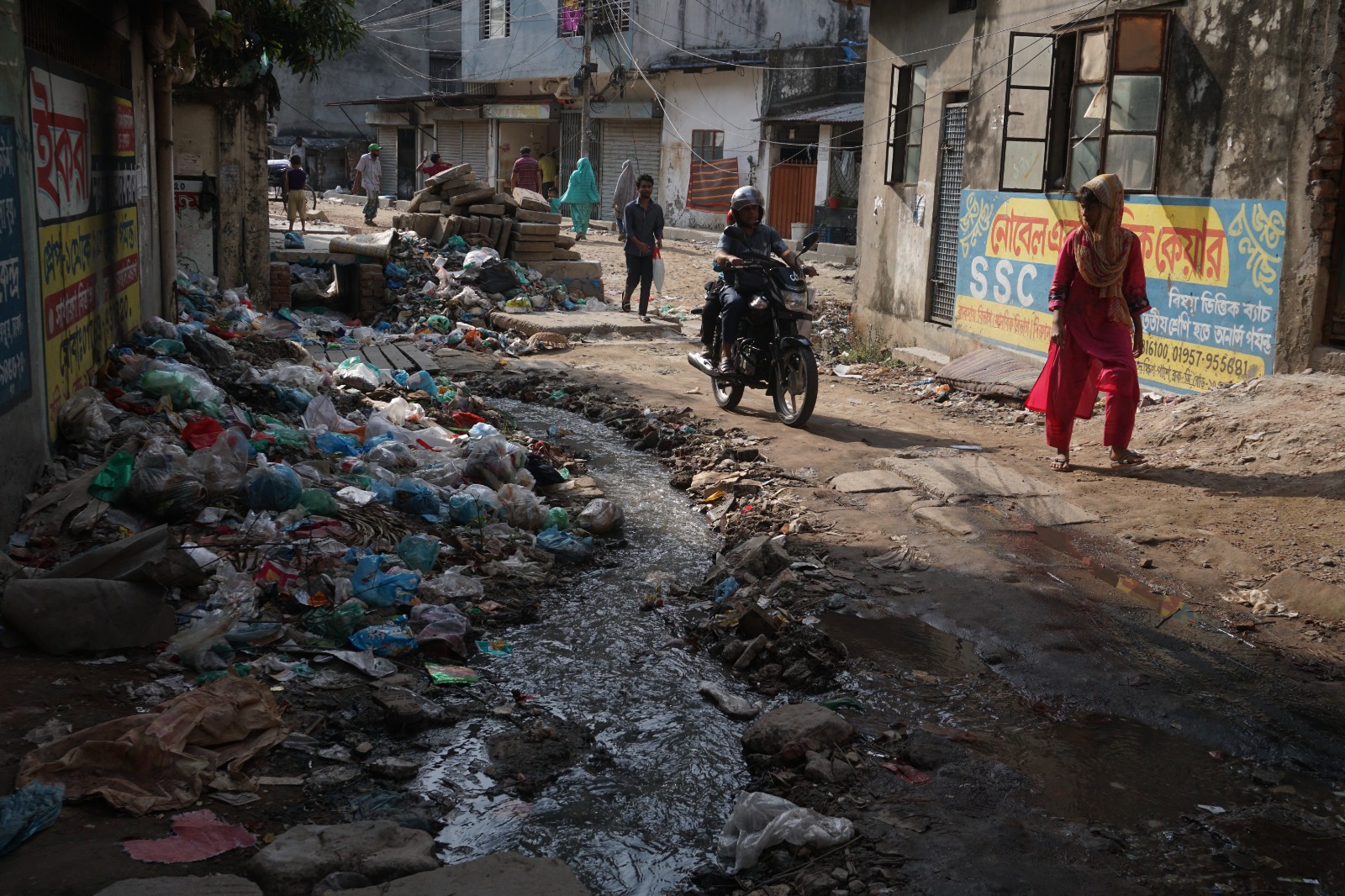
The public health impact is evident. Stagnant water creates a breeding ground for mosquitoes, increasing the risk of dengue and chikungunya outbreaks. Poor sanitation and open sewage expose residents, especially children, to infections and skin diseases.
In a community already struggling with economic hardship and social marginalisation, the drainage crisis deepens their vulnerability.
Despite repeated complaints, lasting solutions remain absent. The camp continues to rely on temporary fixes while broken drainage lines and blocked channels worsen over time.
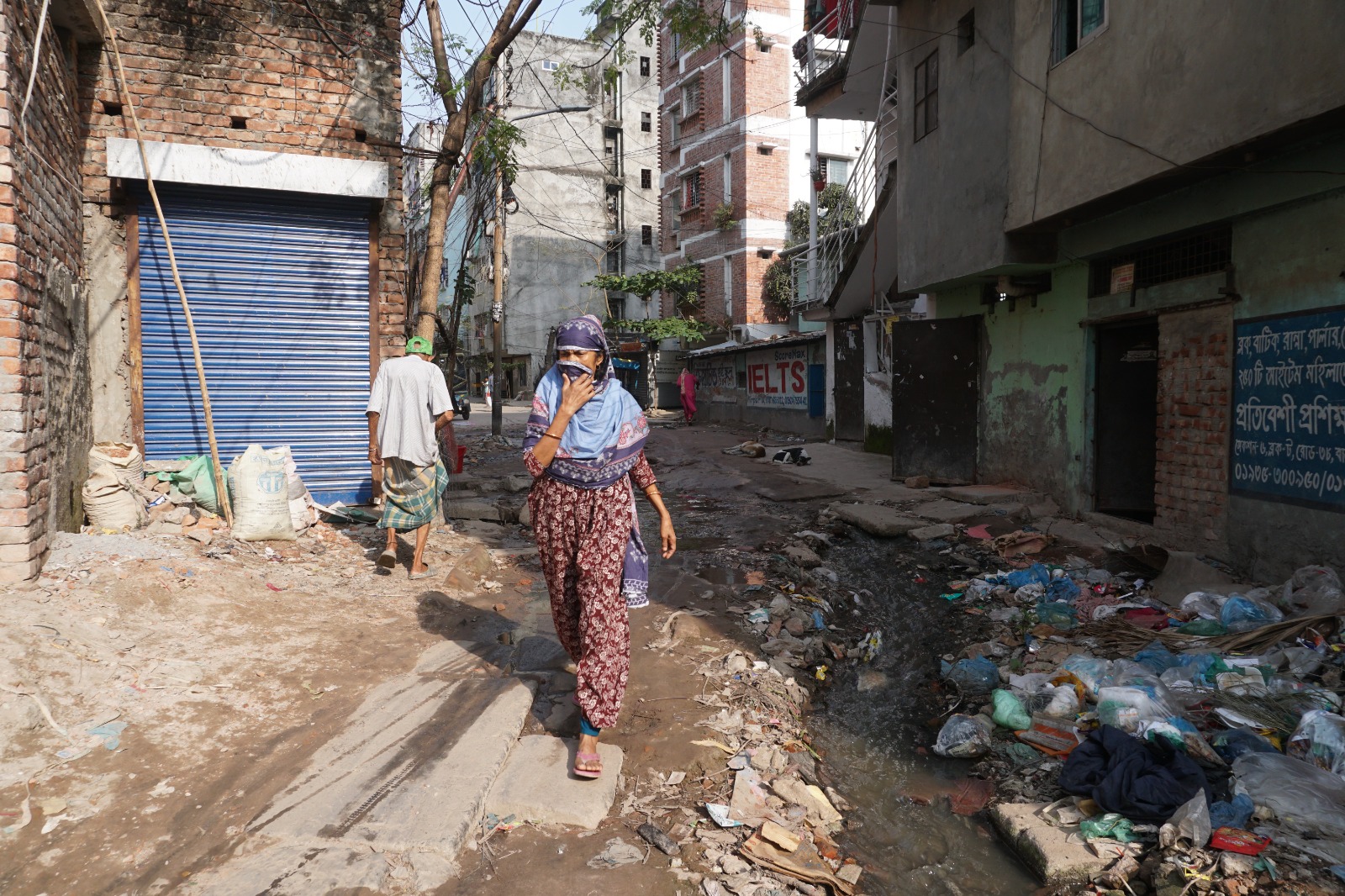
For the residents of Mirpur’s Bihari camp, stagnant water is more than an infrastructure problem. It is a symbol of neglect and exclusion in one of Dhaka’s busiest urban zones.