Across the rolling hills of southern Lebanon, ancient olive groves, terraced hillsides, and vibrant border towns have been replaced by an unliveable landscape of total desolation.
Broad aerial bombardments, ground detonations, and heavy bulldozing have razed or leveled roughly 50 border villages, including Kfar Kila, Mansouri. and Naqoura.
Towns that once functioned as living ecological, social, and agricultural systems have been systematically reduced to sprawling fields of concrete rubble and twisted metal.
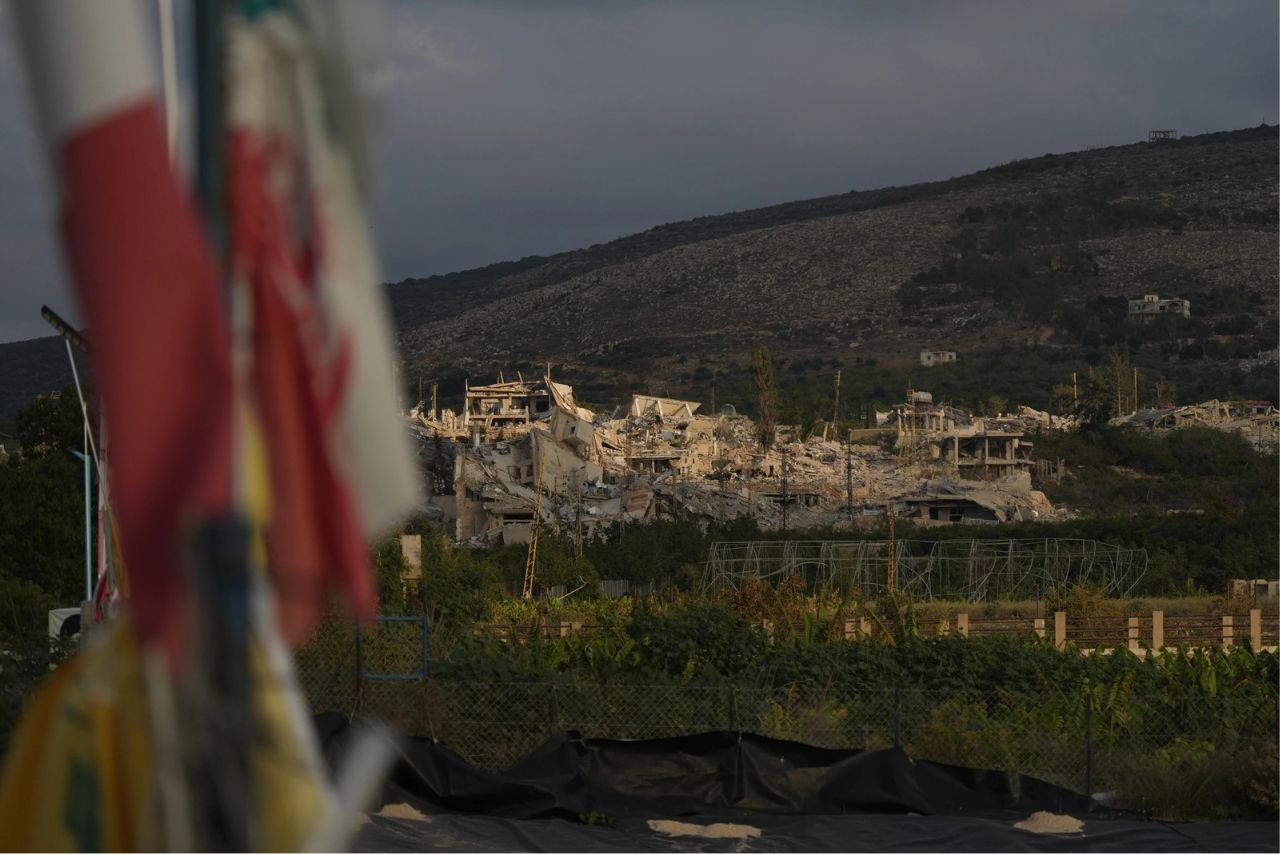
Behind Israel’s designated yellow line” a 10-kilometer-deep ribbon of territory along the border- daily demolitions continue, preventing displaced residents from ever reaching their land.

For the families and farming communities who resided in the region, life has been thoroughly upended.
Intense bombardment and blanket evacuation orders covering roughly 14 per cent of Lebanese territory forced over 1.2 million people nearly one fifth of the national population to flee within weeks.

Hundreds of thousands remain internally displaced in crowded collective shelters, temporary tents, or expensive rentals across the country.



In their abandoned hometowns, vital civilian infrastructure lies in ruins, from local primary schools and water wells to historic heritage sites like Bint Jbeil’s 400-year-old Great Mosque.
The devastation reaches deep into the earth itself. shattering the agricultural sector that formed the lifeblood of southern society.



Heavy shelling and white phosphorus munitions have burned and contaminated more than 16,000 hectares of farmland, forests, and ancient olive orchards.
Toxic heavy metals and herbicides have seeped into the soil and the vital Litani River Basin, threatening long-term fertility.

In the south, 77 per cent of farmers have been displaced and 78 per cent have stopped working altogether, leaving untended crops to rot in fields littered with unexploded cednance.

More than 10,000 agricultural holdings have been disrupted, stripping families of their traditional livelihoods in citrus, tobacco, and olive production.
Beyond the physical destruction of homes and crops, the conflict has fractured the deep, ancestral bond connecting the southern people to their homeland.
Displaced residents face an agonising and uncertain future, wondering whether the social, economic, cultural, and environmental foundations of village life can ever be rebuilt.