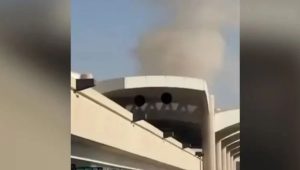
The Israeli military has captured Lebanon’s historic Beaufort Castle, a medieval hilltop fortress in the country’s south, during an expanded offensive against the Lebanese armed group Hezbollah.
The capture, announced on Sunday, comes despite an existing ceasefire between Israel and Lebanon, which Israel has repeatedly breached, reports Al Jazeera.
“The Israeli flag is once again flying over the peaks overlooking the Galilee communities,” Israeli Defence Minister Israel Katz said during a memorial ceremony for soldiers killed in the 1982 Lebanon war, according to The Times of Israel.
“Our heroic soldiers have captured Beaufort once again and will remain there as part of the security zone in Lebanon,” he was quoted as saying.
Katz also shared a photograph on social media showing the Israeli flag alongside that of the military’s Golani Brigade flying over the fortress.
What is Beaufort Castle?
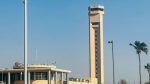
Beaufort Castle, known in Arabic as Qalaat al-Shaqif, is a 900-year-old fortress situated on a rocky hilltop in southern Lebanon, around 700 metres (2,300 feet) above sea level. Constructed by Crusaders in the 12th century, the castle overlooks the Litani River.
The Crusaders named the fortress Beaufort, meaning “beautiful fortress” in Old French.

Over the centuries, the site changed hands several times, passing from Crusader rulers to various regional powers, including the Ottoman Empire.
Its elevated location made it one of the region’s most important defensive positions, enabling those in control to monitor movement across vast areas of southern Lebanon.
In more recent decades, Palestinian fighters used the castle as a base before Israeli forces seized it during their 1982 invasion of Lebanon.
Israel later incorporated the fortress into its security zone in southern Lebanon and maintained control until withdrawing in 2000.

Why is the castle strategically important?
Located on a commanding hill near Nabatieh, Lebanon’s fifth-largest city, Beaufort Castle and the surrounding ridge — which Israeli forces have also secured — are widely regarded as among the most strategically significant military positions in southern Lebanon.
The fortress provides Israeli troops with a key observation point overlooking large parts of southern Lebanon and northern Israel.
Israeli officials said the operation aimed to dismantle Hezbollah infrastructure and secure high ground near the Israeli border.
Al Jazeera correspondent Obaida Hitto, reporting from Tyre in southern Lebanon, said the capture gives Israeli forces “a significant tactical advantage against Hezbollah”.
“It overlooks all of the towns and villages that are around the city of Nabatieh. It also looks over the western Bekaa Valley, all the way into the occupied Golan Heights and into northern Galilee,” he reported.
“People here are extremely concerned that this operation is going to expand even more because of the vantage point that the Israelis now have.”
Rising tensions in southern Lebanon
According to Lebanon’s Ministry of Public Health, Israeli attacks across the country since 2 March have killed more than 3,412 people and injured 10,269 others.
Israeli troops captured Beaufort Castle following days of clashes and air strikes in villages surrounding the fortress. Forces advanced through the rugged terrain near Nabatieh, where fighting with Hezbollah fighters had intensified.
On Sunday alone, Israeli forces killed at least 12 people and wounded 35 others in more than 36 attacks across southern Lebanon, according to an Al Jazeera tally.
Israel has occupied extensive areas of southern Lebanon since hostilities escalated following the US-Israel war on Iran, which began on 28 February. Israeli forces now control approximately 2,000 square kilometres (770 square miles) of Lebanese territory, nearly one-fifth of the country.
Iran-backed Hezbollah entered the conflict on 2 March by launching rockets, missiles and drones at a missile defence site near Haifa in northern Israel in response to the killing of Iranian Supreme Leader Ali Khamenei during the war’s opening strike on Tehran.
Before that attack, Hezbollah had not targeted Israel since a ceasefire was announced in November 2024, despite what it described as near-daily Israeli violations of the agreement.
Last week, Israeli Prime Minister Benjamin Netanyahu ordered a deeper military push into Lebanon, marking Israel’s furthest advance into its northern neighbour in more than 25 years.
On Sunday, Netanyahu said he had again “instructed the Israeli military to expand the manoeuvre in Lebanon”.
“Now my instruction is to deepen and expand our grip on the places that were under Hezbollah’s control,” he said while visiting frontline positions.
On Monday, Israel issued evacuation orders for residents of seven villages in southern Lebanon: Houmine al-Faouqa, Bnaafoul, Arab Salim, Roumine, Aazze, Arkey and Jbaa.
The Israeli army’s Arabic-language spokesperson, Avichay Adraee, announced in a post on X that residents must move at least 1,000 metres (3,280 feet) away from the affected areas immediately as Israeli forces prepare further attacks.