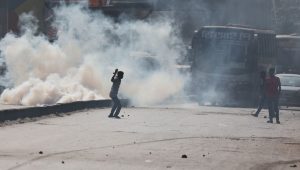
Red signboards surrounding Shahbagh intersection in the heart of Dhaka carry a clear instruction: “Silent zone, no honking”. Yet right beneath them, motorists blare their horns indiscriminately, turning the designated silent zone into one in name only.
Despite the presence of hospitals and educational institutions, drivers routinely disregard noise restrictions, leaving city residents to endure unbearable noise.
Among those paying the heaviest price are traffic police personnel tasked with maintaining order on the roads. Prolonged exposure to excessive noise is gradually damaging their hearing and causing other physical and psychological problems.
According to standards set by the World Health Organisation (WHO) and Bangladesh’s Department of Environment (DoE), noise beyond certain thresholds can cause serious physical and psychological harm. Sound levels of 45 to 60 decibels are generally considered tolerable.
Under Bangladesh’s Noise Pollution (Control) Rules, permissible noise levels in silent zones are 50 decibels during the day and 40 at night. The corresponding limits are 55 and 45 decibels in residential areas and 70 and 60 decibels in commercial areas.
Far beyond permissible limits
Recent surveys by the DoE and environmental organisations show that traffic-generated daytime noise at busy intersections, including Shahbagh, Farmgate, Paltan and Motijheel, averages between 80 and 110 decibels.

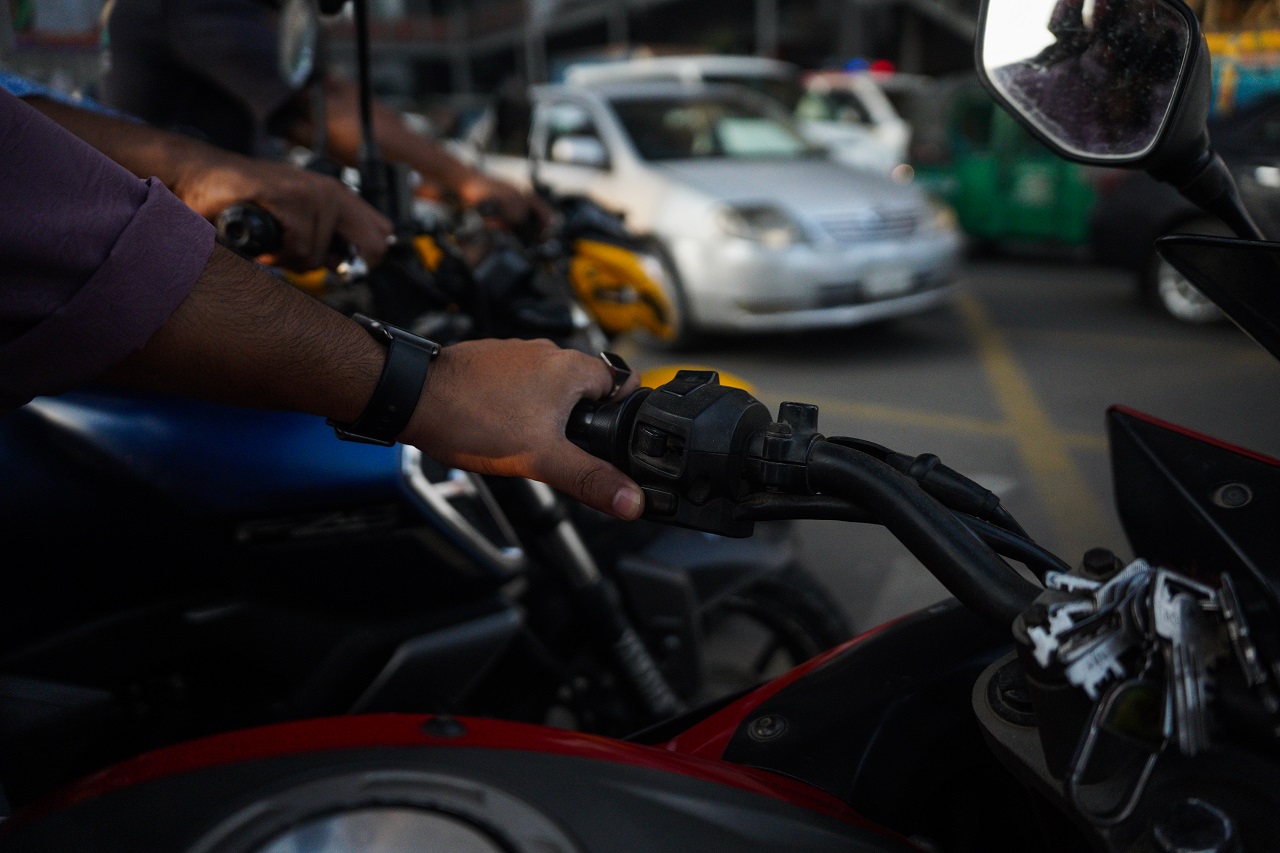
Private car horns generate noise of 85 to 92 decibels, motorcycle horns 99 to 107 decibels, and banned hydraulic horns used in buses and lorries 100 to 120 decibels.
During a visit to Shahbagh, drivers were seen honking continuously without any apparent reason.
“Nobody seems to recognise that causing noise pollution is a punishable offence. Look, the police are standing here, yet drivers are honking right in front of them. Those who need to honk are doing so, and so are those who do not,” said Dhaka University student Mir Fakhruzzaman while waiting for a bus.




Another student said, “There is so much noise that I can barely speak to you properly. Those responsible for taking action remain silent for reasons unknown. The Department of Environment has done little more than put up a signboard in this area.”
Other pedestrians blamed drivers’ ignorance, lack of awareness and indifference among the authorities concerned.
Traffic police losing their hearing
Exposed to noise levels of 85 to 110 decibels for eight to 12 hours daily, traffic police personnel face the risk of permanent hearing loss.
Many are already experiencing hearing difficulties and other physical and psychological complications.


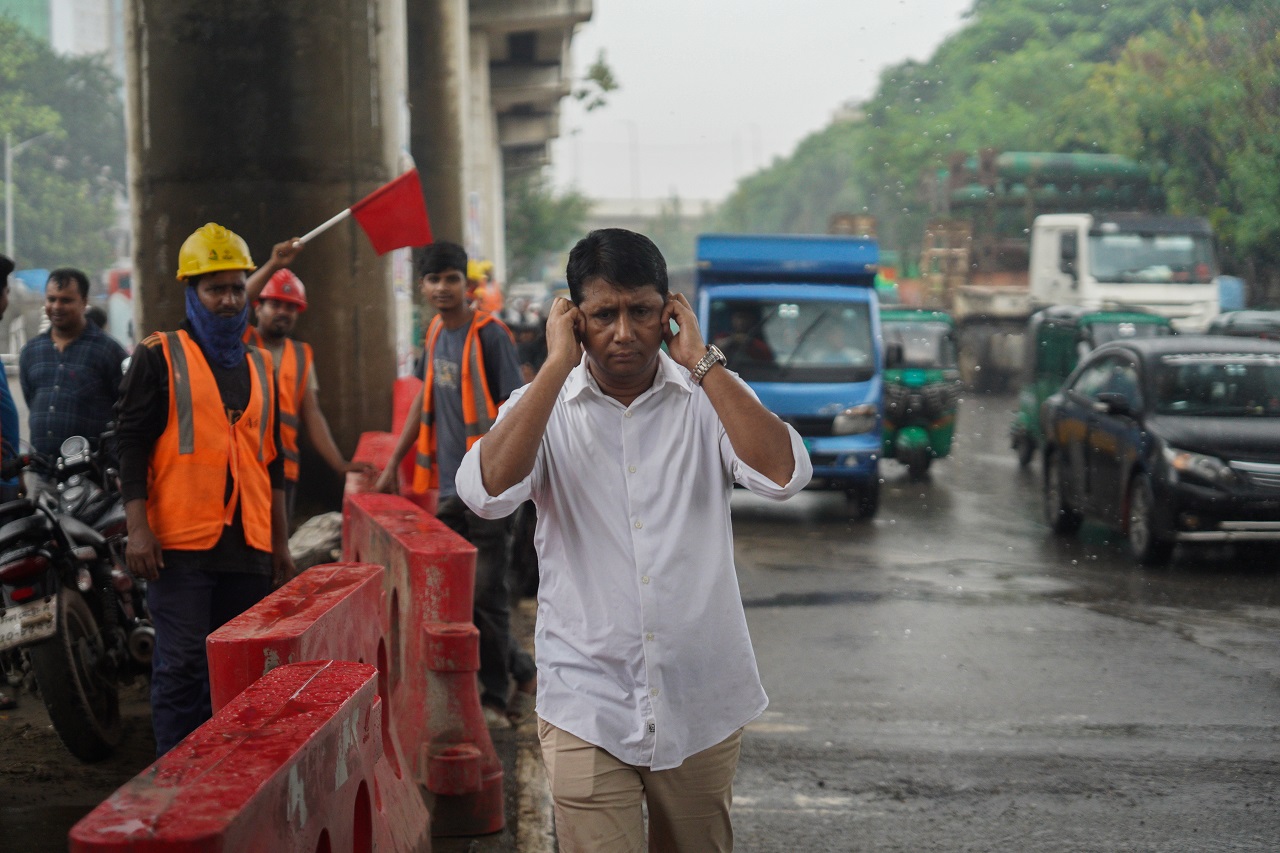
Traffic police constable Saidur Rahman, stationed at Shahbagh, said constant exposure to excessive noise caused persistent earache and buzzing in his ears.
Medication prescribed by a doctor had brought no lasting relief, while prolonged exposure to loud noise had also made him increasingly irritable.
Another constable stationed at the intersection, Rezaul Karim, reported similar problems.

Enforcement struggles amid relentless honking
Traffic police personnel acknowledge the severity of the problem but say conventional manual traffic management limits their ability to enforce the law.
They believe artificial intelligence (AI) or sound-detection technology could help identify offending motorists and facilitate legal action.
Asked by TIMES how many motorists had faced legal action for noise pollution over the past six months, Shahbagh Zone Traffic Police Inspector Sardar Mohammad Tarikul Alam said, “Amid hundreds of vehicles, it is quite difficult to immediately identify which vehicle is honking.
“Even when we identify someone and attempt to file a case, they argue with us, demanding evidence. Therefore, drivers’ own awareness is more important than law enforcement in this regard.”
Urban planners and civil society representatives say putting up signboards alone will not address the growing crisis.
They stress strict law enforcement, modern technology and greater awareness among drivers to curb noise pollution, warning that failure to act could leave the city facing a silent epidemic of hearing loss.