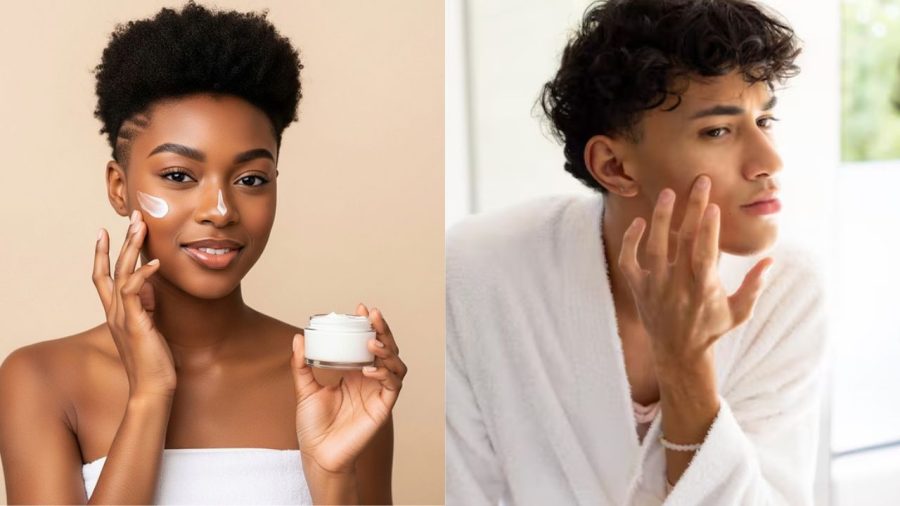



Social media is fuelling a growing trend among teenagers to achieve “flawless complexions” and complex “glass skin” routines, with many young people turning to influencers in Get Ready With Me (GRWM) videos for skincare advice instead of medical professionals.
However, dermatologists have warned that unrealistic beauty standards promoted online are encouraging teenagers to adopt complicated, adult-style skincare routines that can seriously damage their developing skin.
Unrealistic beauty standards
Consultant dermatologist Jonathan Kentley said the most concerning impact of social media on young people is the “relentless images of unrealistic beauty standards”.
Having treated thousands of patients, Kentley said he had never seen anyone with “glass skin”, describing it as a myth created by heavily filtered images that give children the false impression that such complexions are achievable, reports BBC.

He said visible pores, blackheads, blemishes, pigmentation, redness and scarring are all normal features of teenage skin, although individual experiences vary. Nothing within the normal variation of teenage skin is genuinely abnormal, he added.
Puberty, testosterone and acne
More than 80 per cent of teenagers aged 13 to 18 experience acne during adolescence.




Consultant dermatologist Zainab Laftah said most skin problems during puberty are driven by testosterone, a hormone that increases oil production. While boys often experience more severe symptoms because of higher androgen levels, girls also produce testosterone and can develop the same symptoms.
Testosterone, together with blocked hair follicles and inflammation, can lead to blackheads, whiteheads and inflamed spots. Laftah stressed that acne is a common, normal and treatable condition.
She said salicylic acid can be particularly useful for teenagers with oily or acne-prone skin because it penetrates oil-filled pores and helps clear accumulated sebum and dead skin cells. However, unnecessary or excessive use can cause dryness and irritation.
For severe acne or other significant skin problems, Kentley advised teenagers to consult a GP or dermatologist rather than relying on social media accounts.
Five essential skincare tips for teenagers
Laftah and Kentley recommended five key measures for maintaining healthy teenage skin:
- Keep skincare routines simple: Teenagers need only three basic products — a gentle cleanser, a fragrance-free moisturiser and a broad-spectrum sunscreen with an SPF of 30 or higher.
- Avoid excessive use of products: Complicated routines involving frequent exfoliation or strong acids can irritate young skin and damage the developing skin barrier. Kentley said there had been an exponential rise in perioral dermatitis among teenagers because of excessive use of barrier-stripping ingredients such as exfoliating hydroxy acids and retinoids. Laftah added that adult-style routines involving multiple serums, toners, masks and active ingredients often compromise the skin barrier and cause further skin problems.
- Prioritise sleep and a balanced diet: High levels of the stress hormone cortisol, caused by a lack of sleep, directly contribute to acne breakouts. Kentley also said studies have linked diets high in sugar and refined carbohydrates, including white rice and pasta, as well as whey protein in protein shakes, to acne flare-ups. However, individual triggers vary.
- Avoid picking or popping spots: Squeezing spots can push inflammation deeper into the skin, increasing the risk of scarring and discolouration.
- Laftah supported the use of hydrocolloid star patches, describing them as a positive trend on social media. They absorb fluid from superficial spots while creating a protective barrier that discourages picking.
- Seek medical advice when necessary: Persistent, painful cystic acne or scarring requires professional medical evaluation, as prescription-grade treatment is often necessary.
Male skin and shaving
Kentley said higher androgen levels can make male teenage skin slightly oilier and more prone to spots.
Facial hair and shaving can also cause significant irritation. Incorrect shaving techniques can result in folliculitis, a condition that overlaps with acne and can cause skin barrier damage and severe inflammation.
Kentley recommended four measures to protect male skin while shaving:
- Shave after showering: Make sure the skin is hot, steamed and properly prepared.Use a shaving brush: Lift facial hairs away from the skin before shaving.
- Use a shaving brush: Lift facial hairs away from the skin before shaving.
- Apply lubrication: Always use a lubricating product, such as shaving foam or shower gel.
- Shave in the right direction: Move the razor in the direction of hair growth.