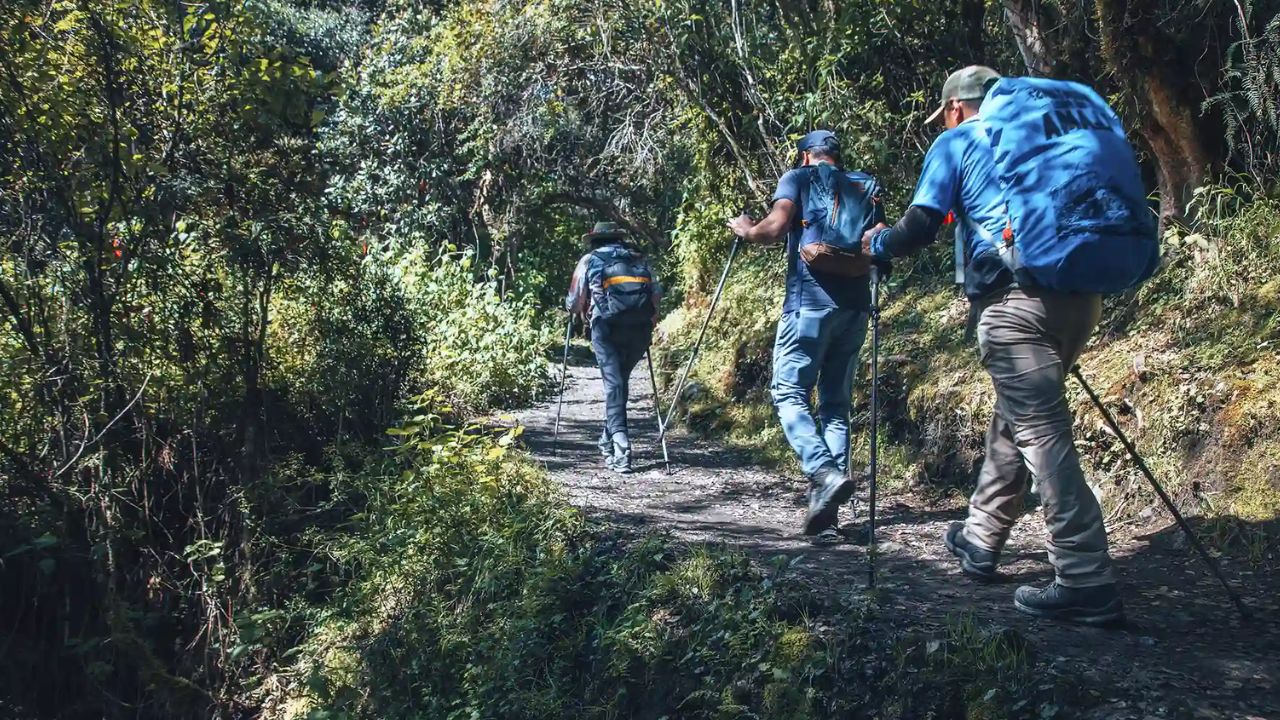

As the allure of emerald ridges in hill tracts and misty tea gardens continue to captivate a new generation of adventurers, the transition from urban life to backcountry requires more than mere enthusiasm.
For novice trekkers, the first journey into the wilderness is a test of both physical preparation and psychological resilience. Adopting rigorous techniques for safety ensures a rewarding experience rather than a hazardous encounter.
Rules of preparation, pacing
The foundation of a successful first hike lies in the realism of the planning phase. Beginners must accurately match trail difficulty with their current physical fitness, utilizing classification systems such as Yosemite Decimal System (YDS).
Most maintained trails in Bangladesh, such as the initial paths toward Boga Lake, fall under Class 1, characterized by low risk and clear markings. However, as one moves toward peaks like Saka Haphong, the country’s highest point at 1,063 metres, the terrain demands greater technical awareness.
Accurate pacing is essential to avoid navigating in darkness or during sudden tropical downpours. Planners utilize Naismith’s Rule, which estimates a baseline pace of one hour for every 5 kilometres of horizontal travel, with an additional hour added for every 600 metres of vertical ascent.

For the high-humidity environments of southeastern Bangladesh, experts recommend the Aitken Modification, adjusting the pace to 4 kilometres per hour and factoring in a 10 to 30 per cent safety buffer to account for heavy loads and technical jungle overgrowth.
Survival blueprint: The 10 essentials
Before setting foot on the trail, every trekker must secure 10 essentials, a system of survival gear designed to manage unexpected delays or injuries. This system includes navigation tools such as a magnetic compass and topographic maps, sun protection including SPF-rated balm, and an insulation system using moisture-wicking layers.
Cotton must be strictly avoided as it saps body heat 25 times faster than dry air when wet, a condition that can lead to hypothermia even in moderate temperatures.
The kit is further reinforced with illumination, specifically high-output LED headlamps with spare batteries, and a custom first-aid kit containing SAM splints and irrigation syringes.




Fire-starting tools, a repair kit with multi-tools and duct tape, and calorically dense, non-cook nutrition are also mandatory.
Hydration protocols require reliable water purification filters or chemical treatments to eliminate waterborne pathogens like Giardia lamblia. An ultra-lightweight emergency shelter, such as a space blanket or tarp, provides a critical margin of safety for forced overnights.
Physiological management, natural medicine
Managing internal health in humid Bangladesh climate is as vital as carrying the correct gear. Trekkers must distinguish between simple dehydration and Exercise-Associated Hyponatremia (EAH), a life-threatening condition caused by over-drinking water, which dilutes blood sodium and causes cellular swelling.
To mitigate this risk, hikers are advised to drink only to thirst and consume salty snacks regularly. While Bangladesh’s peaks do not reach the 2,400-metre threshold for Acute Mountain Sickness (AMS), those training for international expeditions should follow acclimation protocols of ascending no more than 300 to 500 metres per day once above 2,500 metres.
Mitigating hazards in wilderness
Bangladesh presents specific environmental risks, most notably one of the highest lightning mortality rates globally. Expedition planners strictly enforce the 30-30 Rule: if the time between a lightning flash and thunder is under 30 seconds, the storm is within a 10-kilometre radius and immediate shelter must be sought.
In open fields, trekkers should assume the lightning safety position, crouching low on the balls of the feet with heels touching to minimize contact with the ground.
Monsoon hazards between June and September include flash floods that can transform mountain streams, or jhiris, into lethal torrents within minutes. Stream crossings should be attempted in the morning before water levels rise, with pack straps unbuckled for quick removal.
The trekkers must be aware of herpetological risks, particularly the Green Pit Viper, which is the leading cause of venomous envenomation in the Chittagong Division. Standard polyvalent antivenom in the country does not protect against this species, necessitating conservative management through limb immobilization during evacuation to facilities like Chittagong Medical College Hospital (CMCH).
Security and frontier protocols
Expeditions in the Chittagong Hill Tracts are governed by rigid security protocols due to regional volatility. Foreign nationals must obtain a special permit from the Ministry of Home Affairs or the deputy commissioner’s (DC) office at least 10 to 30 days in advance.
Movement is further restricted by mandatory military escort convoys, such as those departing Baghaihat for Sajek Valley strictly at 10:30am and 3:30pm daily.
Domestic hikers must also adhere to regulations by carrying hard photocopies of their National Identity Card for submission at every military and Border Guard Bangladesh (BGB) checkpoint, including the Y-Junction and Boga Lake. A strict 4pm curfew is enforced at Ruma Bazar, after which no transit is permitted toward higher peaks like Keokradong or Tazing Dong.
To protect these sensitive ecosystems, all participants must follow Leave No Trace (LNT) principles, which include disposing of waste in “catholes” 6 to 8 inches deep and maintaining a distance of at least 90 metres from wildlife, such as the nationally critically endangered animals.