
Brief wellness exercises lasting as little as 30 seconds, known as “micropractices”, can improve mood, energy levels and psychological wellbeing, offering a practical alternative to lengthy self-care routines.
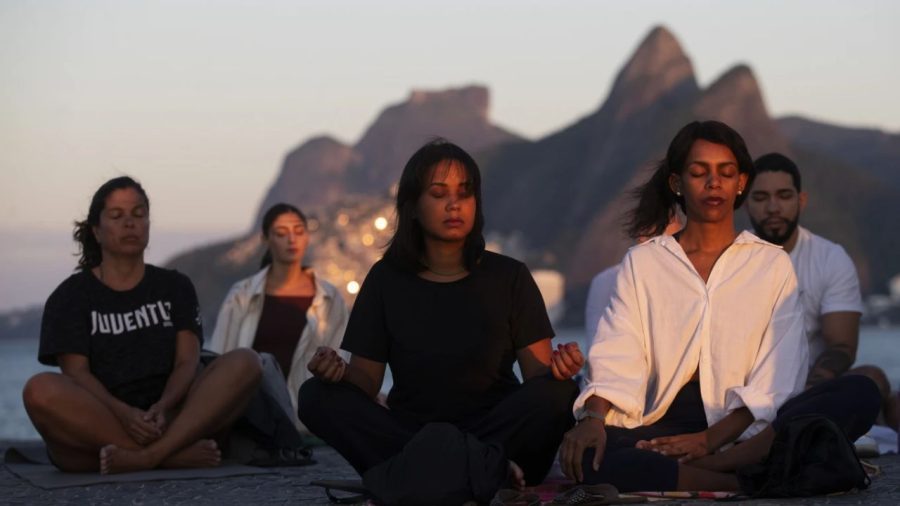
While popular self-care practices such as 05:00 meditation sessions and icy winter swims can require significant time and commitment, research suggests that simple activities lasting only a few seconds can provide meaningful mental health benefits, reports BBC.
Eli Susman, author of Micropractice, says some effective exercises can be completed in just half a minute.
Laughter yoga may ease anxiety
Laughter yoga is one such micropractice. It involves deliberately producing laughter without depending on humour or jokes.
A typical session begins with breathing exercises, followed by guided fake laughter, which can eventually turn into genuine laughter.
Natalie Van der Wal, a researcher at Delft University of Technology in the Netherlands, conducted a comprehensive meta-analysis that found non-humorous laughter to be approximately twice as effective as humour-related laughter in reducing depression and anxiety.
Van der Wal also noted that laughter yoga can help calm the nervous system while making it easier for people to develop social connections and friendships.

To practise laughter yoga, people place their hands on their stomach, take three deep breaths and begin fake laughter. They can optionally say “hi hi hi, ha ha ha”, gradually increasing the volume before ending with a deep breath and reflecting on gratitude.
Practising with a partner can also make the exercise more engaging, with participants imitating each other.
‘Micro yoga’ can ease screen-related strain
For people who spend long periods sitting in front of screens, Susman highlights mindful stretching, which he calls “micro yoga”.
The practice addresses the hunched posture associated with screen-based work, helping to ease neck tension and improve overall posture.




Research indicates that stretching for just 15 to 30 seconds every 15 minutes can increase workplace productivity by around 15 per cent.
Combining mindful stretching with deep breathing and mindfulness can provide additional benefits in relieving psychological distress, while also reducing burnout and medical errors.
The exercise involves interlacing the fingers behind the back and extending the arms downwards while gently lifting the chest during an inhale. The stretch is then softened during an exhale and repeated for two to three slow breaths.
Health experts advise people to seek medical advice before beginning new exercise routines because of the physical risks involved.
Deep breathing increases alpha and theta waves
Mindful breathing exercises can calm the nervous system by activating the parasympathetic nervous system, commonly known as the “rest and digest” state. This helps suppress the fight-or-flight response and reduce stress, depression and anxiety.
A study led by Amit Kumar, a researcher at the University of Naples Federico II in Italy, found that taking three slow, deep breaths increases brain alpha waves, which are associated with calm and focused attention, as well as theta waves, which are linked to deep relaxation.
Kumar recommends using the technique throughout the day, including in the office before an important meeting, to prevent stress from building up. However, people experiencing severe stress may need more than 30 seconds of breathing exercises.
The technique involves sitting comfortably with the eyes closed and taking three 10-second deep breaths. The exhalation should be longer than the inhalation, while attention is focused on the flow of air into the lungs.
Self-soothing touch lowers cortisol
Research by Susman and his colleagues found that a 20-second “self-soothing touch” exercise can produce lasting psychological benefits.
In their study, participants placed their hands over their heart and stomach while directing kind thoughts towards themselves. They recorded significantly lower levels of the stress hormone cortisol than participants in a control group.
A follow-up study published recently by Susman found that people who practised the technique more frequently experienced sustained improvements in self-compassion six months later.
The exercise involves placing the hands over the chest or upper arms and focusing on warmth and gentle pressure while engaging in compassionate self-reflection.
Making mindful breaks part of daily life
Van der Wal said people do not need to try every technique. Instead, they can choose practices that suit their lifestyle and the amount of practice they need.
Mindful breaks can also be incorporated into everyday activities, including walking and washing up, allowing people to manage stress throughout the day.
The findings were reported by Melissa Hogenboom, a senior health correspondent at the BBC and author of Breadwinners and The Motherhood Complex.
Hogenboom also writes the Health Fix newsletter and designs courses including Live Well For Longer and Six Steps to Calm. She said she had personally found laughter yoga beneficial for maintaining her daily wellbeing.