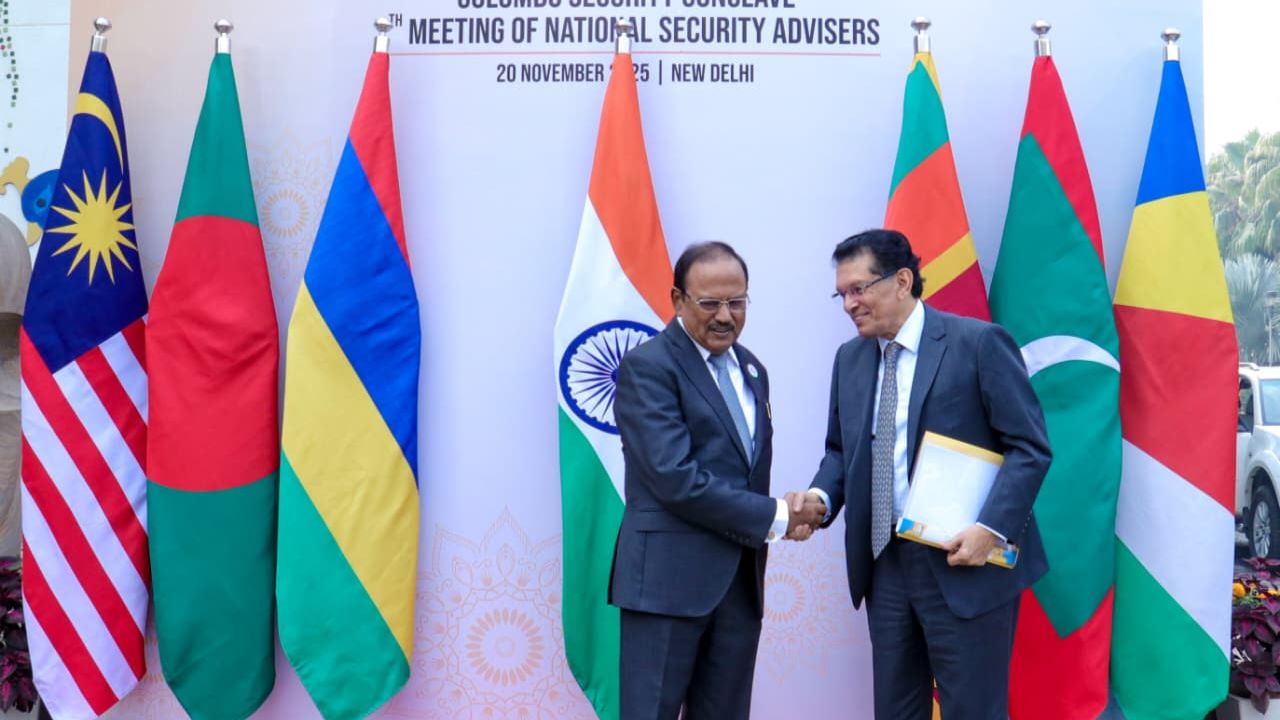

Security, politics, and open communication dominated the meeting between the national security advisers of Bangladesh and India in New Delhi on Wednesday.
Both sides used the opportunity to spell out their positions: Dhaka reassured Delhi of its commitment to safeguarding India’s security interests, while India expressed concern over evolving regional dynamics and the possibility of any strategic realignment by Bangladesh that could affect its security, according to sources in both capitals.
The meeting between Khalilur Rahman and Ajit Doval—both trusted by their respective leaderships—was seen as an important moment to exchange views, express concerns, seek assurances, and shape the tone for future engagement.
The discussion took place just days after the International Crimes Tribunal sentenced to death ousted prime minister Sheikh Hasina and former home minister Asaduzzaman Khan Kamal—believed to be in Kolkata. It was also the highest-level policy engagement between the two countries since Chief Adviser Mohammed Yunus and Indian Prime Minister Narendra Modi met in Bangkok in April.

Rahman reached the Indian capital on Tuesday to attend the Colombo Security Conclave NSA-level meeting. During his bilateral meeting with Doval, he also invited the Indian NSA to visit Bangladesh, according to a press release from the Bangladesh High Commission in New Delhi.
Security concerns
Bangladesh generally views its relationship with India through a development lens, while India approaches Bangladesh primarily from a security perspective.
“Security remains India’s foremost concern, and that issue clearly surfaced during the discussion,” said one source, adding that Delhi specifically raised apprehensions over Dhaka’s recent efforts to expand military engagement with Pakistan.




“Any security realignment—let alone military engagement with Pakistan—is a red flag for India. Dhaka reassured Delhi that it would not take any step detrimental to India’s security interests. Bangladesh also proposed deeper engagement between the two defence establishments.”
Another source said Delhi also conveyed its concerns about the growing visibility of radical forces in Bangladesh, believing such developments could pose risks to India’s internal security.
India for an inclusive election
Indian Foreign Secretary Vikram Misri has publicly stated that New Delhi wants a free, fair, inclusive, and participatory election in Bangladesh. Analysts interpret this as a signal that India does not want the Awami League excluded from the political arena.
The fall of the Sheikh Hasina government last year disrupted the long-standing political duopoly in Bangladesh. Jamaat-e-Islami—banned during Hasina era—has since re-emerged, alongside its student wing, Islami Chhatra Shibir.
A diplomatic source noted that India has traditionally enjoyed strong ties with the Awami League and views the party as a stabilising force capable of countering radical elements that could threaten India’s security.
Open communication
Both sides agreed on the need for open and consistent communication to avoid misunderstandings and reduce tensions, another source said.
“There must be reliable channels of communication to prevent confusion and misinterpretation,” the source added.
A former diplomat observed, “Previously, the two top leaders had a hotline and communicated directly. Alongside that, robust engagement at the level of foreign ministers and foreign secretaries is essential for exchanging views and clarifying positions.”