
The 1980s and 1990s were decades filled with fantasy, sincere emotions, and the tranquil beauty of a life untouched by modern technology. It was a time unlike any other – perhaps impossible, and even unfair, to compare with the present.
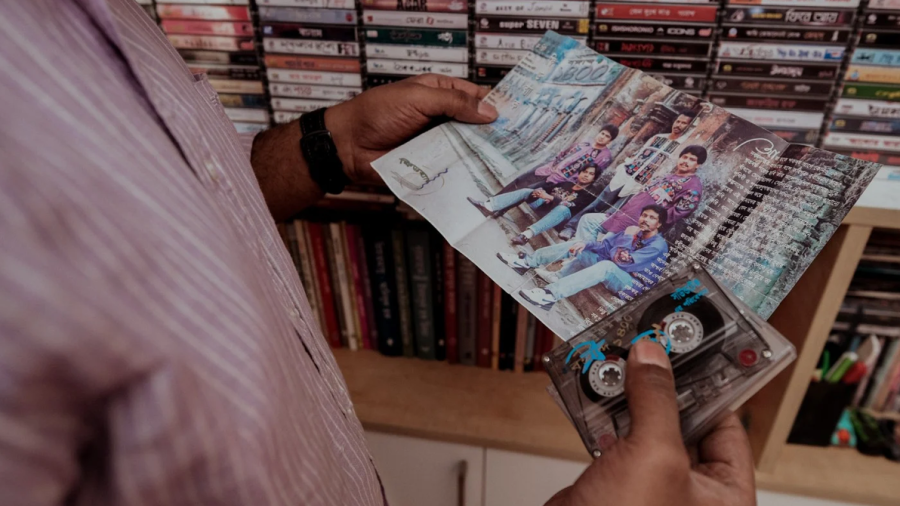
Life had a different rhythm then. We listened to songs and memorable movie dialogues on audio cassettes, collected picture cards, wrote heartfelt letters under the glow of a lantern, built friendships through pen-pal correspondence, and gathered around 12-volt battery-powered cassette players. These simple moments defined the emotional landscape of middle-class life. Those two decades were among the most precious chapters of our lives – not merely memories, but emotions frozen in time.
If the 1960s and 1970s can accurately be termed the diamond age of music, then the 1980s and 1990s unquestionably signify Bangladesh’s own golden era of melody. Those were not just two ordinary decades in musical history; they were an age where melodies carried poetry, and every song resonated with genuine human emotion.
Today, amid a flood of hip-hop tracks, remixes, and algorithm-driven hits, the songs of those decades continue to offer a soothing sense of comfort. Why do they remain timeless? Why do compilations from the ’80s and ’90s continue to feature among the most sought-after on YouTube and Spotify? To answer those questions, we must travel back to those unforgettable years.
Unlike most of today’s music, often shaped by auto-tune, computers, and AI-assisted production, the songs of the 1980s and 1990s were created in a completely different way. They relied on live orchestration, where harmoniums, violins, flutes, tablas, sitars, and guitars blended seamlessly to create unforgettable melodies. Gifted composers crafted tunes that spoke directly to the human heart, leaving an emotional imprint that persists.

Equally striking were the vocalists who imbued those tunes with their essence. Whether it was patriotic songs, modern Bangla music, pop, film soundtracks, or band music, every genre was elevated by extraordinary vocal performances.
Legendary artists such as Sabina Yasmin, Runa Laila, Shahnaz Begum, Ferdousi Begum, Abdul Hadi, Abdul Jabbar, and more had already secured their places in musical history. They were followed by a new generation of immensely talented performers, including Andrew Kishore, Kumar Bishwajit, Tapan Chowdhury, M.A. Shoaib, Shubhro Dev, Ayub Bachchu, James, Hasan, Milu, and many others who dominated those two decades with their unforgettable voices.
In the pop music scene, Nazma Zaman, Pilu Momtaz, and Saba Tani enjoyed tremendous popularity. I have deliberately left out the names of the band artists – not because they were any less important, but because they deserve an article of their own. They were the idols of a whole generation. Their popularity was phenomenal, and almost every concert they performed was packed to capacity, filled with energy, excitement, and unforgettable memories.



The wave of music from that era did not stop at Bangladesh’s borders. At the same time, Indian singers such as Kumar Sanu, Udit Narayan, Sonu Nigam, Anuradha Padwal, Alka Yagnik, Kavita Krishnamurti, Kabir Suman, and others were equally cherished by Bangladeshi audiences. Their distinctive voices and heartfelt performances resonated deeply with listeners across the country.
Those days are now long past. We experienced that music through cassette players and CDs, and perhaps that tangible link made each song more intimate. The emotional resonance those melodies once possessed is seldom present in contemporary music. Many modern songs are forgotten almost as quickly as they are heard.
The 1980s and 1990s likewise saw a flourishing viewership for English-language melodies in Bangladesh. Even today, songs like Madonna’s ‘Like a Virgin’ and ‘La Isla Bonita’, or Michael Jackson’s ‘Black or White’, instantly transport us back in time. The music of Cliff Richard, Richard Marx, Laura Branigan, George Michael, and later Britney Spears remains etched in our memories. Ironically, while we can still recall those artists and their albums with ease, many of us struggle to remember the names – or even a single album – by today’s singers.
That does not inherently suggest contemporary artists are devoid of talent. The genuine difference resides elsewhere. Modern music often depends heavily on technology and digital production, sometimes at the expense of emotion and meaningful songwriting. The lyrics frequently lack the depth and poetic beauty that once defined popular music. Yet this generation is blessed with many gifted singers. Regrettably, their voices are not consistently utilised to their peak potential. In many cases, the race for instant fame encourages them to choose songs that prioritise commercial success over lasting artistic value.
During those years, tremendous importance was placed on songwriting – something that is increasingly rare today. Legendary lyricists crafted songs in which every line carried a story, a poem, or a beautiful metaphor. From the simplest rural expressions to sophisticated poetic imagery, each lyric was carefully woven into something timeless. Love, heartbreak, loneliness, and the stubbornness of the human heart were portrayed with such simplicity and emotional depth that ordinary listeners could effortlessly see reflections of their own lives in those songs.
Those songs were not only meant to be heard – they were meant to be experienced visually as well. When Runa Laila performed ‘Shilpi Ami Tomaderi Gaan Shonabo,’ or when Shakila and Tapan sang ‘Tumi Amar Prothom Shokal,’ they ceased to be mere songs and became unforgettable performances. They proved that music is not only something to listen to but also something to watch and feel. Even today, those extraordinary performances replay across the screen of our memories like scenes from a cherished film.
The magic extended to the silver screen as well. The contrast between the hero’s rugged, larger-than-life presence and the heroine’s graceful dance, the irresistible charm of the classic ‘chocolate boy’ image, and the unforgettable expressions of actresses such as Shabnur, Mousumi, Shabnaz, Diti, and Champa brought those songs close to life. Music was an integral part of a film’s narrative, never inserted merely for entertainment. Patriotic songs could bring tears to the eyes, while modern and band music captured the vibrant spirit of youth. People treasured those songs for years, collecting cherished cassettes that became part of their lives.
Today, songs often arrive with great fanfare only to fade away within a few months after release. While the melodies of the 1980s and 1990s were genuinely everlasting. Those melodies continued to remind us of our childhood, our first love, rainy afternoons by the window, and numerous nights filled with laughter alongside companions. No matter how advanced technology becomes, songs that evoked warmth and emotional attachment are difficult to recreate. That is precisely why the music of those two decades remains immortal in our hearts.
In my view, it was the remarkable music created in four languages – Bengali, Hindi, Urdu, and English – that elevated the 1980s and 1990s into a truly extraordinary musical era. Perhaps that is why, even today, listeners continue to search for and revisit the songs of those decades on YouTube.
The writer is a freelance journalist