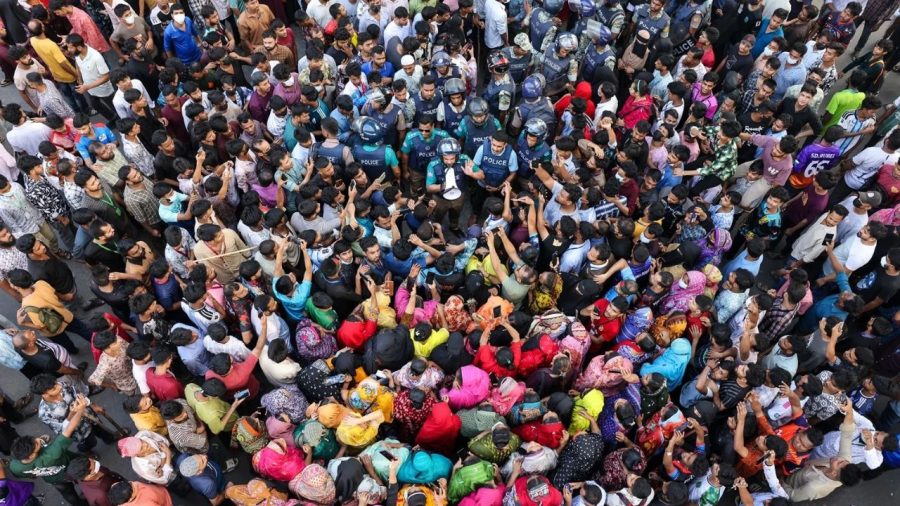



Questions are mounting over how much influence the leaders of garment workers’ organisations, who represent them in Dhaka or negotiate with the government, actually have over workers on the factory floor.
For years, questions have persisted over who runs these organisations and what purpose they serve, as their calls to launch or end movements often appear to have little impact on the ground.
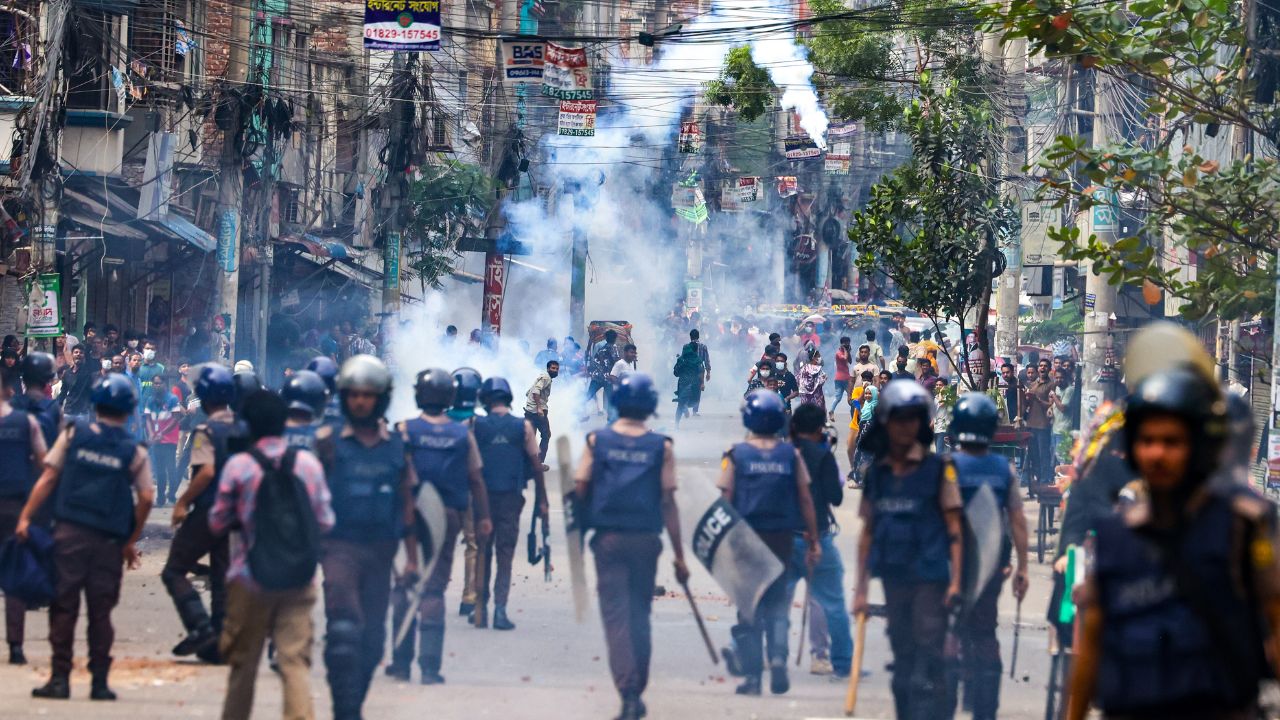
Garment workers are now staging widespread protests in Savar, Ashulia, Gazipur and Narayanganj, as well as Mirpur in Dhaka, demanding a minimum monthly wage of Tk30,000.
Meanwhile, the government has formed the Minimum Wages Board, while Home Minister Salahuddin Ahmed and government representative Shamsur Rahman Shimul Biswas have held meetings with factory owners’ and workers’ organisations. Despite assurances from workers’ representatives that they would call off the movement, the unrest has continued.
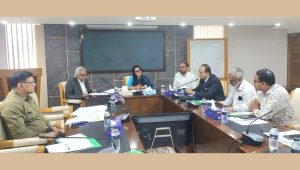
Last Monday, 38 representatives of workers’ organisations met Home Minister Salahuddin Ahmed at the Secretariat. Earlier, representatives of the Bangladesh Knitwear Manufacturers and Exporters Association (BKMEA) and the Bangladesh Garment Manufacturers and Exporters Association (BGMEA) met the minister and called for factory security to be ensured.
On Tuesday, Shimul Biswas also met representatives of several organisations at Ahsania Mission. Following that meeting, participating leaders again urged workers to remain calm, but their appeals have yet to bring about a change on the ground.

BKMEA President Mohammad Hatem told TIMES, “As the situation has not normalised even after workers’ organisation leaders met the government, it is presumed that those organisations or leaders have no contact with or control over the workers.
“Many in the workers’ organisations are also instigating this movement behind the scenes to put the government in a difficult position and destabilise the garment sector,” he alleged.
BGMEA Vice-President Shehab Udduza Chowdhury said: “Senior leaders of workers’ organisations have said there will be no movement. But it is happening anyway. The government is making sincere efforts to control the situation. Even so, who is carrying out vandalism and arson in factories in the name of the movement demands investigation.”



He also questioned how much influence workers’ organisations actually have at the factory level.
Abul Hossain, president of the Textile Garments Workers Federation, who attended the meeting at the home ministry, said the unrest could have been avoided if the government had formed the wage board earlier.
“A third party has now infiltrated the movement. They are trying to take the movement in a different direction. Workers are eager to return to work,” he said.
Asked who the alleged infiltrators were, he said, “It is not possible for us to identify who are real workers and who are infiltrators. It is the government’s responsibility to find the infiltrators.”
Nazma Akter, president of the Sommilito Garments Sramik Federation, who also attended Monday’s meeting, said workers’ organisations represented a range of political affiliations and viewpoints.
“There are many workers’ organisations. Some of them belong to the BNP, others to the Awami League. People of various political ideologies and different positions are associated with these organisations. Each organisation and leader is carrying out the movement from their own position,” she said.
She said it was not possible for one person to control so many organisations and people with differing views.
“Everyone’s statements and programmes are different. I always try to carry out the movement peacefully,” she added.

Moshrefa Mishu, president of the Garments Sramik Oikya Forum, said the government had not identified the alleged third party it claimed was involved in the movement.
“Although the government says there is a third party in the movement, it is not disclosing their names. The present government also wants to control workers in the same way as the Awami League government did. That is why workers are on the streets to realise their demands,” she said.
Bangladesh’s garment sector has 54 registered industrial federations, or central organisations, and more than 1,000 registered basic trade unions working to uphold workers’ rights and demands.
Among the notable organisations are the National Garment Workers Federation (NGWF), Bangladesh Garment Sramik Trade Union Kendra (GWTUC), Bangladesh Garments and Industrial Workers Federation (BGIWF) and Sammilito Garments Sramik Federation.
Professor Md Ismail Hossain of the Department of Social Work at Shahjalal University of Science and Technology, said, “Most of these organisations are influenced by one party or another. Some work in the interests of the government, some of the owners, while others serve different interests.
“As a result, they have failed to earn the trust of ordinary workers. This is why, when protests begin, workers do not respond to their appeals, even when these organisations make repeated requests to them,” he told TIMES.