


Scores of academics and students at public universities in Bangladesh have been arbitrarily punished due to their alleged affiliation with deposed prime minister Sheikh Hasina and her Awami League party, Human Rights Watch (HRW) said.
According to a HRW press release, any actions to punish individuals for their peaceful beliefs or without guaranteeing due process violate rights to freedom of expression and association protected under international human rights law, while reproducing abusive attempts under previous administrations to control campus political expression.
“Bangladesh has a long history of political debate in its universities, and only autocrats should fear such discourse, not a government formed following student protests,” said Meenakshi Ganguly, deputy Asia director at Human Rights Watch.
“Bangladesh needs to turn the page on the repression of the past, not repeat it whenever the ruling and opposition parties trade places”.
‘Widespread sanctions’
The sanctions, which include dismissals, suspensions, and teaching restrictions, centre on allegations that academics were complicit in violence by the Awami League government before it was toppled by student-led protests in 2024, engaged in “subversive” activities supporting her party, or discriminated against students wearing Islamic clothing.
Hundreds of students, allegedly Awami League members and supporters, are also being expelled, denying them their educational rights.
The rights organisation interviewed over a dozen affected teachers, examined university correspondence, and reviewed and analysed a televised discussion and a social media video.
The findings also confirmed student expulsions, the cancellation of examination certificates, and barring students from campus.

Reports from media in August 2026 indicate that at least 404 additional academics across 22 universities have been put under investigation for belonging to a pro-Awami League Telegram messaging app group, read the release.
An unidentified professor at a public university said that university authorities are targeting Awami League-aligned teachers who did not support the 2024 student movement with false allegations, preventing them from taking classes or conducting research work.
The political shift follows a police crackdown on protests in July and August 2024 that resulted in hundreds of deaths, forcing Sheikh Hasina to flee and paving the way for BNP to return to power following an election in February 2026. The interim government criminalised Awami League activities in May 2025.
HRW noted that Bangladeshi universities have for years been run in a partisan manner, employing and promoting academics close to the ruling party while acting against supporters of other political parties.
Impact on campuses
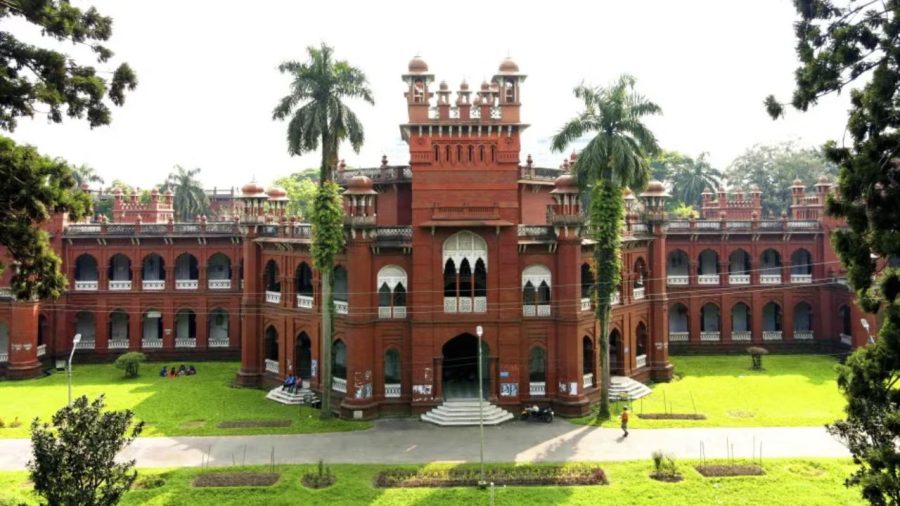
In total, over 20 public universities have been affected by these measures, according to HRW.

At Dhaka University, the country’s most prestigious university, newly appointed authorities ordered 44 academics to stop work and restricted teaching assignments for another 25 starting in September 2024, without transparent or credible disciplinary investigations.
Six academics were subsequently formally “temporarily suspended” following inquiry committee findings, and similar investigations have begun against another 14 teachers.
In March 2025, Dhaka University temporarily suspended 126 students and withheld their examination certificates after a fact-finding committee cited photographic, video, or social media evidence of attacks on peaceful protesters.
Police cases allege another 277 Awami League students were involved; although authorities have taken no formal action against them, students and teachers confirmed they stay away from campus for fear of arrest, while the university has provided no forum for them to respond to allegations.
At Bangladesh Agricultural University in Mymensingh, authorities dismissed, suspended, or removed 12 academics and demoted or restricted the activities of another 34 after establishing an “investigation commission” that appeared not to comply with legally established disciplinary processes.
At Sher-e-Bangla Agricultural University in Dhaka, 12 academics were temporarily suspended and 10 removed from academic activities following inquiry proceedings that teachers said they were barred from attending, in an apparent breach of academic discipline law.
Another 85 teachers were denied promotions.
Disputed allegations
Individual cases illustrate the impact of these measures.
Professor Mashiur Rahman, from the Dhaka University sociology department who had been deputed as a vice-chancellor at another university since 2017, was told to stop all academic and administrative work on 25 September 2024.

Allegations against him included claiming during a July 2024 television discussion that the movement was “illegal, baseless and irrational,” and inciting genocide at a prime minister’s house meeting on 3 August 2024.
However, HRW reviewed a video of the broadcast showing no such comments, while Rahman explained that the gathering was an obligatory University Grants Commission meeting for all vice-chancellors, adding that no evidence was provided to support the allegation, which he denies.
University authorities recommended his permanent suspension on 31 August 2026, which he is appealing.
At Bangladesh Agricultural University, sanctions against teachers centred on participation in a pro-Awami League march on 4 August 2024, the day before Hasina fled, which a university commission of inquiry called a “terrorist” procession.
However, a video posted on Facebook by the Bangladesh Agricultural University Journalists’ Association on 4 August 2024 and analysed by HRW showed campus demonstrators chanting slogans with no visible direct confrontations.
Professor Purba Islam, from the department of pharmacology, was suspended on 4 August 2025 for alleged slogan-chanting in support of oppression and genocide under Sheikh Hasina, though video evidence showed no sign of her shouting slogans.
Similarly, Professor Yahia Khandoker, from the university’s department of animal breeding and genetics, was suspended on 4 August 2025 after being accused of taking a position in favour of mass killings.
Khandoker said he was with his family in Dhaka throughout the protest period and was not at the university. Although the High Court has stayed his suspension, the attorney general’s office is appealing the order.
Tribunal convictions
In separate proceedings, the country’s International Crimes Tribunal convicted three academics on charges of crimes against humanity, placing two in prison, while another academic awaits trial.
“Any acts of revenge against people who peacefully supported the previous government would show that freedoms of speech and assembly are not protected,” Ganguly said. “Universities should be places where people are free to express their views, not places where support is enforced for the government of the day.”