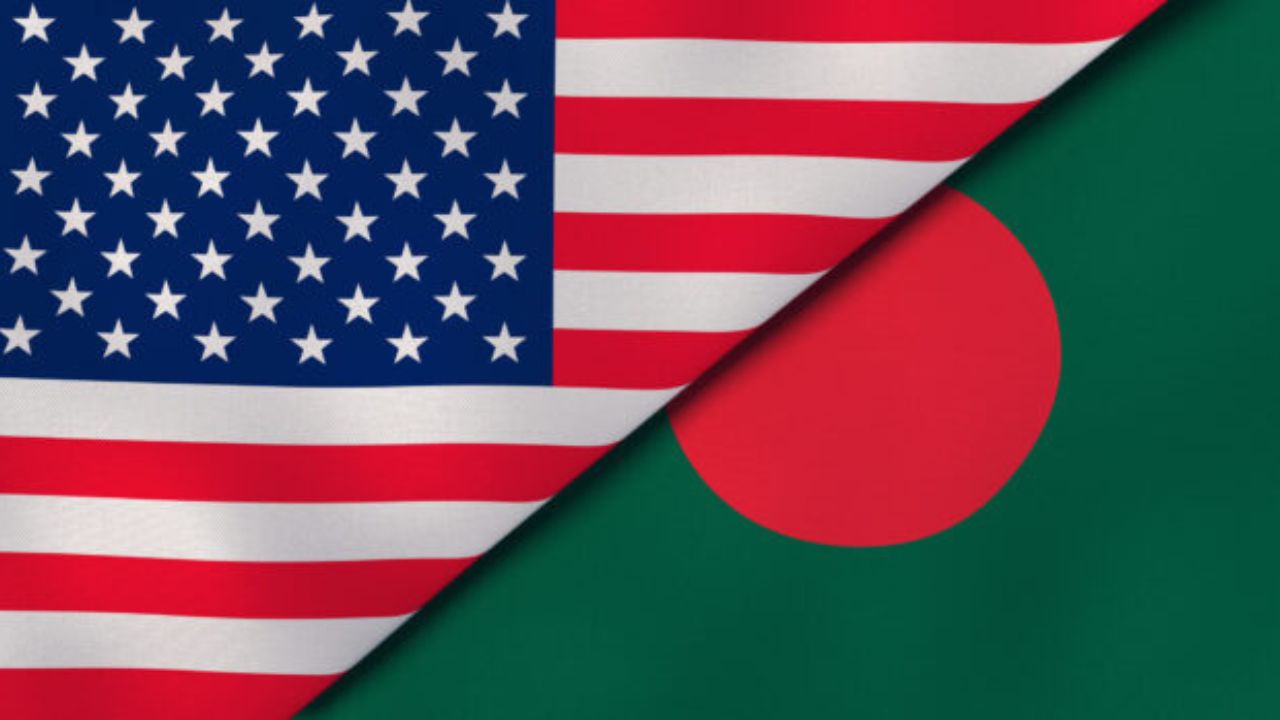



The stunning Democrat victory in the US midterm elections, which handed the party control of both the Senate and the House of Representatives, could have significant global and regional implications, including for Bangladesh, as it weakens President Donald Trump’s political position, creating fresh opportunities for Dhaka to engage with both sides of the political aisle.
The election outcome is expected to limit Trump’s ability to pursue his domestic and international policy agenda without congressional scrutiny.
For countries that have faced uncertainty over his administration’s trade, foreign and economic policies, the shift in congressional power could offer some breathing space.
However, the transition will not take place immediately. The Republicans will retain their existing congressional majorities until the newly elected lawmakers take office in January, leaving the administration with two months to pursue its agenda under the current political arrangement.
Diplomatic and political observers believe Bangladesh should use the changing political landscape to strengthen its engagement with both Democrats and Republicans, particularly over the Agreement on Reciprocal Trade (ART) signed with the Trump administration.
Former Bangladesh ambassador Mahbub Hassan Saleh said Dhaka should reach out to leaders of both parties and build bipartisan relationships rather than relying primarily on the party in power.
“We signed the Agreement on Reciprocal Tariff. Now Bangladesh can explain to Democrat leaders why the deal is unfair and urge them not to support it,” he observed.
Saleh believes the Democrat victory provides Bangladesh with an opportunity to raise concerns about the agreement.

He also stressed the importance of developing political connections across party lines, noting that the Democrat Party could return to the White House in the next presidential election.
The election outcome, therefore, offers Dhaka an opportunity to reassess its engagement strategy with Washington and cultivate relationships with lawmakers who could influence future US policy towards Bangladesh.
Bangladeshi diaspora’s role
The Bangladeshi diaspora in the United States also participated actively in the election, with many casting their votes in favour of Democrat candidates.
Mohammed Shamim, a Bangladeshi-American who has lived in the United States for more than 25 years, said diaspora voters appeared more enthusiastic about participating in this election than in previous midterms.
He identified economic hardship, concerns about democratic institutions and Trump administration’s immigration policies as three major factors influencing voters’ decisions.




According to him, the economic consequences of the Iran war and the wider Middle East conflict have pushed up the prices of essential commodities, increasing financial pressure on ordinary Americans.
Shahim contends a majority of ordinary US voters, including Bangladeshis, perceive the way Trump is governing the country to be a threat to democracy and the voters said ‘no’ to his actions.
Global and regional implications
The Democrat victory has implications beyond Washington, particularly for countries that
had to navigate uncertainty arising from Trump’s foreign and economic policies.
His administration’s unilateral decisions on tariffs, trade, immigration and international conflicts have created challenges for several countries, while questions over the consistency of US policy have affected confidence among some international partners.
The election result, however, demonstrates that the US political system retains institutional mechanisms through which voters can influence the balance of power and constrain the administration.
Saleh maintains the Democrat takeover of Congress could restore greater political scrutiny and institutional checks on the administration.
Sanity will be back in Congress, but the US president has the authority to act on his own up to some extent, he added, with the caution that the president would retain considerable executive powers, including the authority to veto legislation passed by Congress.
A presidential veto could make it difficult for lawmakers to advance legislation opposed by the White House, particularly if Democrats do not have the two-thirds majority required to override it.

Consequently, while the new congressional balance could restrict Trump’s legislative agenda, it would not necessarily prevent him from pursuing policies through executive orders and other presidential powers.
For Bangladesh, the implications are particularly important in trade and regional diplomacy.
The ART agreement remains a major issue for Dhaka, as its terms could affect the country’s export competitiveness and economic relationship with its largest export market.
The change in congressional control provides an opportunity to engage Democrat lawmakers and explain Bangladesh’s concerns over the agreement.
At the regional level, Saleh believes Trump’s relationships with India and Pakistan are likely to remain largely unchanged over the next two years.
Trump has maintained a functional relationship with India while also pursuing warm ties with Pakistan. The Democrat victories in Congress are unlikely, by themselves, to bring about an immediate change in these bilateral relationships.
Nevertheless, the new political environment could increase congressional scrutiny of the administration’s regional policies, creating additional channels for diplomatic engagement.
For Dhaka, the immediate priority will be to use the transition period to establish contacts with incoming Democrat lawmakers while maintaining its existing relationships with Republicans.
The midterm results may not fundamentally alter Washington’s foreign policy overnight, but they have changed the political dynamics in which that policy will be pursued.
Bangladesh now has an opportunity to turn that shift into a broader, bipartisan diplomatic engagement.