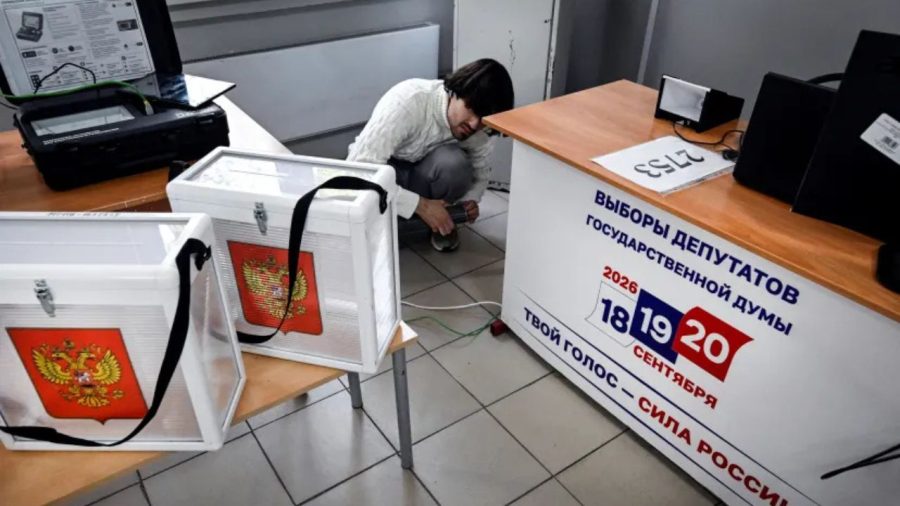

Russians are heading to the polls from Friday to Sunday to elect members of the 450-seat State Duma, marking the country’s first parliamentary election since launching its full-scale invasion of Ukraine in 2022.
The three-day voting period encompasses 111 million eligible voters, local elections, governor contests in 11 regions, and legislative votes across 39 regions. For the first time, voting is also being conducted in four Ukrainian territories occupied and claimed annexed by Moscow, a move rejected by Ukraine as illegal, reports Al Jazeera and AP.
Electronic voting has also been made available across the country.
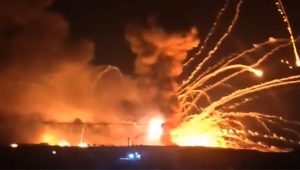
The election comes over four years into the conflict amidst mounting economic pressure and domestic disruption. Summer long-range Ukrainian drone strikes targeted oil refineries, warehouses, and infrastructure deep inside Russia, bringing the war closer to everyday citizens.
Although heavy military spending initially boosted economic growth, the national economy has since slowed, forcing the government to raise taxes and domestic borrowing to manage a widening budget deficit.
Elite concerns over potential instability surfaced when Andrei Klepach, chief economist at state-owned VEB.RF bank, warned that mounting costs in a war of attrition could trigger a social crisis, resulting in his immediate dismissal the day after his comments were published.
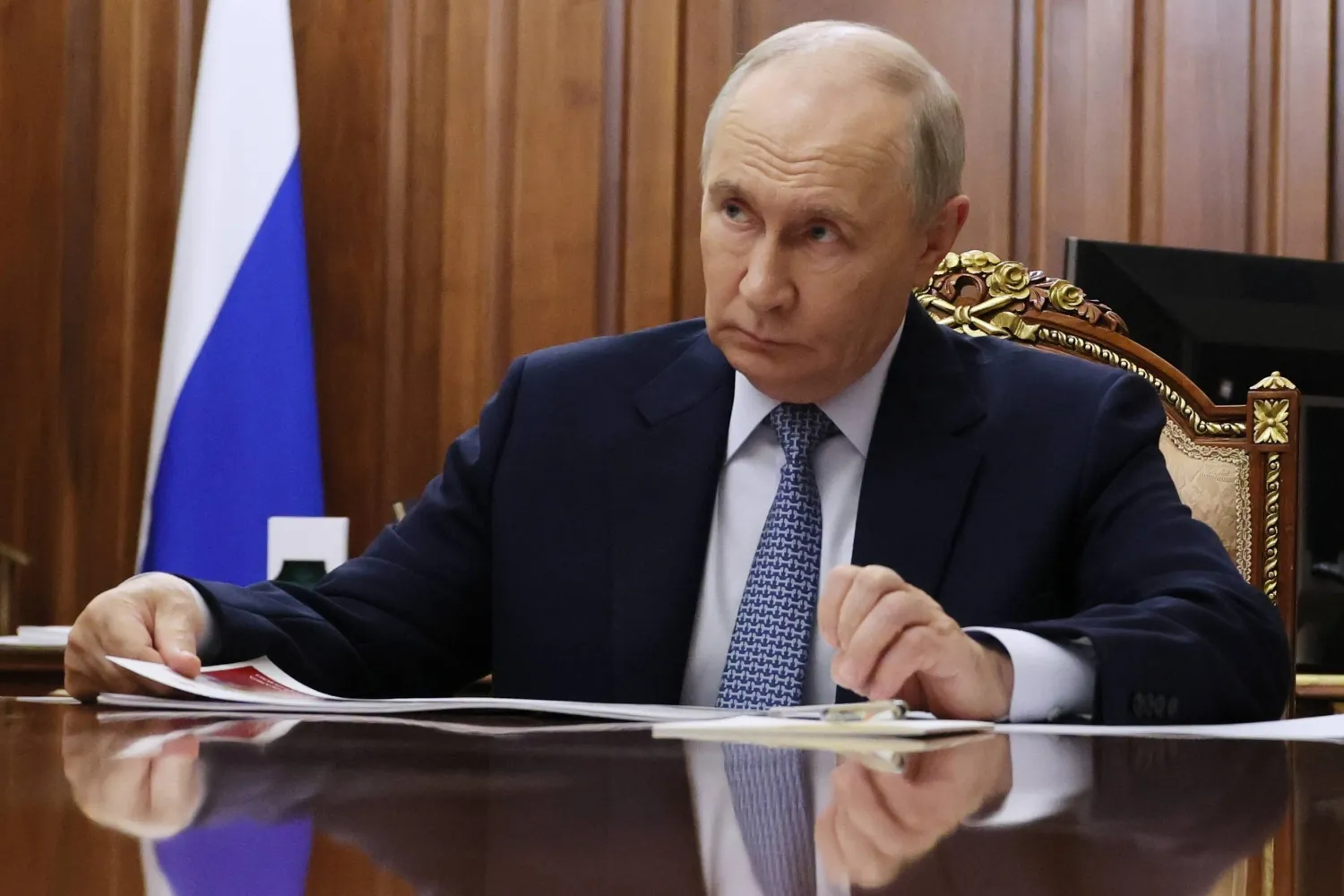
President Vladimir Putin maintained that the economy can withstand the pressure, accusing Ukraine of opening a “Pandora’s box” and threatening a major response.

Moscow subsequently escalated missile and jet-powered drone attacks against Ukrainian cities to exploit air-defence shortages, while targeting Black Sea ports to disrupt agricultural exports.
Military experts warn that Russian battlefield losses remain high while volunteer recruitment has declined, raising speculation regarding another mobilisation following the 2022 draft of 300,000 reservists.
President Putin dismissed claims by Ukrainian President Volodymyr Zelenskyy about a post-election draft as “nonsense.”
During a Kremlin meeting on 5 September with US envoys Steve Witkoff and Jared Kushner, followed by a phone call with US President Donald Trump, President Putin reiterated that Russia holds the advantage on the battlefield.
Sidelining anti-war opposition and dissent
To secure the electoral environment, authorities moved to suppress dissent and restrict political competition. In July, the Central Election Commission initially approved 11 parties, including Yabloko, the only registered political party openly opposed to the war.
However, following an appeal by the nationalist Motherland party, Russia’s Supreme Court ordered Yabloko’s removal from the party-list ballot, arguing its anti-war position violated territorial integrity.
Authorities also blocked many Yabloko candidates from single-constituency races. Carnegie Russia Eurasia Center analyst Tatyana Stanovaya noted officials feared the campaign could turn into a public dispute over peace and the war.
Prominent anti-war figures face severe imprisonment or exile. Maxim Kruglov, deputy chairman of Yabloko, was sentenced in June to seven years in prison for spreading false information about the military.
Court officials in Pskov sentenced another Yabloko member, Lev Shlosberg, to over 11 years in prison for speaking against the war. Meanwhile, liberal politician Boris Nadezhdin, who sought to challenge President Putin in 2024, fled Russia last month after being designated a “foreign agent.”
Systemic parties and the Duma landscape
Half of the Duma’s 450 seats are filled through party lists and half in single-constituency races.
Governing party United Russia, formed in 2001, won over two-thirds of seats in 2021 and is expected to retain its dominant majority alongside “systemic opposition” parties that vote in sync with the government.
Among these, the Communist Party – led by Gennady Zyuganov alongside Deputy Chairman Dmitry Novikov – could reflect voter anger over economic hardship if it finishes second.
The ultranationalist Liberal Democratic Party and social-democratic A Just Russia both staunchly support the war.
The New People Party, founded in 2021 for younger voters and technocrats, is backed by some pro-peace Kremlin figures as a legal avatar for anti-war voters following Yabloko’s removal, according to analyst Bratersky.
Smaller entities on the ballot include the Communists of Russia, Party of Pensioners, Green Party, Party of Direct Democracy, and Motherland Party.
Kremlin objectives and political legitimacy
With President Putin facing no immediate challenge, analysts say the Kremlin views the election as a legitimating ritual to demonstrate mass consensus and support for the war.
In an address before voting commenced, President Putin stated that voter resolve would demonstrate that millions stand behind Russian fighters. Analyst Mark Galeotti noted the vote ensures United Russia remains dominant in parliament.
Although past elections faced disputes – including 2011 vote-rigging protests and 2021 fraud allegations – authorities reject claims of manipulation.
Chris Weafer, CEO of Macro-Advisory Ltd., noted that Ukrainian strikes generated a “rally around the flag” effect, maintaining high support in opinion polls. Consequently, the Kremlin remains focused on voter turnout to substantiate claims of broad public backing.