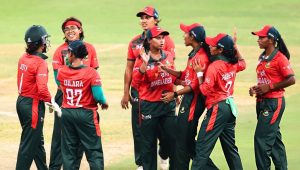
The Women’s Asian Cup kicked off on 1 March in Perth, Australia, with matches also played on 2 March in Gold Coast. Group B fixtures began on 3 March in Sydney, where North Korea defeated Uzbekistan 3–0 at CommBank Stadium in the day’s opening match.
Bangladesh are set to face defending champions China at the same venue roughly three hours later. While China are the reigning champions, North Korea are the highest-ranked team in Bangladesh’s group, showcasing their dominance by scoring three goals within 41 minutes. A victory for Uzbekistan against North Korea could have improved Bangladesh’s chances of reaching the quarter-finals, meaning Bangladesh were closely monitoring the match.
Bangladesh and Uzbekistan will meet on 9 March in Perth, a match effectively acting as an unofficial final for both sides. Neither team is expected to beat China or North Korea, so the winner of this head-to-head fixture could still progress as one of the two best third-placed teams across the three groups.
Following the loss to North Korea, Uzbekistan coach Kotrina Kulbite has turned her attention to Bangladesh.

“As you mentioned, there is a chance to reach the quarter-finals even by finishing third. We certainly want to achieve that. The Bangladesh–Uzbekistan match is very important. We will monitor Bangladesh’s match against China today, but for now, our focus is on our next match,” Kulbite said.
Despite the FIFA ranking gap—Uzbekistan 49th, Bangladesh 112th—Kulbite is not underestimating her opponents. “Rankings do not matter. It is the players’ performances that determine the result. I have confidence in my players,” she added.




Uzbekistan struggled against North Korea, spending most of the match defending deep in their own half. Two of the three goals conceded came from penalties, and their first-choice goalkeeper was forced off due to injury within the first ten minutes.
North Korea dominated possession and attacking play but could not score beyond three goals. The final 49 minutes remained goalless as Uzbekistan maintained a disciplined defensive block.


North Korea will now face Bangladesh on 6 March. Coach Ri Song Ho hinted that breaking down a potential defensive ‘low block’ from Bangladesh could pose challenges. “We want to score goals and will improve our tactics for the Bangladesh match. If necessary, we will adjust our approach to break through their defence and achieve the goals we need,” he said.
Speaking ahead of the Bangladesh clash, Kulbite emphasised that match outcomes are determined on the pitch, not by rankings. “Rankings do not play on the field; players’ performances decide the result. I do not rely on ranking statistics,” she said.
Kulbite also revealed that her team has begun analysing Bangladesh and will finalise preparations after observing their match against China. “In football, lower-ranked teams can often cause upsets. We are keeping our players ready for a competitive contest,” she said.
North Korea forward Myong Yu-jong, who scored a first-half hat-trick against Uzbekistan, credited her team for the performance. “This is not my achievement alone; it belongs to the whole team,” she said after being named player of the match.
With Bangladesh preparing to face China and then North Korea, the 9 March match against Uzbekistan becomes a pivotal opportunity for the Red and Green team to secure a potential quarter-final spot.