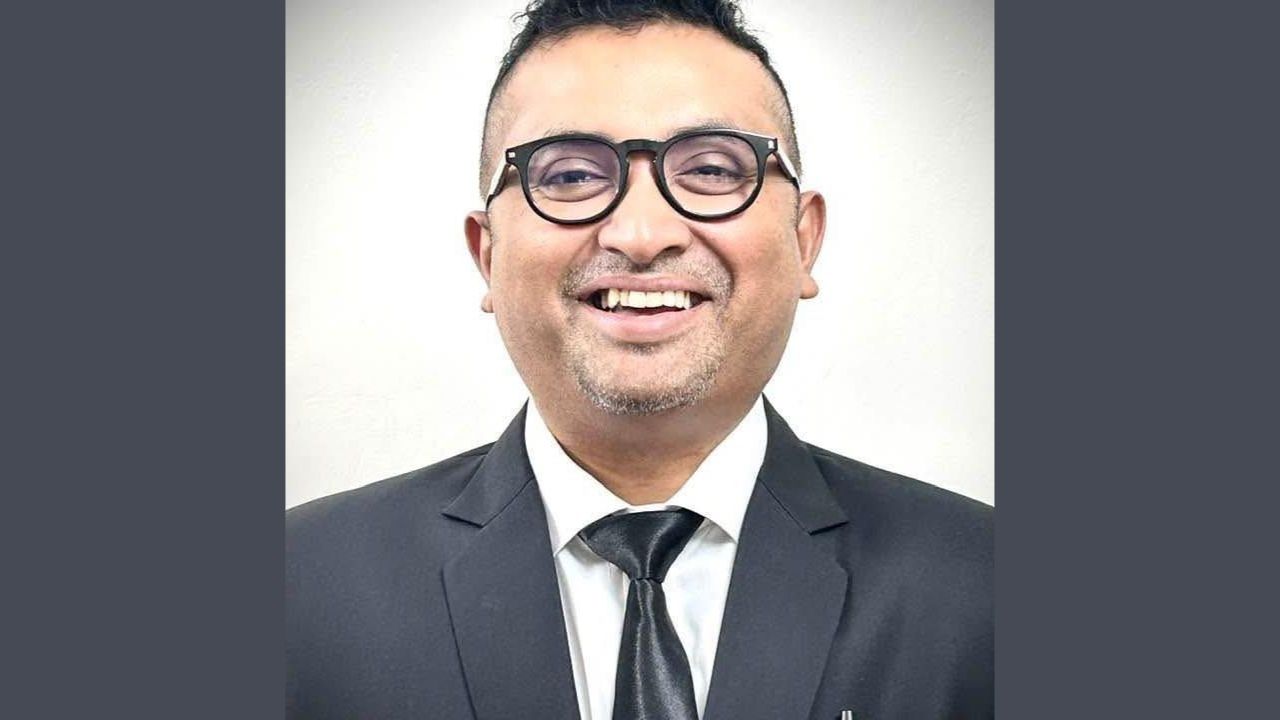



Prosecutor and Special Investigation Officer of the International Crimes Tribunal, Tanvir Hasan Zoha, has been gathering evidence of crimes against humanity committed during the July uprising. A core focus of his investigation has been collecting and analysing digital data and footprints such as phone conversations, photos and video footage related to the crimes. But the perpetrators destroyed or deleted all evidence before fleeing.
Today, the Tribunal will deliver its first verdict in a case filed over crimes against humanity committed during the uprising. The principal accused is ousted prime minister Sheikh Hasina. The evidence recovered by Zoha will play a critical role in establishing the crimes. Ahead of this historic verdict, TIMES of Bangladesh Editor, Special Affairs, M Abul Kalam Azad interviewed him to know how he recovered data that forms the basis of verdict.
You worked closely on this investigation. How did you collect the evidence during the probe?
The officials of the law enforcement agencies and other state institutions destroyed all evidence before escaping. But they could not remove the servers. Backups also remained in the cloud. We extracted the digital and electronic evidence from there.
Such evidence is normally stored in several institutions including Bangladesh Telecom Regulatory Commission (BTRC), National Telecommunication Monitoring Centre (NTMC), Dhaka Metropolitan Police (DMP), Counter Terrorism and Transnational Crrimes (CTTC) Unit and the Detective Branch. For example, NTMC used to record the prime minister’s calls. The call lists of everyone she spoke to were also stored there. These voice files and call lists were deleted from the institution. The situation was similar in the other agencies. We recovered the information by cross-checking and reconstructing the audit logs of these institutions.
Drones and helicopters were used to suppress the movement. The drones have already been seized and submitted to the Tribunal. Their footage has been sent to the CID for examination.
Overall, all call records, audio clips and other data showing the directives issued by the former prime minister as the highest authority—and how officials in various state bodies executed those directives—have been collected and sent to the court.

The evidence shows that the then director general of RAB planned to open fire on protesters from a helicopter. The home minister took this plan. The prime minister approved it as an “innovative idea.” The investigation also found documents indicating that heavy weapons were carried on RAB helicopters.
The chargesheet submitted to the court accuses Sheikh Hasina, her former home minister Asaduzzaman Khan Kamal and the police chief Chowdhury Abdullah Al-Mamun of five types of crimes. How do you assess the rationale behind these charges?
The first charge concerns the former prime minister’s press conference at Ganabhaban, where she spoke of suppressing the protesters with force. The second relates to her directive to use lethal weapons against protesters. Even on the day she fled, members of the law enforcement agencies continued executing that directive—because they still did not know she had escaped.
For this reason, two serious charges were brought against her over the Savar and Jatrabari killings. The court also has video evidence of the six bodies that were burned in Savar.
Many were injured by live ammunition during the movement, alongside those killed. Several of the wounded have become witnesses in this case. They did not see Sheikh Hasina firing directly at anyone, but the investigation authority has submitted evidence proving they were shot under her directive. As proof of her orders, audio recordings exist of her conversations with former minister Hasanul Haq Inu, former mayor Fazle Noor Taposh and then Dhaka University vice-chancellor Professor Maksud Kamal.



Additionally, a former army officer sent an SMS to the prime minister detailing the number of rounds fired from lethal weapons and the resulting casualties. That evidence has also been given to the court.
Do you believe the digital data submitted as evidence is sufficient to prove the crimes?
Digital evidence is used as proof in courts everywhere. The evidence submitted in this case can be proven conclusively through the testimonies of witnesses.
One may ask whether the evidence was fabricated later. The investigation authority has ensured there is no scope for such a question. All data has been examined using advanced software while maintaining international standards. Forensic experts analysed it and provided their assessments.
Moreover, state witnesses have testified that most of the digital evidence is accurate. As an investigator, I believe this evidence is fully sufficient to prove the crimes.azad
But many leaders of the ousted govt are claiming that this evidence was created using AI.
The evidence is genuine. Anyone who wishes to verify it can easily do so—there are digital mechanisms for that. While preparing their reports, renowned international media outlets like the BBC and Al Jazeera also used the services of EarShots and Tech Global to verify the data. They confirmed that the call records were not generated using artificial intelligence.
The former prime minister’s son, Sajeeb Wazed Joy, posted a Facebook status claiming the voice clip was actually an instruction issued during the 2016 Holey Artisan terror attack. But he later deleted the post. This itself shows that he ultimately accepted the voice recording as belonging to the July–August movement period.
I believe that if courts anywhere in the world cross-check the evidence submitted to the International Crimes Tribunal, the result will be the same.
Based on this evidence and witness testimony, you have sought the highest punishment from the Tribunal. Do you believe the highest sentence is possible?
We have uncovered this volume of information and evidence through a difficult phase. We hope the court will take it into account. The prosecutors also expect the highest punishment.
By highest punishment we understand the death penalty. Another option is life imprisonment. Do you think either is possible?
That is for the judges to decide. They will determine what they deem appropriate. We are seeking the maximum punishment. Sheikh Hasina can in no way evade responsibility for several of the charges—there is ample evidence to prove them. For the remaining charges, the digital evidence may not be as strong, so there could be some variation in judgement.
Besides Sheikh Hasina, her former home minister and the former inspector general of police (IGP) are also accused in this case.
The former IGP has become a state witness. The court will consider his sentence. His punishment may be reduced. But that is entirely up to the court.
Another point is that the former prime minister directly issued commands over the head of the former IGP. For this reason, some listened to the IGP and some did not. Essentially, it was the former prime minister who initiated the entire chain of events. Alongside her were the former law minister, adviser Salman F Rahman and former home minister Asaduzzaman Khan Kamal. We have called them the “Gang of Four.”
Former home minister is the second accused after Hasina in the case. He may face multiple types of verdict.