


It was 17 May 1981. The Dhaka airport was drenched in torrential rain. Thousands of people gathered there in the downpour, just to catch a glimpse of her. As Sheikh Hasina emerged from the airport and stepped onto a truck to greet the crowd, her face was shrouded in deep sorrow. But in the eyes of the people, there was joy and a sparkle of hope.
That sorrowful expression carried the pain of losing her father and mother, three brothers, two sisters-in-law, and other close relatives on 15 August 1975 — a grief she had borne for nearly six years.

Among the masses, however, there was the joy of welcoming back the daughter of the Father of the Nation. Their eyes held the dream of establishing a democracy free from the interference of extra-political forces.

Sheikh Hasina carried that public dream forward. Upon returning to the country, she did not speak of taking revenge for the killings of her parents, brothers, and other relatives. Instead, she said, “I do not want to regain everything I have lost; I want you to come with me. We must establish the ideals of the Father of the Nation and restore the people’s rights to food and to vote.”
Now, people ask: how did the woman once seen as an icon of democracy become a dictator, blinded by the intoxication of power?
Since 15 August 1975, Bangladesh had been under direct or covert military rule. Upon her return, Sheikh Hasina embarked on the movement against that rule, with a single goal — to establish democracy and secure people’s right to vote.
For this, she always prioritised elections. She compelled the military ruler Ershad to hold elections. When unprecedented electoral fraud marred the announcement of the results, she again took to the streets. She did not hesitate to reach an understanding with BNP — known as her party’s main rival — for the sake of the democratic movement. This joint movement of the two major parties finally removed Ershad from power.
In 1991, Bangladesh held the most neutral and fair election in its history. BNP formed the government. But under the BNP’s democratic rule, people’s voting rights again began to erode. As a result, Sheikh Hasina led another movement, demanding a caretaker government to conduct elections. That demand was realised, and in the following election the Awami League came to power, with Sheikh Hasina becoming prime minister.
Many believed that once in power, Sheikh Hasina would become desperate to avenge the murder of her family — that she would set up special tribunals to quickly prosecute and execute the killers. But she did not follow that path. She kept faith in a democratic society’s regular judicial process. The lower court delivered its verdict; the case then proceeded naturally to the High Court. She could not see the Supreme Court’s final ruling while still in power.
One of Sheikh Hasina’s landmark successes in her first term was the Chittagong Hill Tracts Peace Accord. For nearly two decades, the region had seen conflict and had effectively been under informal military rule. The peace agreement was a significant step in establishing democracy there.
Thus, while in opposition she fought for democracy, and once in power she pushed forward efforts to institutionalise it.
That same Sheikh Hasina changed completely after the grenade attack on her in 2004. Having miraculously survived the attack, she witnessed what she considered a mockery of justice in the name of investigating the assassination attempt. This deepened the wound she had carried since 15 August 1975. Her trust in the people around her, as well as her confidence in the existing democratic system, began to erode. This became evident after the 2008 election.
After winning the 2008 election, she initiated massive economic development programmes on the one hand. On the other, she abolished the caretaker government system through court, taking away people’s voting rights.
She centralised power, sidelined many senior leaders of her own party, and surrounded herself with a group of non-political sycophants. She launched harsh repression against opposition parties. A new slogan emerged in politics: development does not require democracy — democracy hinders development.
One of Sheikh Hasina’s greatest strategic mistakes was bringing India directly into Bangladesh’s internal politics. As a large neighbour, India had previously influenced Bangladesh’s politics behind the scenes. But before the 2014 election, Sheikh Hasina opened the door for overt intervention. Encouraged by India, the 2014 election was held without the participation of the opposition or the voters — a farcical election. The stigma that BNP had earned by holding the 15 February 1996 election, Sheikh Hasina took upon herself.
The BNP government created by their farcical election had lasted less than a month and a half. But by brutally suppressing the BNP — one of the country’s major political parties — Sheikh Hasina managed to complete a full term. This convinced her that no force in the country had the power to unseat her. Emboldened, she became even more reckless.
During this period, corruption became all-pervasive. Her associates became increasingly brazen in seizing banks and looting public funds. Sheikh Hasina remained indifferent, as if looting state resources were normal.
Meanwhile, she became more violent in suppressing the opposition and dissent, using state forces for the task. Bangladesh turned into a police state. Dissidents were abducted in the dead of night and kept disappeared for months or even years. Sheikh Hasina banished the concept of human rights. The cries of small children who had lost their fathers, the wails of wives missing their husbands, the grief of mothers who had lost their sons — none of it touched her. She dismissed concerns raised by international human rights organisations.
In 2018, India again intervened in politics to persuade BNP to join the election. But Sheikh Hasina tainted that election as well. The ruling party stuffed the ballot boxes the night before the polls. She felt no shame in retaining power in this manner.
She then shaped state forces into something akin to her own partisan militia. Inside the country, she had the state security forces; outside it, she had India. Buoyed by these two powers, she felt no need to heed the people or any other force. During this terrifying era of her rule, she displayed the ultimate form of arbitrariness. In 2018 she felt the need for BNP participation, but by 2024 she no longer considered it necessary. She held an election with only her own loyalists — creating yet another shameful chapter: “Aami and Dummy”, meaning “me versus dummy candidates”.
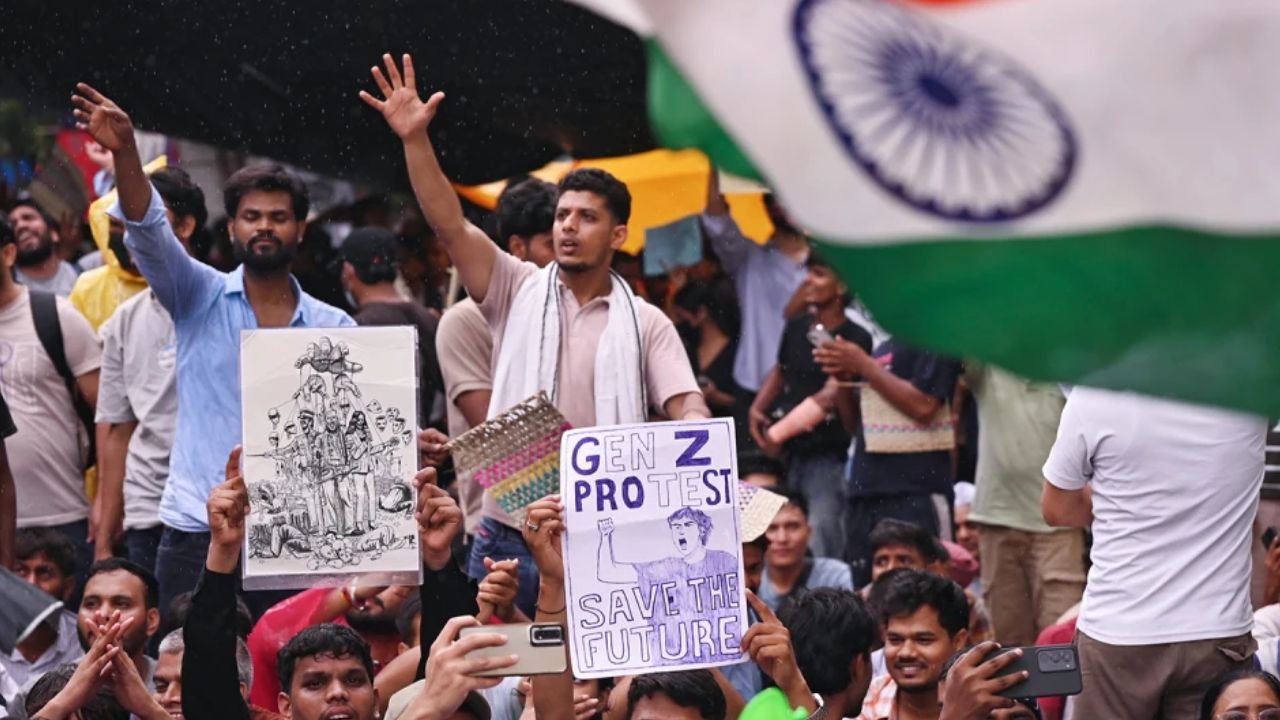
Sheikh Hasina became truly monstrous during the 2024 quota reform movement. The peaceful protest by university students was met with force. When schoolchildren and college students joined the movement, she became even more severe. At one point, she reportedly authorised the use of bullets and bombs to crush these children, teenagers, and young adults. But power is never permanent — this truth prevailed in the end, forcing her to flee.
Many political analysts believe that Sheikh Hasina had become excessively dependent on India not only for trade and diplomatic relations but also for resolving Bangladesh’s internal political crises. In the end, this was no longer a secret. She failed to understand what the people wanted, why political parties required space for normal political activity, or what the hopes and aspirations of the new generation were. She assumed that India would solve any problem, and that she would never have to relinquish power.
Thus, blinded by the greed for power, the leader who once fought for democracy ultimately became an autocrat and a dictator.


