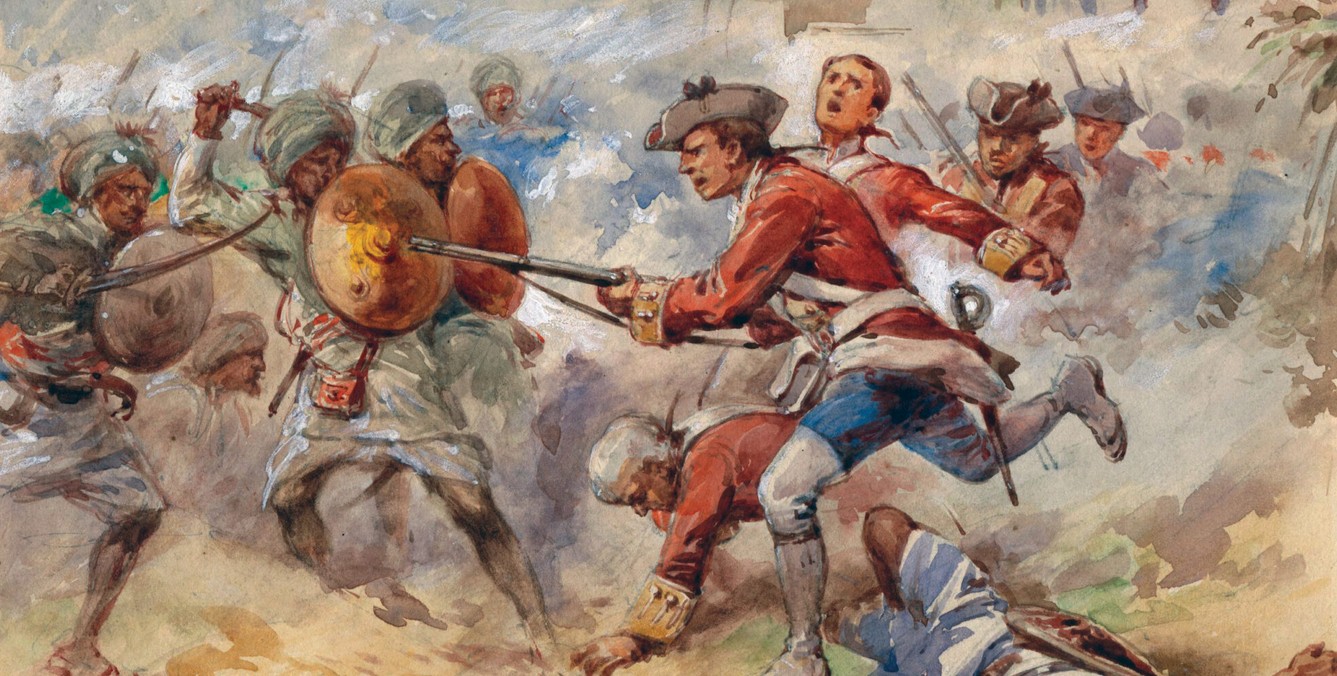

There are two ways to lose a country: lose its borders or lose its balance sheet. In 1757, Bengal began losing the latter. Palashi was more than the fall of a nawab. Bengal lost control of revenue, credit, trade, industrial incentives and the institutions that created and allocated wealth. Its greatest loss was not territory but economic sovereignty. That is why Palashi is as much a finance lesson as a history lesson.
For generations, we have debated who betrayed Siraj-ud-Daulah. Far less often have we asked who captured Bengal’s financial system. More than 250 years later, that question remains painfully relevant.
Before Palashi, Bengal was among the world’s most commercially vibrant manufacturing economies. Textiles, silk, agriculture, shipbuilding, river transport, saltpetre, bullion flows and indigenous credit networks formed an integrated financial ecosystem where trade followed credit and credit followed trust. The hundi system financed commerce, settled transactions across long distances and reduced the need to move bullion. Banking families such as the Jagat Seths did more than accumulate wealth. They supplied liquidity, intermediated treasury operations and financed political power.
Siraj lost not simply because he lacked soldiers or weapons, but because he no longer controlled the financial and political networks that sustained them. His defeat began before the battle.
Bangladesh faces the same risk in a softer form. Financial power concentrated within politically connected networks can destabilise banks, businesses, depositors and the sovereign balance sheet while narrowing policy choices and increasing external dependence. Protecting the national balance sheet is therefore no less important than protecting national borders.
The Diwani rights of 1765 transformed the business model of the East India Company. Instead of importing silver to buy Bengal’s exports, the Company collected Bengal’s taxes and used Bengal’s own revenues to purchase Bengal’s goods. Bengal financed its own extraction and Britain’s rise. This was not a trade. It was a balance-sheet capture.

Bangladesh should study that model carefully. The country needs national champions, but scale must never become immunity. State access, policy protection, concentrated banking relationships and weak market discipline eventually distort both competition and institutions. The debates over S Alam-linked banks, Beximco’s debt, Summit’s power-sector capacity payments and other politically connected business groups point to the same conclusion. Corporate size is not the problem. Privilege without transparency, accountability and market discipline is.
Bengal’s greatest loss was never treasure. It was control over taxation, procurement, trade privileges, judicial authority, monetary flows and capital allocation. The prize was not the vault but the system.
Modern Bangladesh offers its own reminder. The 2016 Bangladesh Bank reserve heist, in which more than $81 million was stolen, exposed how institutional weakness could become sovereign embarrassment. Allegations of large-scale capital flight involving politically connected groups point to the same governance failure. Whatever assets are eventually recovered, citizens bear the costs through weaker public finances, greater financial risks and eroded confidence. That is Palashi’s enduring lesson. Once institutional control is compromised, those who never approved the original decisions ultimately pay the price.




Bengal’s two centuries of decline after Palashi coincided with Europe’s Industrial Revolution. Technology reshaped global production, but distorted incentives hollowed out Bengal’s economy. The Permanent Settlement of 1793 redirected capital from industry to rent extraction. Land became safer than manufacturing. Access became more profitable than innovation. The pattern endures.
Too much Bangladeshi capital still flows into land, licences, procurement relationships, regulatory arbitrage and collateral-backed lending. Too little financial technology, skilled labour, branding and competitive manufacturing. Banks favour collateral over cash flow, while import margins often appear safer than industrial investment. After Palashi, distorted incentives hollowed out industries from muslin and shipbuilding to jute. Today they threaten leather, engineering, biotechnology, advanced agriculture and value-added manufacturing. Bangladesh will not industrialise sustainably until productive risk earns greater rewards than rent-seeking.
Colonial rule did not invent extraction. It institutionalised it by turning Bengal into a source of imperial finance. Partition changed the office address, not the model. East Pakistan generated much of Pakistan’s export earnings through jute, while investment and policymaking remained concentrated in the West. Independence ended one form of extraction but inherited weak institutions, limited reserves and a narrow industrial base. Liberalisation later energised private enterprise while creating new concentrations of power.
Bangladesh increasingly resembles two economies: large firms with policy access and financial strength, and thousands of businesses struggling with thin margins, working-capital shortages and weak bargaining power. Extraction now appears through connected lending, repeated loan rescheduling, procurement capture, import privileges, delayed tax refunds, cartel behaviour and regulatory silence. The mechanisms have changed. The logic has not.
Cheap labour built a competitive export economy, but it cannot sustain the next stage of development. Low wages attract orders, not brands. Labour discipline keeps factories running, but does not create innovation. Weak productivity ultimately encourages brain drain and capital flight. Bangladesh must invest in education, technical skills, healthcare, workplace safety and stronger management to move from stitching to design, from assembly to engineering and from exporting workers to exporting talent.
Palashi offers enduring lessons for business and policymakers. Political risk never sits outside the balance sheet. Siraj, Mir Jafar, Jagat Seth, Robert Clive and the East India Company formed one financial ecosystem. Today’s equivalents include regulation, taxation, foreign exchange, related-party lending and contract enforcement. Liquidity determines bargaining power. Those with liquidity dictate terms; those without accept them.
Legality does not guarantee fairness. Extraction often arrives through contracts, procurement rules, board approvals and regulation. Large firms are not the problem. Opaque concentration is. The strongest industrial policy is credible finance. Countries diversify when finance, infrastructure, regulation and markets reward productive risk-taking. That lesson is especially urgent as Bangladesh navigates LDC graduation, banking reform, export diversification, energy security, climate finance, capital-market development and currency stability. Governance failures can be as damaging as policy mistakes.
Banking cannot become a vehicle for politically convenient rescues. Capital markets cannot remain fundraising windows instead of institutions for price discovery. Persistent defaults are often governance failures disguised as liquidity problems. Palashi should become Bangladesh’s annual audit of economic sovereignty.
Bangladesh needs a new capital compact in which banks allocate capital responsibly, markets price risk credibly, and institutions enforce consistent rules. Confidence will come not from announcements but from trust.
Bengal lost more than a battle at Palashi. It lost control of the institutions that directed capital, and generations paid the price. Bangladesh’s future depends on institutions strong enough to prevent extraction, reward productive enterprise and protect economic sovereignty.
Palashi should be remembered not as a frozen tragedy but as a living warning. When a nation loses control of the institutions governing money, it loses far more than wealth. It loses the future that wealth could have built.
The views expressed in this article are solely those of the author
The writer is a Chartered Financial Analyst heading Research, BRAC EPL Stock Brokerage Limited; Former World Bank Group staff member