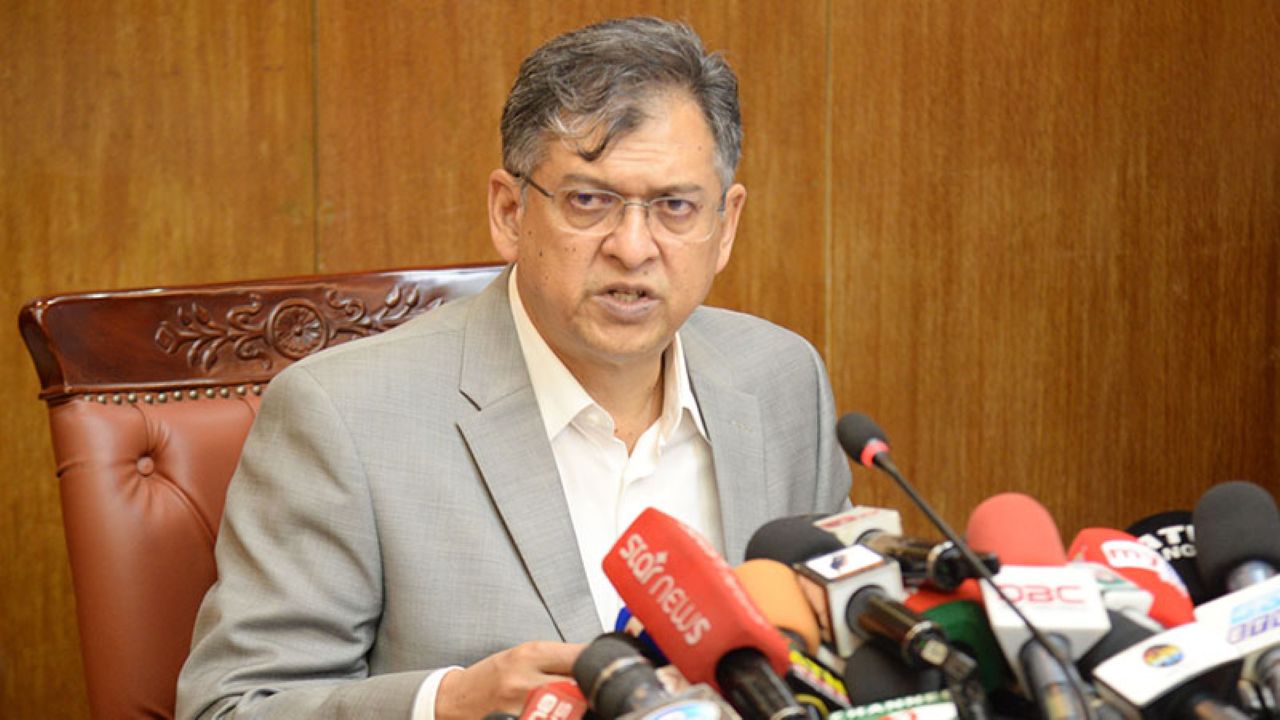
Finance Minister Amir Khosru Mahmud Chowdhury announced on Thursday that corporate tax rates will remain unchanged in the proposed 2026–27 national budget, despite repeated calls from the business community for reductions.
Presenting the budget in Parliament, the minister said maintaining current rates ensures policy continuity and provides investors with a stable medium-term tax framework.
He indicated, however, that the government plans to gradually reduce rates in the future by broadening the tax base and improving collection efficiency.

Alongside maintaining rates, the budget introduces several taxpayer-friendly reforms.
These include simplified corporate tax compliance, online filing and payment of income taxes, reduced regulatory burdens, expanded allowances for business expenditures, and the removal of provisions that disallow costs if withholding tax is not deducted. Selection of tax cases for audit and verification will now be fully automated and transparent.




Sector-wise rates at a glance
Under existing rates, now carried forward, general companies defined under the income tax law face a flat rate of 27.5 percent.
Listed companies that transfer more than 10 percent of paid-up capital through IPO are taxed at 22.5 percent, reducible to 20 percent upon meeting additional conditions.
Publicly traded banks, insurance companies, and non-bank financial institutions face a 37.5 percent rate, while their non-listed counterparts pay 40 percent. Merchant banks are taxed at 27.5 percent.
Tobacco product manufacturers, including cigarettes, bidis, zarda and gul, face the steepest burden at 45 percent plus a 2.5 percent surcharge.
Publicly traded mobile phone operators with at least 10 percent IPO shareholding are taxed at 40 percent, while non-listed operators face a 45 percent rate.
Co-operative societies are taxed at 20 percent. Private universities, medical, dental and engineering colleges, and IT-focused private institutions enjoy a concessional rate of 10 percent.