Bangladesh has called for continued special trade benefits for a defined period after graduating from least developed country (LDC) status, warning that a sudden withdrawal could undermine economic stability.
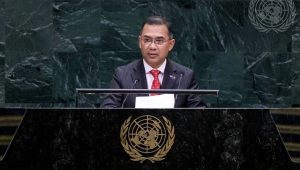
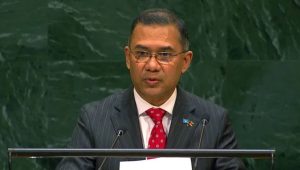
The call came as Commerce Minister Khandakar Abdul Muktadir spoke at multiple thematic sessions on Saturday, the third day of the World Trade Organization (WTO) ministerial conference, where he outlined Dhaka’s positions on key global trade issues, according to a Commerce Ministry press release.
He urged members to adopt an LDC transition package at the 14th WTO Ministerial Conference (MC14), saying sustained support is necessary to ensure a smooth and stable transition.
Restoring a fully functional dispute settlement system was also a priority, with Bangladesh calling for the quick re-establishment of a two-tier mechanism, including the appellate body.
“A predictable, rules-based system is essential, and a strong and neutral mechanism is needed to protect the interests of developing and least developed countries,” he said.

On fisheries subsidies, Bangladesh said its contribution to harmful subsidies is close to zero, while large fishing nations account for the bulk of such support.
The minister called for strict discipline on harmful subsidies, alongside ensuring special and differential treatment (S&DT) for developing and least developed countries.
He also urged full exemptions for small and marginal fishers to maintain fairness and sustainability in the sector.


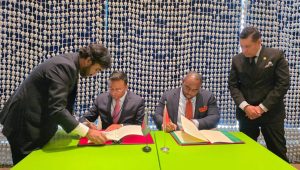
At the conference, Bangladesh announced its accession as the 129th member to the Investment Facilitation for Development Agreement (IFDA), marking its first participation in a plurilateral agreement under the WTO framework.
The minister said the move would help improve the country’s investment environment and send a positive signal to foreign investors.
The European Union, Japan, South Korea, the United Kingdom, and Hong Kong welcomed Bangladesh’s decision.
In agriculture, Bangladesh highlighted the sector’s importance for food security, livelihoods, and poverty reduction.
It called for resolving long-pending issues, including public stockholding, special safeguard mechanisms, and trade-distorting subsidies maintained by developed countries.
The minister reiterated that S&DT must remain central to agricultural negotiations.
On intellectual property rules, Bangladesh supported extending the moratorium on non-violation and situation complaints (NVSCs) under the Agreement on Trade-Related Aspects of Intellectual Property Rights (TRIPS) until the next ministerial conference.
Such complaints could limit policy space for developing countries, particularly in areas such as public health and education, he said, stressing the need for a permanent solution.
The minister said WTO reform must be anchored in transparency, inclusiveness, and fairness to sustain trust in the multilateral trading system.
Bangladesh remains committed to a fair, inclusive, and development-oriented global trade regime and will stay actively engaged in WTO processes to safeguard the interests of developing and least developed countries, he added.
The outcome of MC14 will shape the direction of future reforms in the global trading system, he said.