Residents of Mirpur say they are increasingly living in fear as killings, robberies, muggings, extortion and drug-related crimes surge across the area, prompting comparisons with Mohammadpur, long regarded as one of Dhaka’s most crime-prone neighbourhoods.
University student Masura Tabassum, a resident of Kafrul, says she has drastically reduced going out after dark due to fears of being mugged.
“Even a few years ago, Mirpur was not this dangerous,” said Abul Hasnat, another Kafrul resident. “Now, whenever you step onto the streets, you can see drugs being bought and sold openly. The most alarming part is that many of those involved are young.”
According to recent statistics from the Dhaka Metropolitan Police (DMP), Mirpur Division recorded a notable rise in murders and robberies over the past six months compared with other police divisions in the capital, indicating that the area is gradually emerging as a major crime hotspot.
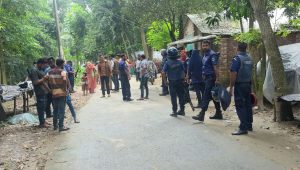
Neighbourhoods including Pallabi, Kafrul, Kazipara, Shewrapara, Bhashantek and surrounding areas have witnessed a series of murders, shootings, muggings, robberies and extortion incidents, while the growing influence of juvenile gangs has heightened insecurity among residents and business owners.
Extortion, drugs on the rise
Residents and traders allege that local criminals and politically connected groups collect nearly Tk50 lakh in extortion every day from footpath vendors and hawkers.
Footpath traders at Mirpur-10 roundabout told TIMES of Bangladesh that they are forced to pay between Tk100 and Tk300 daily for each stall. They alleged that local strongmen and political activists collect the money through intermediaries known as “linemen.”

Business owners and contractors also face demands for large sums of money. Those refusing to pay reportedly receive death threats, while some have even had their homes targeted by gunfire as a warning.
Drug trafficking has also expanded across the area.
Residents and police officials said Mirpur’s dense population makes it easier for traffickers to hide, turning the area into a preferred base for narcotics operations.
Mirpur-10, Sections 13 and 14, Kafrul and Bhashantek are home to large numbers of underprivileged people, some of whom are allegedly recruited by criminal groups to distribute drugs.




Juvenile gangs spreading fear
Police and residents say the activities of juvenile gangs have increased sharply in Mirpur, Pallabi and Kafrul.
In recent weeks, members of an organised gang attacked a bakery and an embroidery factory in the Palashnagar area. Days later, the same group allegedly returned, vandalised the premises, looted valuables and destroyed CCTV cameras.
Witnesses said the attackers carried machetes and other locally made weapons during the assaults. They also allegedly assaulted pedestrians and snatched mobile phones and other valuables.
Among several active juvenile gangs, residents expressed particular concern about two groups known locally as “Bhoira De” and “Bahubali.”
In June, around 50 members of the “Bhoira De” gang allegedly carried out a violent rampage in the Prantik Housing area. Meanwhile, the “Bahubali” gang is reportedly using an abandoned building near Mirpur-10 as its base.


The group has previously been accused of involvement in muggings and murders, although many suspects have yet to be brought to justice.
Young recruits drawn into crime
Interviews with police and a member of one of the juvenile gangs suggest that organised criminal groups recruit teenagers at an early stage.
Speaking on condition of anonymity, one gang member said new recruits are initially assigned to drug dealing, intimidation and public displays of force. Once they prove their loyalty, they are given locally made weapons and assigned to assault targeted individuals, carry out muggings and even participate in gang clashes.
Police said gang members who perform well are often absorbed into larger organised criminal networks.
The gang member attributed the growing recruitment of teenagers to a combination of absent parental supervision, financial hardship, the lure of power and status, thrill-seeking and the desire to finance drug addiction.
Police call for broader response
Police officials blame not only political patronage but also a lack of parental responsibility for the rise of juvenile gangs.
Officers from Mirpur, Pallabi and Kafrul police stations said many young offenders quickly secure bail because Bangladesh’s juvenile justice system provides greater legal protection for minors, allowing repeat offenders to return to crime.
Kafrul Police Station Officer-in-Charge Sajjad Hossain said criminals were exploiting the legal protections afforded to children and adolescents.
“Police action alone is not enough,” he said. “Public awareness, social responsibility and greater accountability from political leaders are all essential to curb juvenile gangs.”
Md Towhidul Haque, assistant professor at the Institute of Social Welfare and Research at the University of Dhaka, said the deterioration in law enforcement following the political transition after 5 August 2024, coupled with political protection for some offenders, had contributed to the rise in organised crime and juvenile gangs.
He also said many offenders escape punishment because cases are not filed under appropriate criminal charges.
“If legal action is not taken in a systematic manner, the deterioration in law and order could spread to other parts of the capital as well,” he warned.