


Blood-stained clothes, memories of martyrs and reminders of past upheavals now share the same space as the former seat of power.
A room in Ganabhaban, once used as ousted prime minister Sheikh Hasina’s bedroom, has been transformed into a museum preserving the memories of the July uprising and other defining moments of recent Bangladesh.
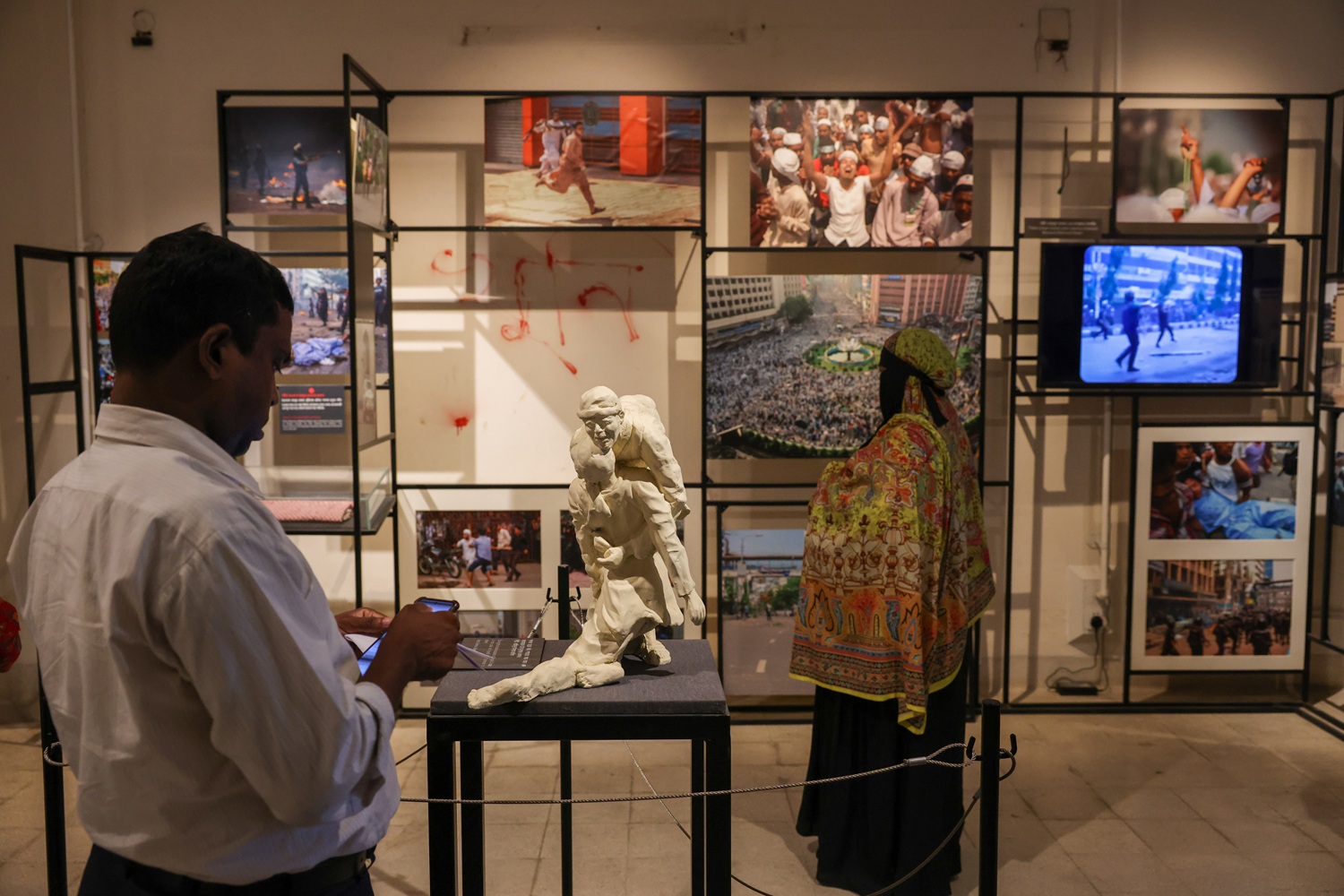
Across the museum, photographs, videos, documents and symbolic installations bring together memories of the July uprising, the BDR mutiny, the Shapla Chattar incident and allegations of enforced disappearances.
The July Uprising Memorial Museum opened its doors to the public on Thursday, drawing hundreds of visitors to Sher-e-Bangla Nagar despite heavy rain. Long queues formed from the morning, while tickets for the opening day were sold out within hours.
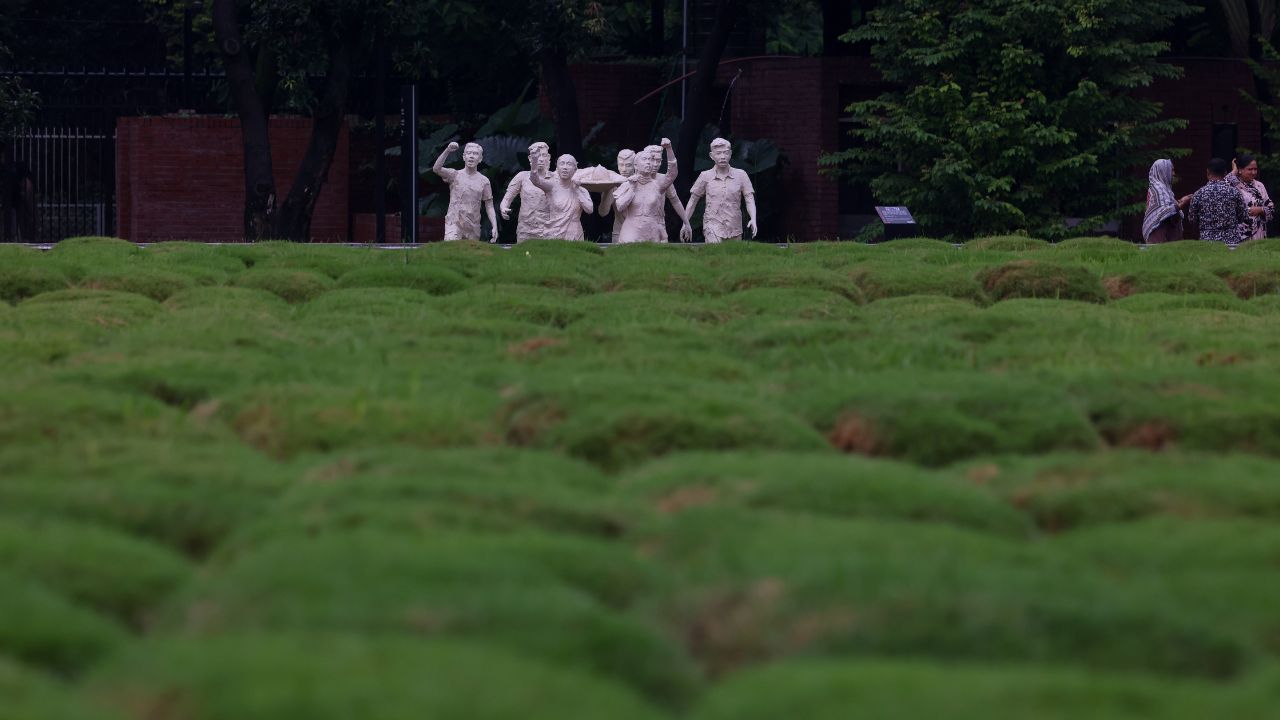
At the entrance, visitors first encounter the ‘July Memorial’, a white marble structure built on a green field. The names of those killed during the uprising are engraved on the monument, while the inner section has been designed with rows of symbolic graves.

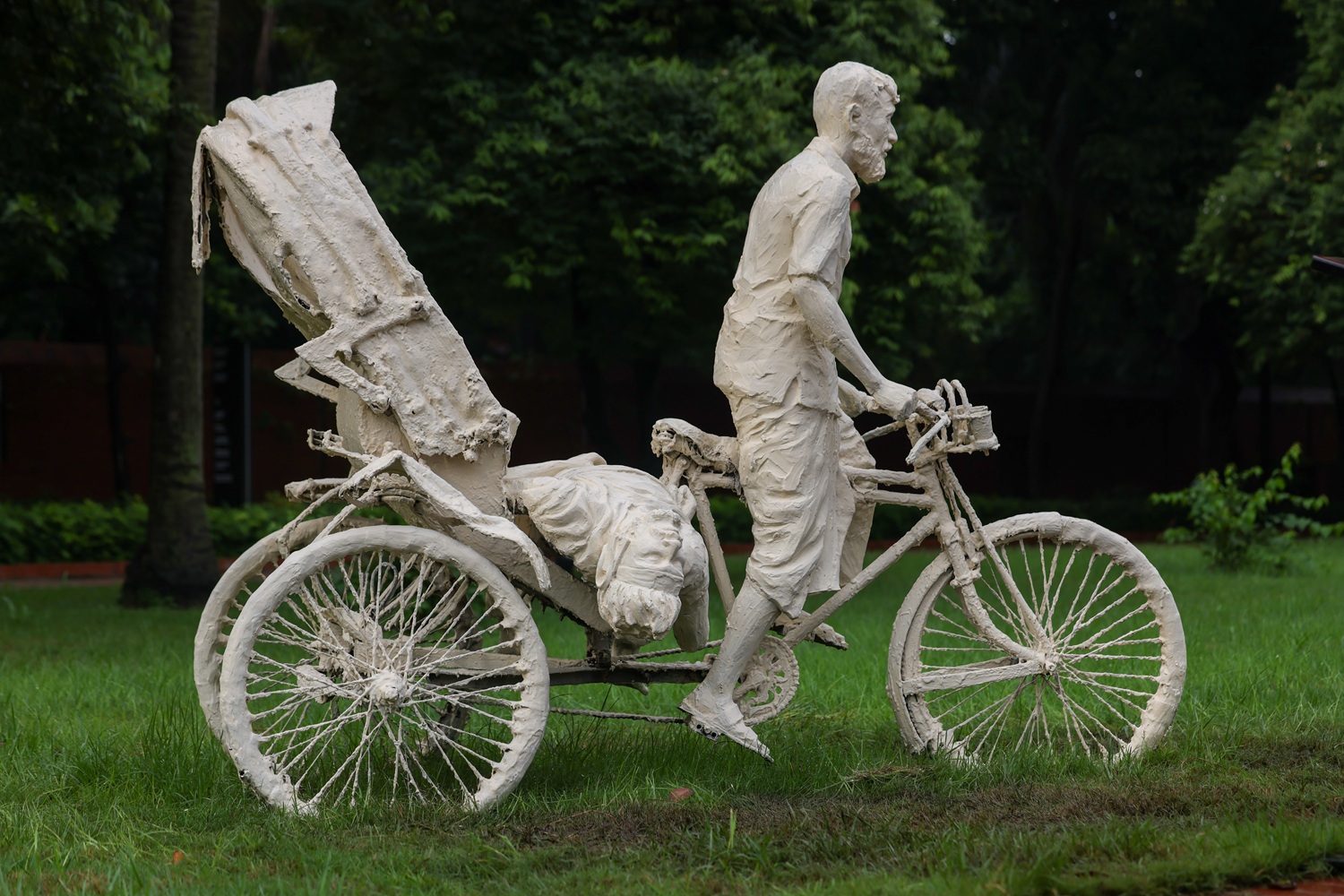
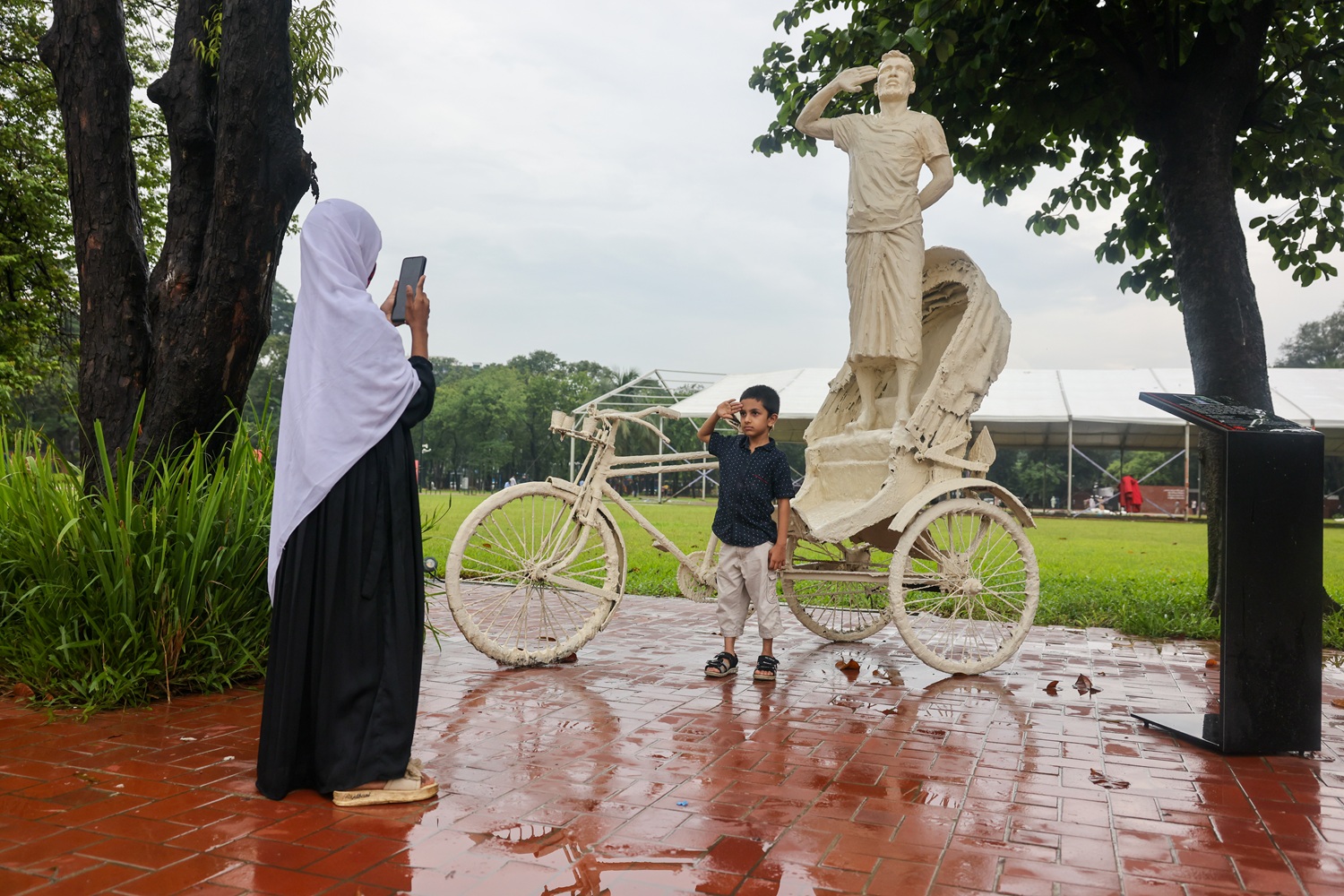
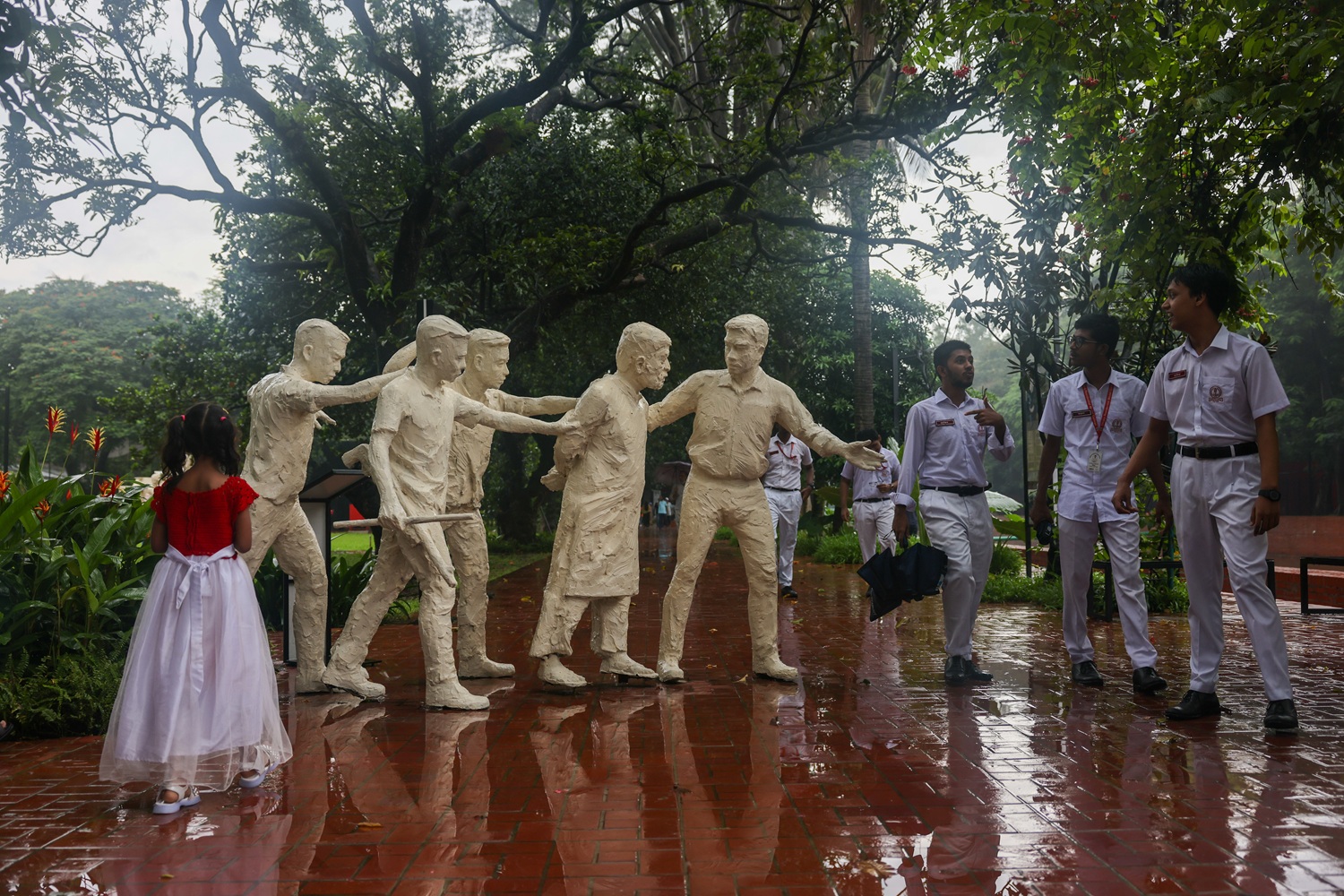
The surrounding grounds feature sculptures depicting key moments from the movement — including a bullet-riddled rickshaw, a representation of a protester hanging from an armoured police vehicle, and a schoolgirl taking part in a demonstration.
Inside the two-storey building, the ground floor focuses on events from Sheikh Hasina’s tenure. Exhibits include photographs, documents and objects related to the BDR mutiny, Shapla Chattar incident and allegations of enforced disappearances and killings.



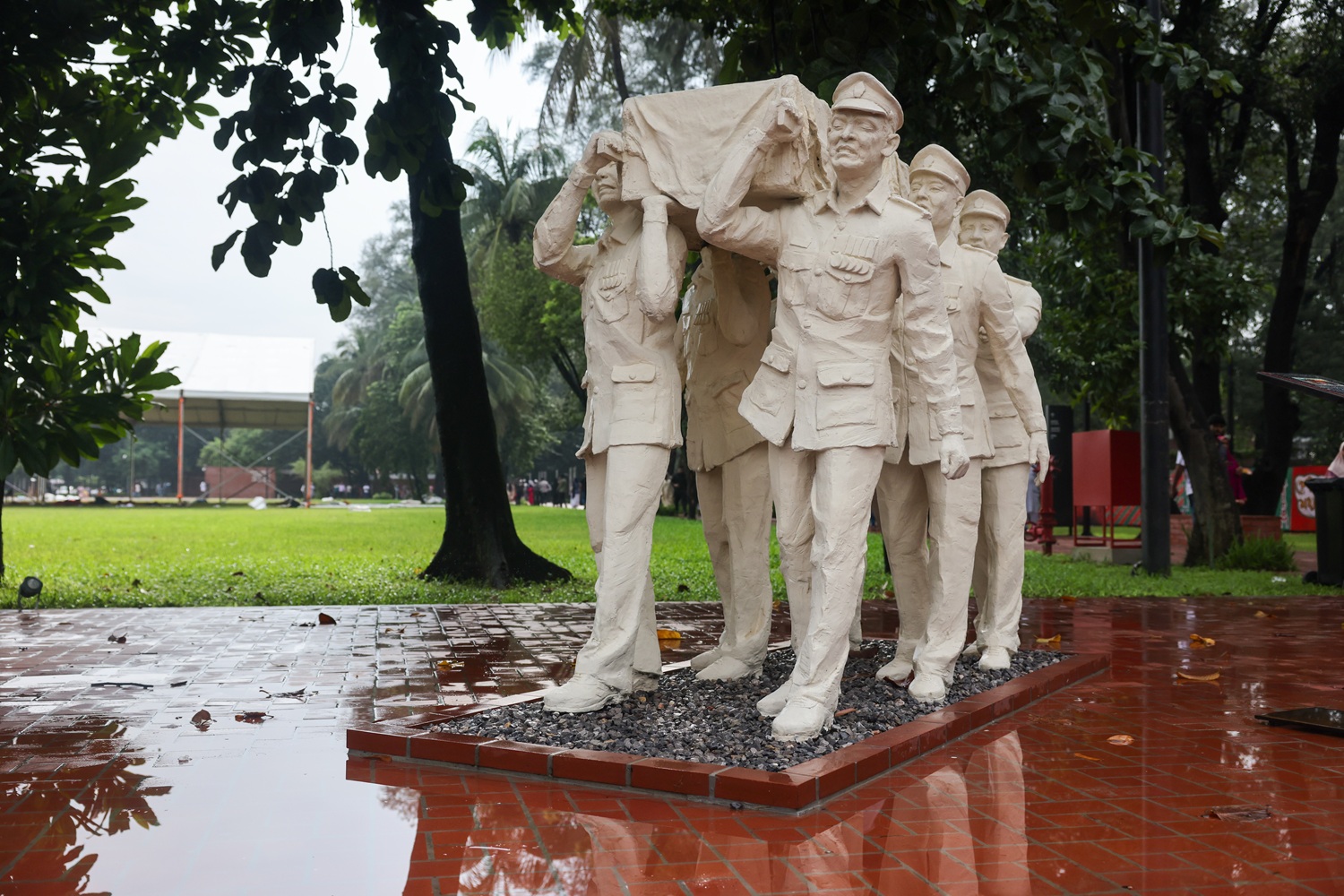
A separate section dedicated to the BDR mutiny displays uniforms, badges and other items linked to the incident. A red telephone installation allows visitors to listen to recorded messages.
The second floor takes visitors into the memories of the July uprising. Sheikh Hasina’s former bedroom has been turned into a gallery, with her bed covered by a cloth bearing the names of those killed during the movement. Blood-stained clothes and personal belongings of victims are displayed nearby.
A timeline placed near the staircase documents the events of July through photographs, videos, artwork and written accounts. Another attraction is a 360-degree digital exhibition that recreates scenes from the movement, offering visitors an immersive experience.
The museum also displays clothes, books, notebooks, sports equipment and other belongings used by participants of the uprising. Protest slogans and artwork from the movement cover several walls and passages.
Outside the main building, a separate section designed as a symbolic “Aynaghar” recreates the atmosphere of alleged secret detention centres through small enclosed rooms.
Visitors from different parts of Dhaka arrived throughout the day, including students, families and elderly people. Many said the exhibits brought back memories of the movement.
“I came with my child so that he could see a part of history,” said Mahbub Ullah from Uttara. “Despite the rain and crowds, I am glad I could enter. Seeing the blood-stained clothes was painful.”
Mahim, a student from Mohammadpur, said he and his friends had taken part in the movement. “Coming here brought back memories of what happened two years ago. Seeing the July exhibits alongside earlier events created a different feeling,” he said.
Museum authorities said visitors would be allowed entry through three time slots each day — 11am to 1pm, 1pm to 3pm and 3pm to 6pm — to manage crowds. Tickets are priced at Tk50 for adults and Tk25 for children. They can be purchased online or directly from the museum.
However, demand has already exceeded expectations, with six of the next 10 days’ online ticket allocations sold out, leaving many visitors unable to secure entry.