


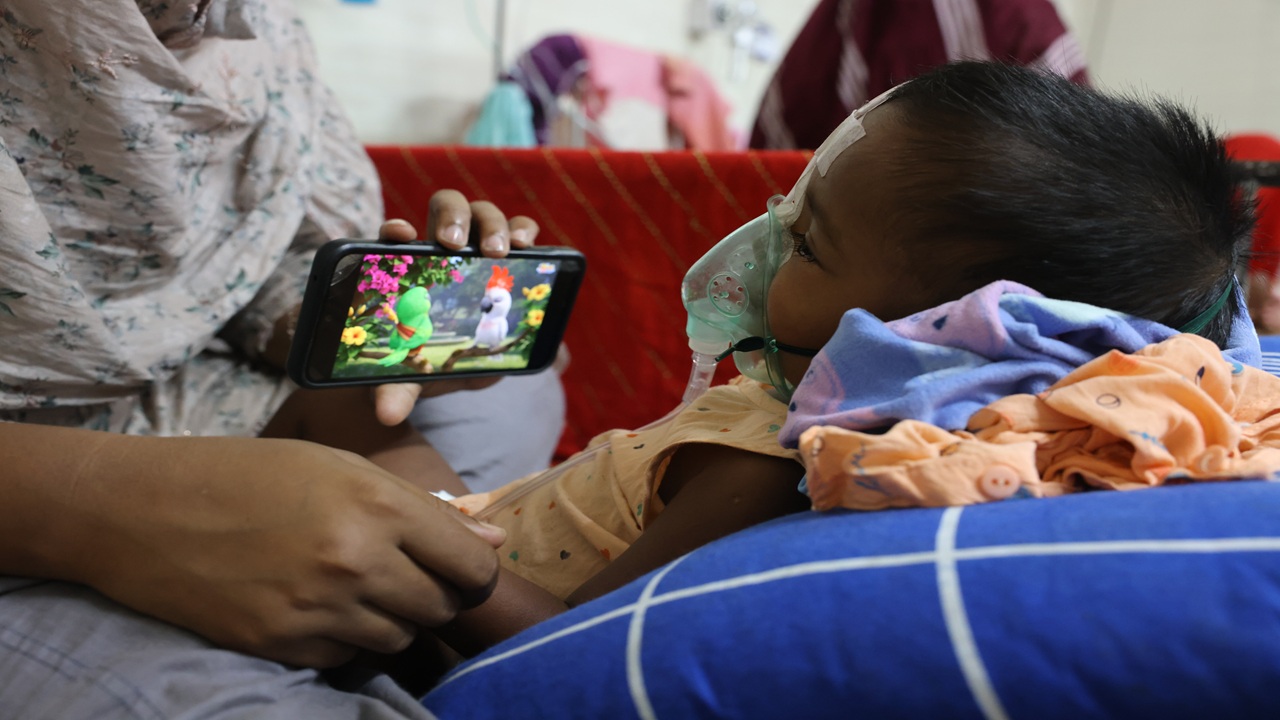
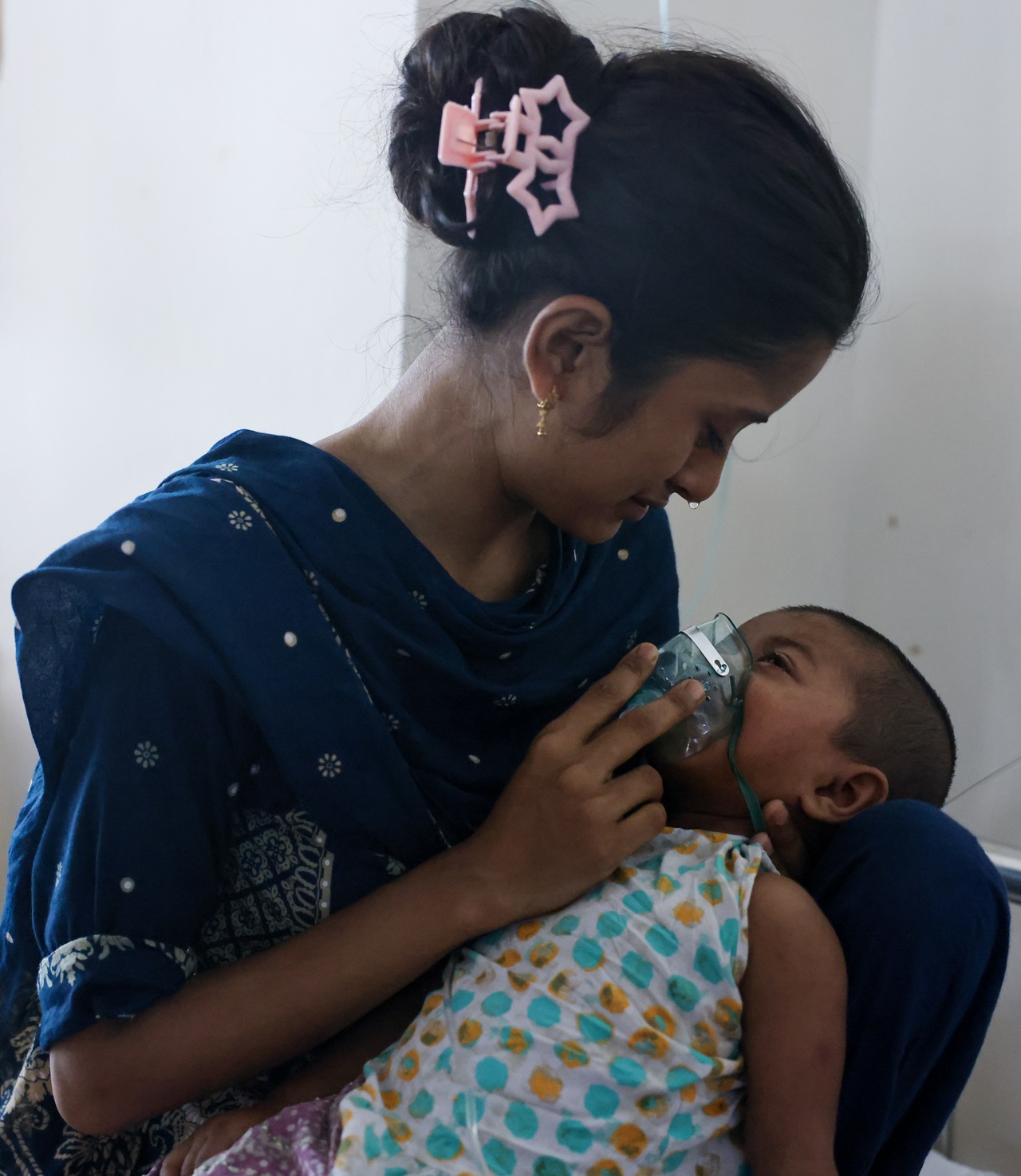
The oxygen tube is too thin. It rests under the child’s nose, barely shifting as he struggles to breathe. A few beds away, another child is crying while a nurse taps lightly at his arm, trying to find a vein.
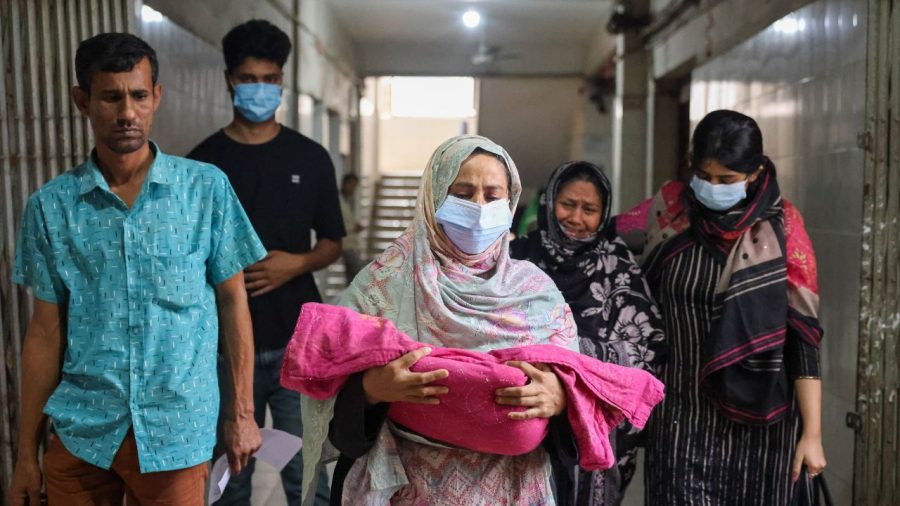
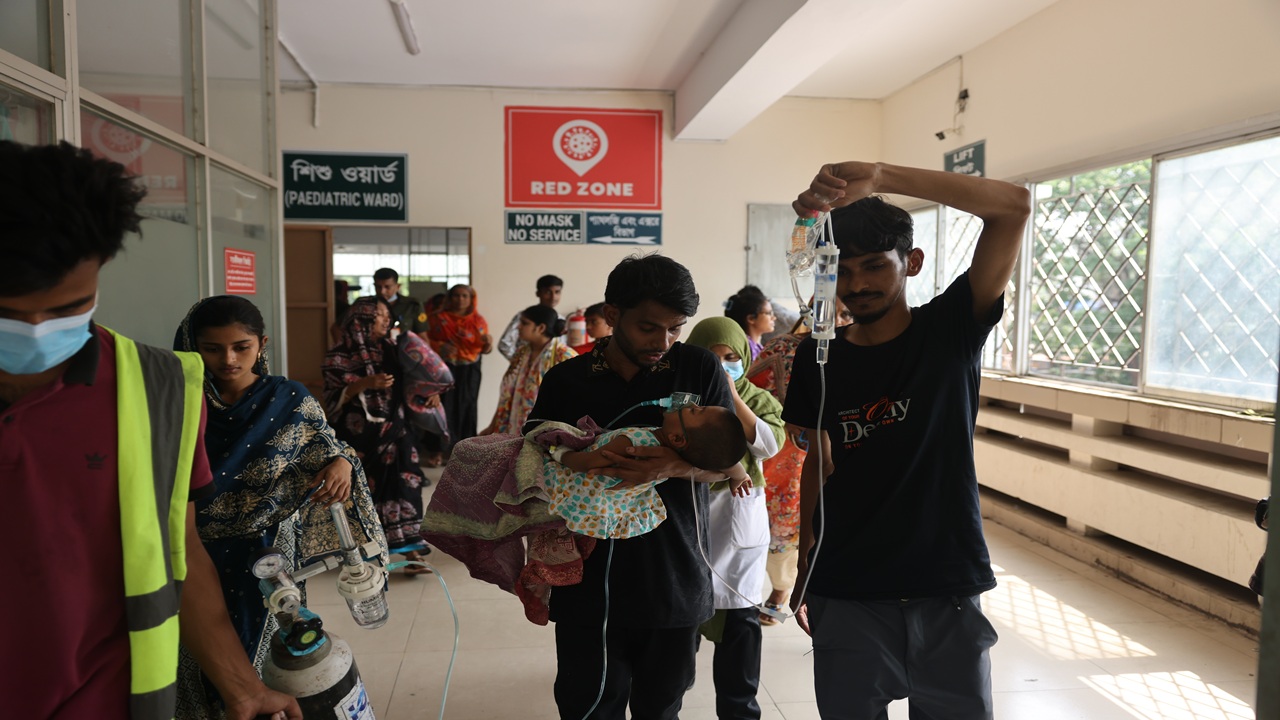
Out in the corridor, it’s quieter. Mothers sit on the floor or lean against the walls; prescriptions folded in their hands.

Scenes like these are now common and evidence of a measles outbreak. Across Bangladesh, hospitals are seeing the same pattern repeat itself. What was once considered controlled has returned, and it’s spreading faster than many expected.
Since mid-March, 41,793 suspected measles cases have been reported, and 5,467 have been confirmed. The death toll, combining suspected and confirmed cases, is 311. Nearly all of those who have died are children, and the numbers keep climbing.

Yesterday, on May 4 alone, the Directorate General of Health Services (DGHS) recorded 1,456 new suspected cases and 17 deaths. For those inside hospitals, it doesn’t feel like a statistic. It feels like something is building, something not yet under control.
What makes this resurgence difficult to accept is that measles isn’t new. Bangladesh had, for years, managed to push it to the margins through sustained vaccination efforts. So, what changed?
Many point back to 2025, when vaccine procurement shifted away from established channels such as UNICEF to an open tender system. The transition didn’t collapse the system overnight, but it slowed it down. Supplies were delayed. Routine immunisation lost momentum.





At first, the impact was easy to miss. Coverage didn’t disappear; it slipped. A missed dose here, a delayed round there. Over time, those small gaps widened. By the time cases began to rise, the vulnerability was already there.
The issue has since become political. Prime Minister Tarique Rahman has described the situation as an “unforgivable” failure, placing blame on both the previous administration and the interim government.
A complaint has been filed with the Anti-Corruption Commission over alleged irregularities in procurement. Those questions are still being examined. But inside hospital wards, the causes matter less than the consequences.
Health Minister Sardar Md Sakhawat Husain said on Sunday that the country has reached 81 per cent coverage in its ongoing measles vaccination programme for children.

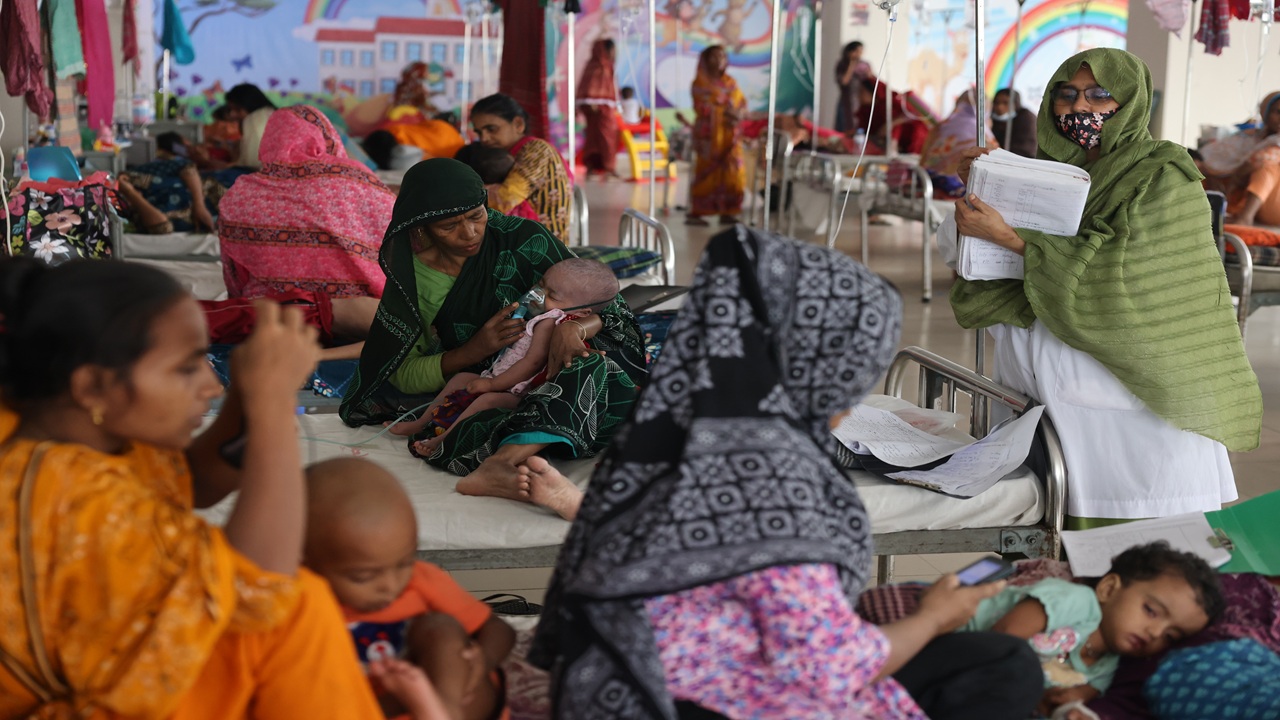
In densely populated urban areas, particularly informal settlements, the virus has spread quickly. The healthcare system is struggling to keep pace. Beds fill quickly, isolation facilities are limited and early detection is inconsistent.
For many families, the delay between symptoms and treatment has made all the difference, and for some, it has come too late.

Public health experts have warned for years that even temporary disruptions in immunisation could reverse hard-won progress. Bangladesh had come close to eliminating measles, but that success depended on continuity. That continuity slipped.
Now, inside crowded wards and along hospital corridors, the consequences are visible in the smallest patients. It is a reminder, stark and difficult, that even preventable diseases do not stay gone on their own. When systems falter, even briefly, they find a way back, and when they do, the cost is measured in lives.