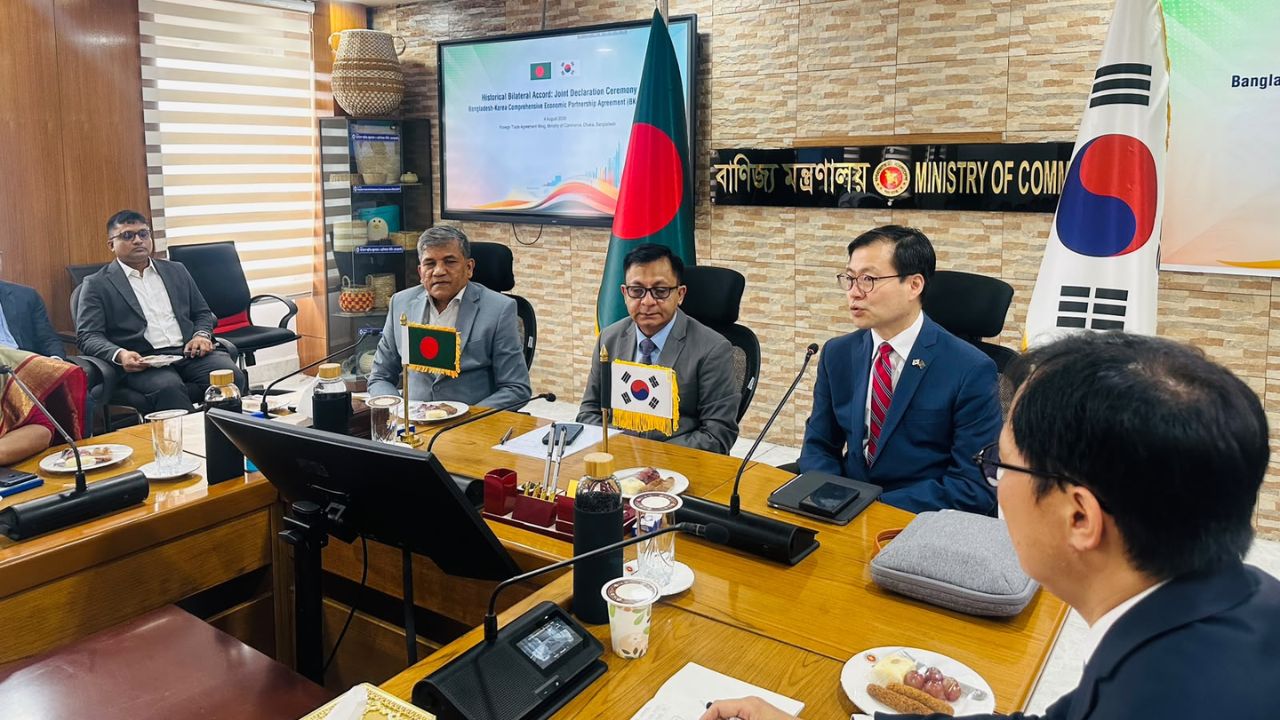



Bangladesh has concluded negotiations on a Comprehensive Economic Partnership Agreement (Cepa) with South Korea, paving the way for duty-free access for 8,428 Bangladeshi products in one of Asia’s largest markets.
The agreement also grants South Korea immediate duty-free access for 1,054 products in Bangladesh. Overall, Bangladesh will receive preferential access for 97 per cent of its goods and services in South Korea, while South Korean goods and services will receive similar treatment for 87 per cent of Bangladesh’s market.
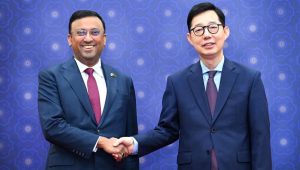
The conclusion of negotiations was jointly announced on Tuesday by Commerce Minister Khandaker Abdul Muqtadir and South Korean Trade Minister Han-Koo Yeo, ending nearly a year of talks that began in August 2025.
The agreement is not yet in force. It will undergo legal scrutiny in both countries before cabinet approval, formal signing and implementation.

For Bangladesh, the Cepa carries significance beyond tariff reductions. As the country prepares to graduate from least developed country status, the agreement is expected to replace unilateral trade preferences with treaty-based market access.
Once implemented, key export sectors—including readymade garments, leather and leather goods, footwear, jute products, pharmaceuticals and home textiles—will enjoy duty-free access to South Korea from the first day of the agreement.
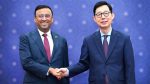

Muqtadir said the government had completed negotiations on a high-standard trade agreement with one of the world’s largest economies within five months of taking office. He said the Cepa would strengthen export competitiveness and support the goal of building a $1 trillion economy by 2034 through higher exports, stronger growth and increased foreign investment.
Han-Koo Yeo said the Cepa would expand Dhaka-Seoul cooperation beyond textiles into technology, supply chains, industrial collaboration and investment.
The agreement also expands services trade. Bangladesh will open 95 service subsectors to South Korean providers, while South Korea will open 111 subsectors to Bangladesh across all four modes of service supply.
Negotiations began after the two countries agreed on the Terms of Reference and formed a Trade Negotiating Committee supported by 11 technical working groups. The two sides completed five formal rounds of talks—three in South Korea and two in Bangladesh—along with around 40 virtual meetings.
Bangladesh’s negotiating team was led by Chief Negotiator Ayesha Akter, while Park Geun-oh headed the South Korean delegation.
The two countries currently conduct bilateral trade worth about $1.39 billion annually. Bangladesh exports around $491.73 million worth of goods to South Korea and imports about $902.90 million, creating a trade deficit of roughly $411 million.
The Cepa was part of the government’s 180-day priority programme. Officials said exporters would receive the negotiated tariff benefits only after legal procedures, cabinet approvals and formal signing are completed.