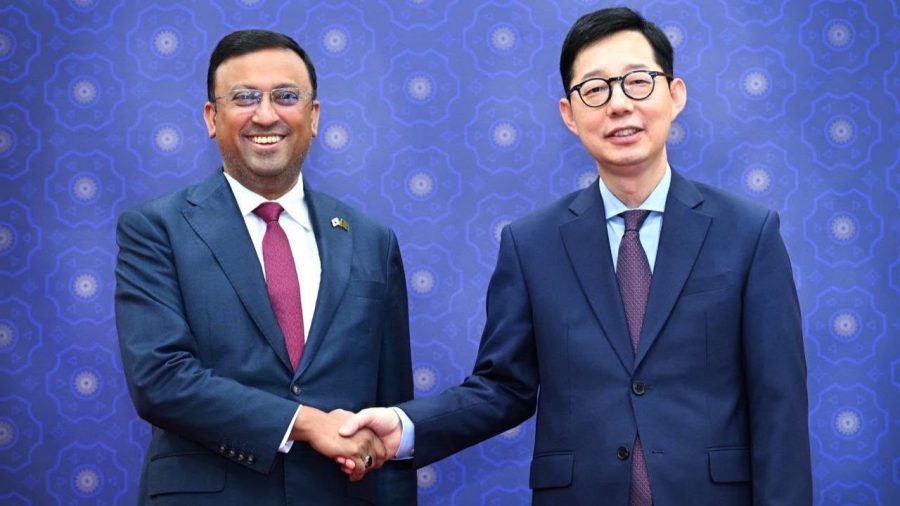



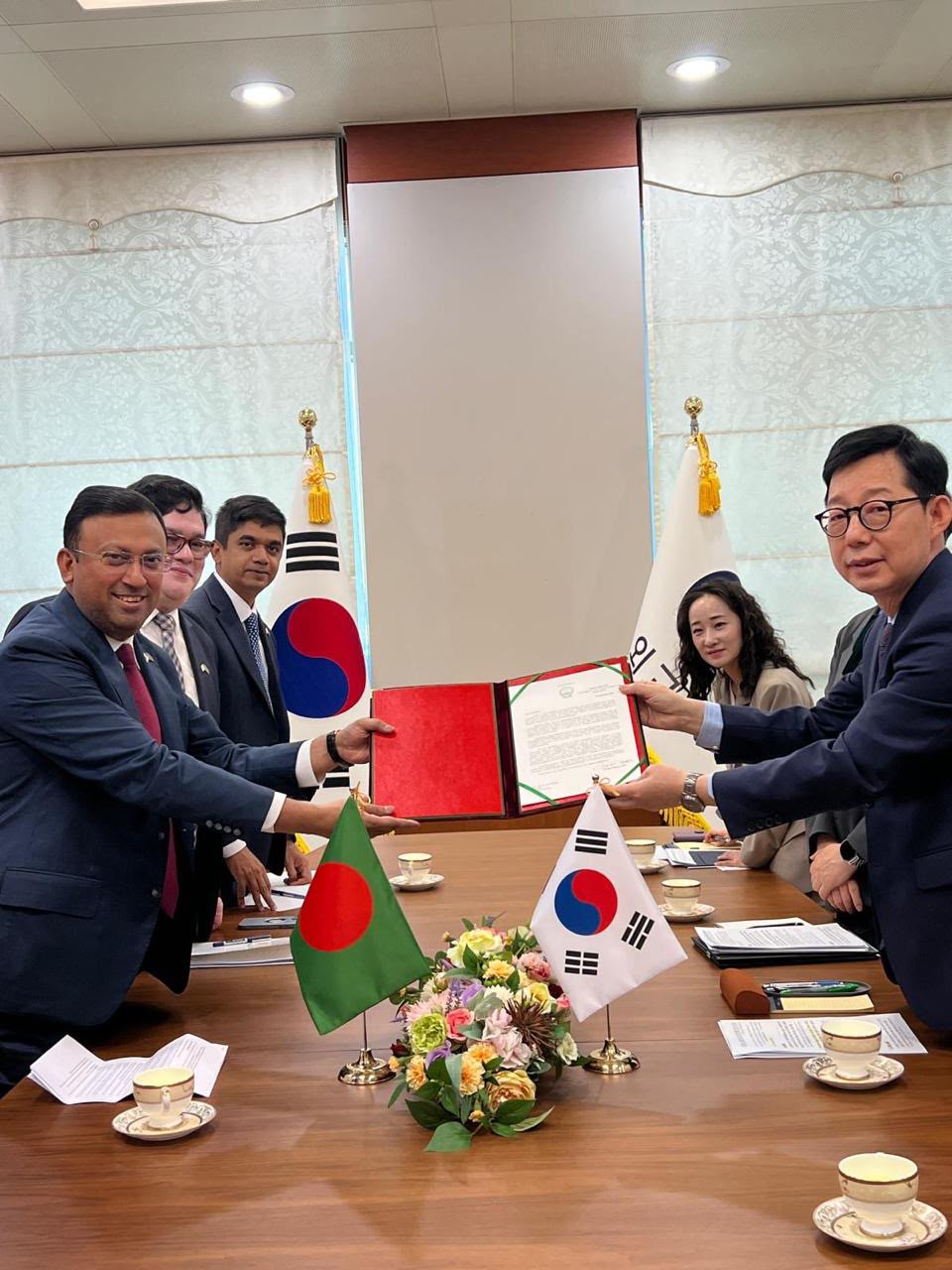
State Minister for Foreign Affairs of Bangladesh Humaiun Kobir has handed over an invitation letter from Prime Minister Tarique Rahman to the South Korean President Lee Jae Myung to visit Bangladesh at a mutually convenient time.
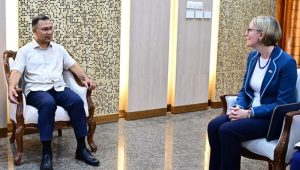
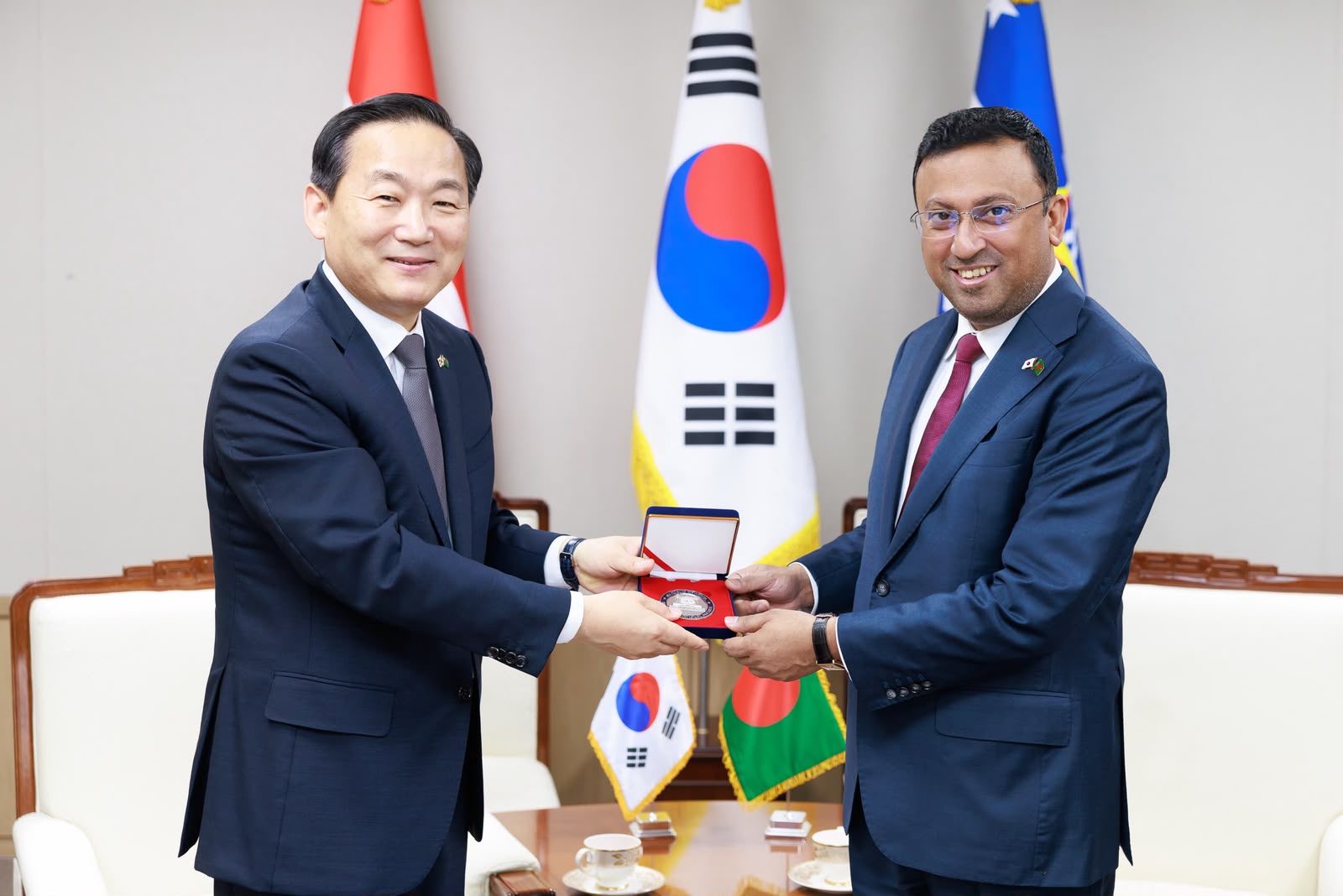
The invitation was presented during a bilateral meeting in Seoul today with Park Yoon-joo, first vice minister of Foreign Affairs of the Republic of Korea (ROK), where the two ministers discussed issues of mutual interest with a particular focus on political and economic cooperation.
During the meeting, the state minister conveyed Bangladesh’s readiness to work closely with the Korean Government to deepen longstanding friendly relations.
He appreciated Korea’s remarkable transformation into a global economic and technological leader, noting that its development experience continues to inspire Bangladesh.
Kobir expressed satisfaction at regular Foreign Office Consultations and other high-level exchanges, while reaffirming Bangladesh’s support for peace and stability on the Korean Peninsula.

Welcoming progress towards concluding the Bangladesh–ROK Comprehensive Economic Partnership Agreement (CEPA), the state minister expressed hope for its early signing.
He called for greater bilateral trade and investment, enhanced market access for Bangladeshi products, and increased Korean investment in technology-intensive sectors, including semiconductors, electronics, shipbuilding, light engineering, high-end RMG, ICT, and other technology-intensive areas.
Kobir also highlighted opportunities in agriculture, agro-processing, logistics, digital transformation, skills development, and services, seeking Korean support for expanded employment opportunities for Bangladeshi skilled and semi-skilled workers through the Employment Permit System.
Appreciating Korea’s development partnership, the state minister sought enhanced cooperation in climate resilience, infrastructure, human-resource development, technical and vocational education, and digital technologies.
He expressed appreciation for Korea’s humanitarian assistance to the Rohingyas and sought continued support for their early and sustainable repatriation to Myanmar.
Both sides also exchanged views on regional and international issues, reaffirming the importance of cooperation in multilateral fora.
In a separate meeting in Seoul, State Minister Kobir met Lee Doo-hee, vice minister of National Defense of the Republic of Korea, to discuss further strengthening bilateral defence cooperation.
Their discussions focused on key areas including training, capacity building, UN peacekeeping, and defence industry cooperation.
Appreciating Korea’s ongoing cooperation in the training and capacity building of Bangladesh’s armed forces, police, and civil defence personnel, Kobir requested continued and expanded opportunities for specialized training.
He encouraged the Korean side to send military personnel to participate in specialized courses offered by the Bangladesh Armed Forces.
Moreover, the state minister informed the Korean side that Bangladesh is in the process of establishing a defence industrial zone and invited Korean interest in exploring investment opportunities in the initiative, with a view to promoting technology, industrial cooperation, and mutual economic benefits.
The Korean side appreciated Bangladesh’s interest in strengthening bilateral defence relations and expressed readiness to explore opportunities for greater cooperation in mutually agreed areas, including training, capacity building, and peacekeeping.
The meetings reaffirmed the shared commitment of Bangladesh and the Republic of Korea to further consolidate their longstanding partnership and expand cooperation for mutual benefit.