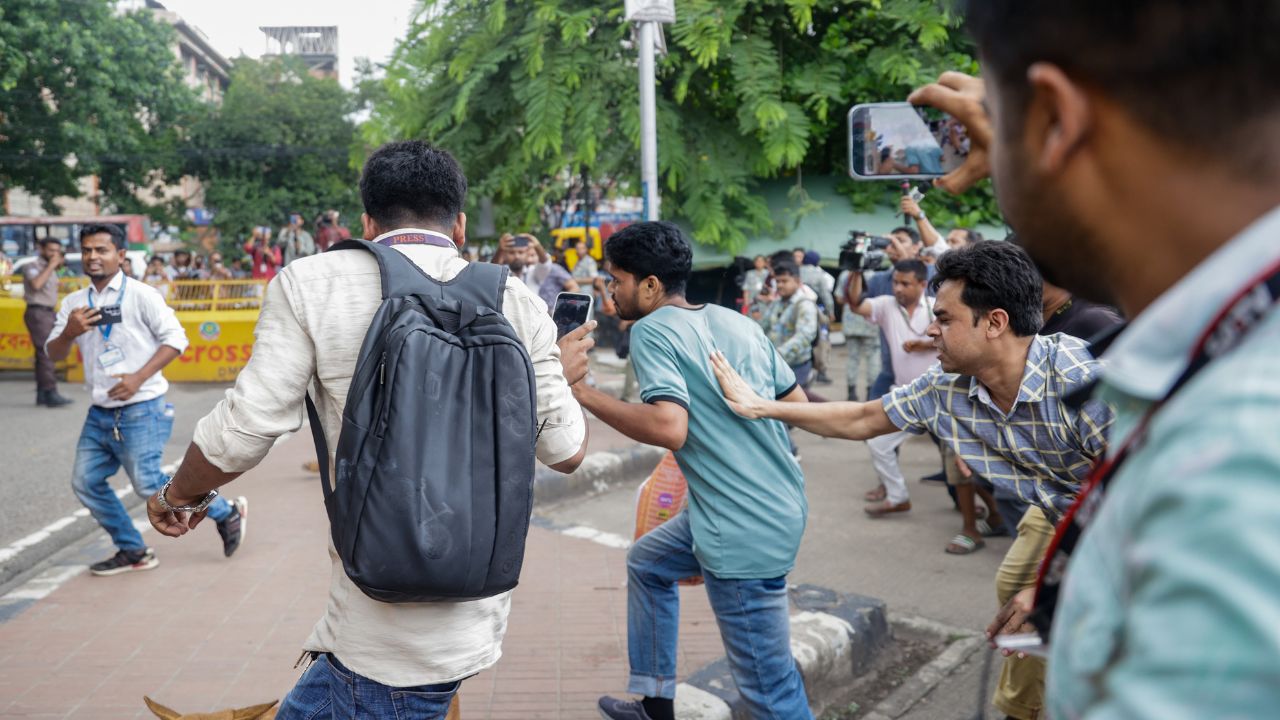



Several people identifying themselves as “July Warriors” have allegedly searched the mobile phones of members of the public and assaulted them on Dhanmondi Road 32.
Exactly two years ago, coordinators of the then Anti-Discrimination Student Movement had strongly criticised similar incidents at the same location, when ordinary people were subjected to phone searches, detention and harassment. At the time, they described phone checks as a “violation of personal privacy.” During the Awami League’s rule, its affiliated student organisation Chhatra League faced widespread criticism for searching people’s phones in a similar manner.
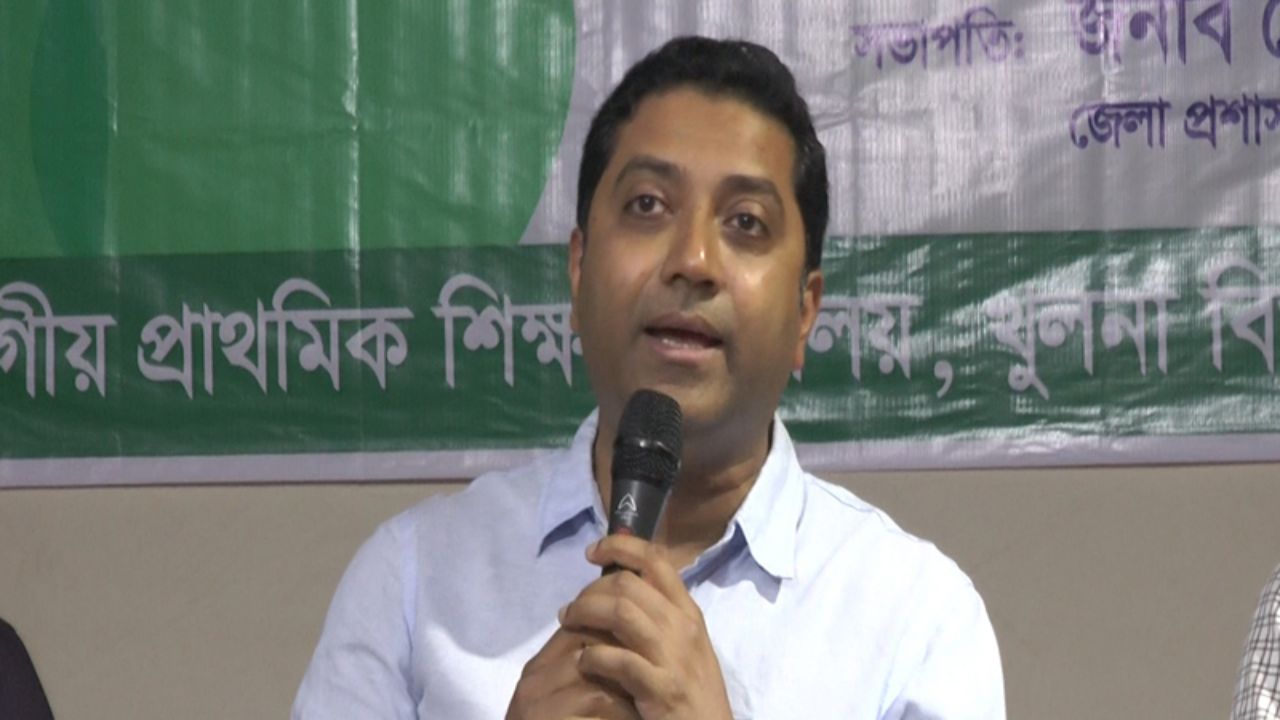
The latest incident began around 11:30am on Saturday at the entrance to Dhanmondi Road 32. A rickshaw puller was recording a video on his mobile phone when ANM Ayash, who identified himself as a “July Warrior” and secretary general of the State Dialogue Forum, approached him and searched his phone.
Ayash alleged that the rickshaw puller had sent the video he recorded to a leader of Jubo League. Following the allegation, several rickshaw pullers accompanying Ayash began assaulting the man. Tensions escalated at the scene, prompting police to intervene and take the rickshaw puller to Dhanmondi Police Station.
Speaking to journalists, Ayash said they were staying in the Dhanmondi Road 32 area to prevent leaders and activists of the banned Awami League and Jubo League from carrying out any “subversive activities”. He also said anyone deemed suspicious would be detained and handed over to police.

However, Ayash did not explain the legal basis for searching the man’s mobile phone.
What does the law say?
Senior Supreme Court lawyer Sharif Bhuiyan said, “No private person has the right to search another person’s phone.”
He explained that Article 43 of the Constitution guarantees citizens the privacy of their correspondence and other means of communication. As mobile phones are now one of the primary means of personal communication, the privacy of information stored on them also falls under this constitutional protection.




He also said accessing someone’s digital device or viewing their personal information without consent may constitute a punishable offence.
What did the coordinators say two years ago?
Ten days after the fall of the Awami League government during the 2024 mass uprising, tensions had similarly gripped Dhanmondi Road 32 ahead of 15 August.
At the time, the charred remains of the home of the country’s founding president, Sheikh Mujibur Rahman, still stood at the site. A group of people had cordoned off the area to prevent anyone from going there to pay tribute. They stopped people passing along the road, questioned them and checked their identity cards and mobile phones.
Hasnat Abdullah, then a coordinator of the Anti-Discrimination Student Movement, himself criticised the practice on Facebook and drew a comparison with Chhatra League.
He wrote at the time, “When Chhatra League checks phones, it is a violation of privacy; what you did today is also a violation of privacy.”
Nahid Islam, now convener of the National Citizen Party (NCP) and then a coordinator of the movement, said portraying arrested people negatively in the media was also a human rights violation and that the accused must be tried through due legal process.
What did Chhatra League do?
During the July uprising in 2024, Chhatra League and Jubo League activists were seen wearing helmets and carrying sticks opposite Shahbagh Police Station.
They were accused of surrounding people near police barricades at Shahbagh, forcing them to unlock their mobile phones and checking their contents. Those whose phones contained anything deemed “suspicious” on suspicion of being quota reform protesters were allegedly slapped, dragged away and taken to the police station compound. At least a hundred police and Ansar members were present at Shahbagh at the time, yet they allegedly did little to stop the incidents.
Contemporary media reports also documented specific allegations against Chhatra League activists of searching the mobile phones of suspected protesters and handing them over to police.
Two years after the mass uprising, online activist Mirza Hasib said he was disappointed to see the same practice of violating people’s privacy being repeated. “No one has the right to check someone’s phone; not even the police, without following legal procedures,” he said.
He also questioned whether anyone could strip a rickshaw puller of his fundamental rights simply because he was a member of a banned organisation.
Asked what action had been taken against those allegedly involved in the phone search, detention and assault at the scene, Dhanmondi Police Station Officer-in-Charge Mohammad Imdadul Islam told TIMES, “Action will be taken if a specific complaint is received.”