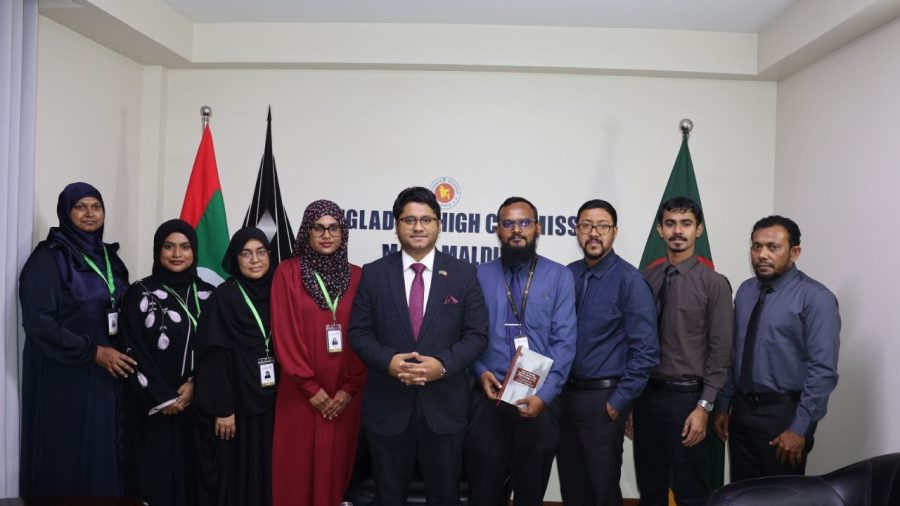



The High Commissioner of Bangladesh to the Maldives, Dr Md Nazmul Islam, on Tuesday met an 11-member delegation from the Islamic University of Maldives (IUM) following their successful seven-day academic trip to Bangladesh under the Social Entrepreneurship Exposure Programme (SEEP) 2026.
The delegation, comprising 10 undergraduate, master’s and PhD students along with one faculty member, had also interacted with the high commissioner prior to their departure, reads a press release.
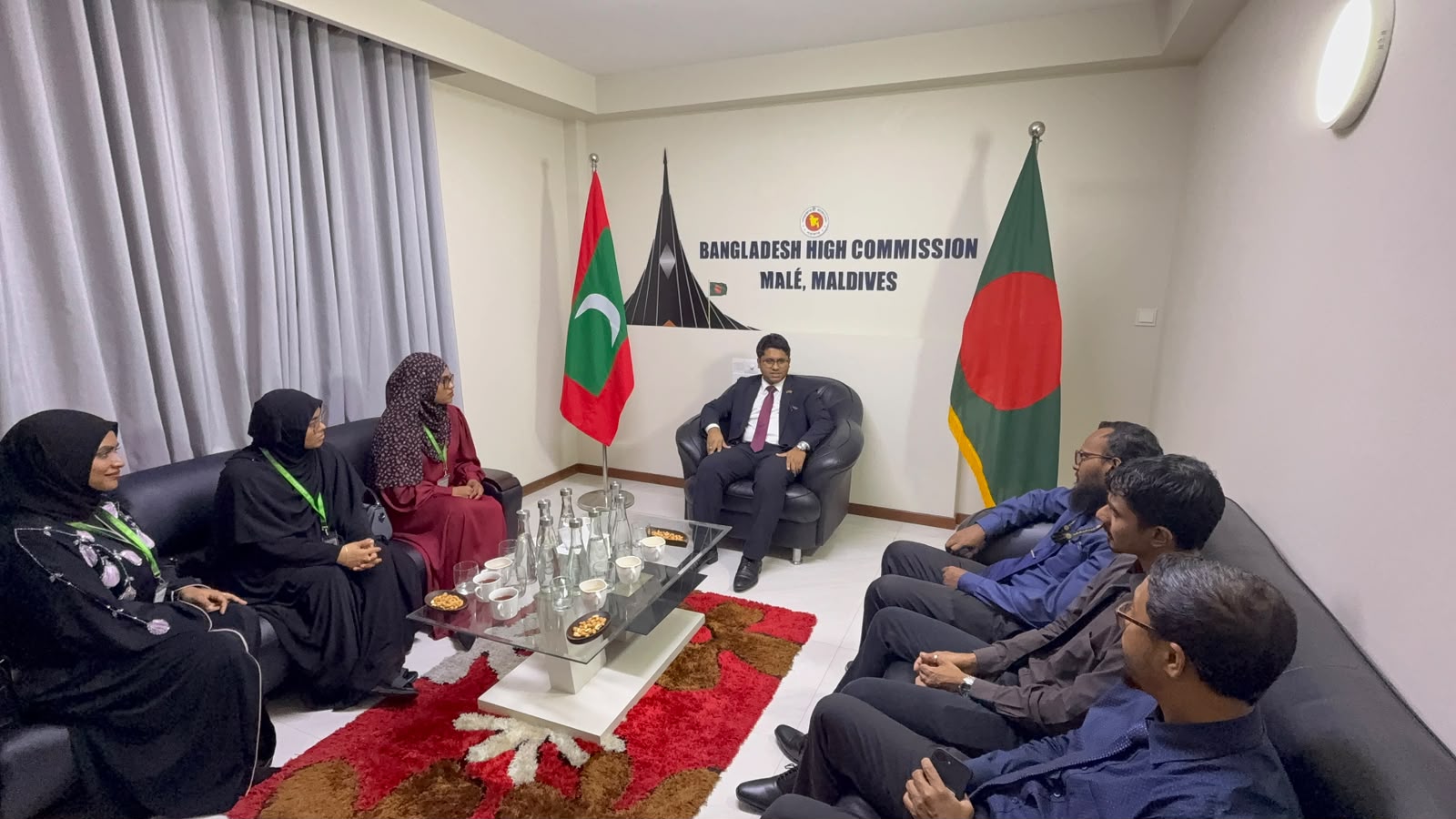
During the meeting in Malé, the students shared their reflections from the visit, which ran from 29 September to 5 October 2026.
Student impressions and interests
During the interaction, the students praised the warmth, hospitality and friendliness of the Bangladeshi people, describing their stay as highly enjoyable and enriching.
They highlighted their appreciation for Bangladeshi cuisine, noting that they continued seeking out Bangladeshi food upon returning to the Maldives.

The participants also expressed strong interest in Bangladeshi ready-made garments, as well as the country’s social entrepreneurship, social business and microcredit initiatives.
The delegates voiced a keen desire to revisit Bangladesh in the future to further explore its academic, social and cultural environment.

Academic and cultural itinerary
Hosted by Daffodil International University (DIU), SEEP 2026 was designed to provide IUM students with practical learning opportunities, institutional interaction, cross-cultural experiences and academic exposure in social entrepreneurship.
Throughout their stay, the delegation visited notable academic, historical and cultural locations, including the University of Dhaka, Lalbagh Fort, Bashundhara Shopping Mall and the Turag River.
The programme schedule proceeded as follows:
29–30 September: Following arrival in Dhaka on 29 September, the delegation commenced activities at DIU on 30 September with a campus tour and opening ceremony. Academic modules covered Introduction to Social Business, Financial Aspects of Social Business, and the Social Business Model Canvas, complemented by group work and sports activities.
1 October: The team visited the High Commission of Maldives in Bangladesh, followed by shopping and other local activities.
2 October: The group visited a historical site in Dhaka and took part in further cultural experiences.
3 October: Academic sessions focused on Social Business and the Sustainable Development Goals (SDGs), Management Aspects of Social Business, Marketing for Sustainability, and Social Business Plan Preparation, followed by a BBQ programme and informal interaction.
4 October: Students delivered final presentations, visited the Yunus Centre, attended a certificate-giving ceremony, and toured the Nobel Museum.
5 October: The delegation departed Dhaka for the Maldives.
Diplomacy and people-to-people ties
Warmly welcoming the students, High Commissioner Dr Nazmul Islam encouraged them to share their experiences of Bangladesh with fellow students, friends and the wider Maldivian community.
He emphasised that regular academic and educational exchanges serve as a vital bridge between Bangladesh and the Maldives, creating opportunities for young people to interact, learn from one another and develop a deeper mutual understanding.
He expressed hope that similar exchange programmes would be organised more frequently in the future, involving a greater number of students and educational institutions from both countries.
Dr Nazmul Islam extended gratitude to IUM for participating in the programme and sending its students, and thanked DIU for hosting the delegation and arranging a comprehensive itinerary combining academic learning, social entrepreneurship, cultural exposure and institutional engagement.
The Bangladesh High Commission regards academic exchanges as an important instrument of cultural diplomacy, public diplomacy and Bangladesh’s soft power.
The high commissioner observed that when students learn together, institutions connect and young people build friendships, education becomes a powerful instrument of diplomacy and a lasting expression of Bangladesh’s “Power of Bonding” with the Maldives.