


Pakistan has expressed interest in signing agreements with Bangladesh’s civil service training institutions to strengthen the skills of government officials and promote the exchange of professional knowledge and experience.
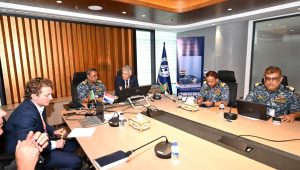
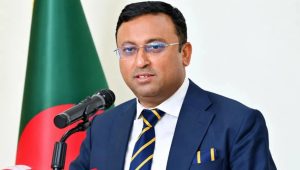
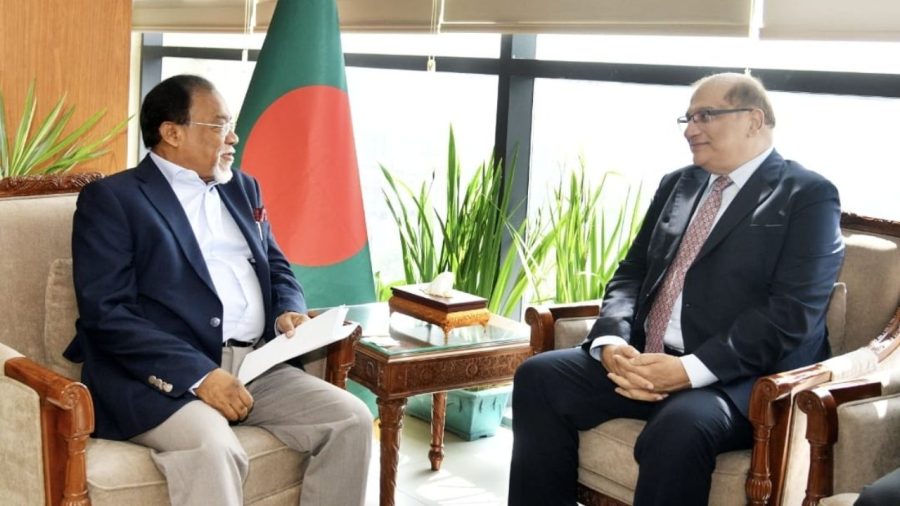
Pakistan High Commissioner to Bangladesh Imran Haider conveyed the proposal during a meeting with Prime Minister’s Adviser on Public Administration Ismail Zabihullah at the Secretariat on Wednesday.
The high commissioner said Pakistan was interested in signing memorandums of understanding (MoUs) between the Bangladesh Public Administration Training Centre (BPATC) and Pakistan’s National School of Public Policy (NSPP), as well as between the Bangladesh Civil Service Administration Academy (BCSAA) and Pakistan’s Civil Services Academy (CSA).
He said 12 Bangladeshi government officials had already completed training in Pakistan, while training arrangements for another 35 officials were under way.

Haider said greater understanding and exchanges of experience between civil servants could play an important role in reducing the trade deficit between the two countries and expanding economic cooperation.
During the meeting, the advisеr recalled the inter-wing scholarship programme that facilitated educational exchanges between students of East and West Pakistan before Bangladesh’s Liberation War.



The two sides also discussed opportunities to strengthen bilateral relations, expand trade and explore cooperation in training, education, healthcare and industry.
Both expressed interest in establishing sports equipment manufacturing factories through joint ventures between Bangladeshi entrepreneurs and manufacturers based in Pakistan’s Sialkot.
The discussions covered the potential production of tennis balls, other types of balls and sports equipment, alongside technology transfer, skills development and improvements in local manufacturing capacity.
The two sides also expressed interest in exchanges of experience and training between athletes from both countries. They emphasised the need for communication and necessary initiatives among the relevant institutions.
On trade, the high commissioner said Pakistan maintained a duty-free import quota of 10,000 metric tonnes of tea annually from Bangladesh.
He said there was scope to increase Bangladeshi tea exports to the Pakistani market.
The meeting also explored the potential for exporting pineapples and shrimp from Bangladesh to Pakistan, with both sides stressing the need for measures to expand trade in these products.