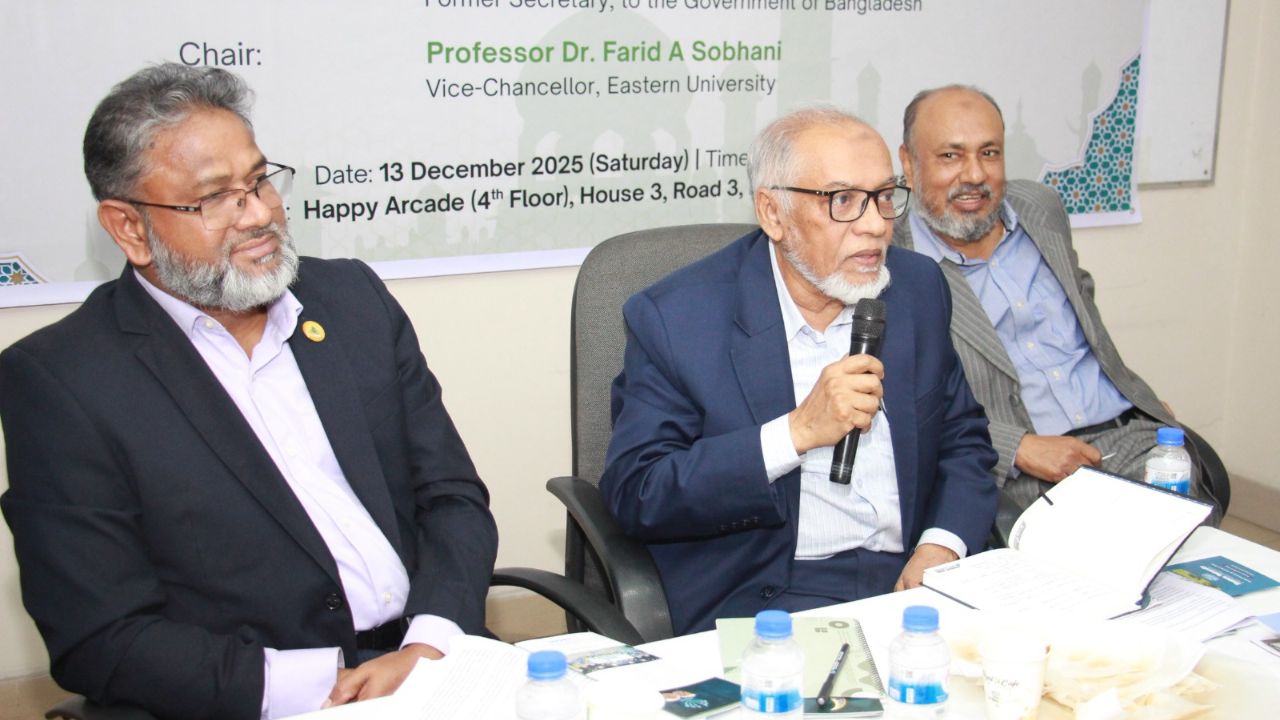



Eastern University hosted a significant roundtable on “Islamic Finance, Banking, and Insurance in Bangladesh” on Saturday, in the capital’s Dhanmondi area. The event was attended by prominent bankers, Shariah scholars, and academic experts from across the country.
The event, chaired by Professor Dr Farid Ahmad Sobhan, vice-chancellor of Eastern University, featured Dr Mohammad Ayub Mia, chairman of Sammilito Islamic Bank and former Secretary, as the chief guest.
Dr Abul Bashar Khan, registrar of Eastern University, moderated the session, while Dr Farhana Khan, director of the Department of Islamic Finance, Banking, and Insurance, oversaw the event’s organisation.
During his address, Dr Ayub Mia welcomed the launch of BBA and MBA programmes on Islamic Finance, Banking, and Insurance at Eastern University, marking a milestone in the country’s academic offerings.

He noted that these programmes would play a crucial role in developing skilled professionals for the sector, bridging academia with the Islamic banking industry.
Dr Ayub Mia emphasised the importance of an independent and influential role for Shariah boards in Islamic finance.
“Shariah boards should not just be advisory but must take on a supervisory role, with their decisions taking priority over the board of directors’ decisions,” he said.




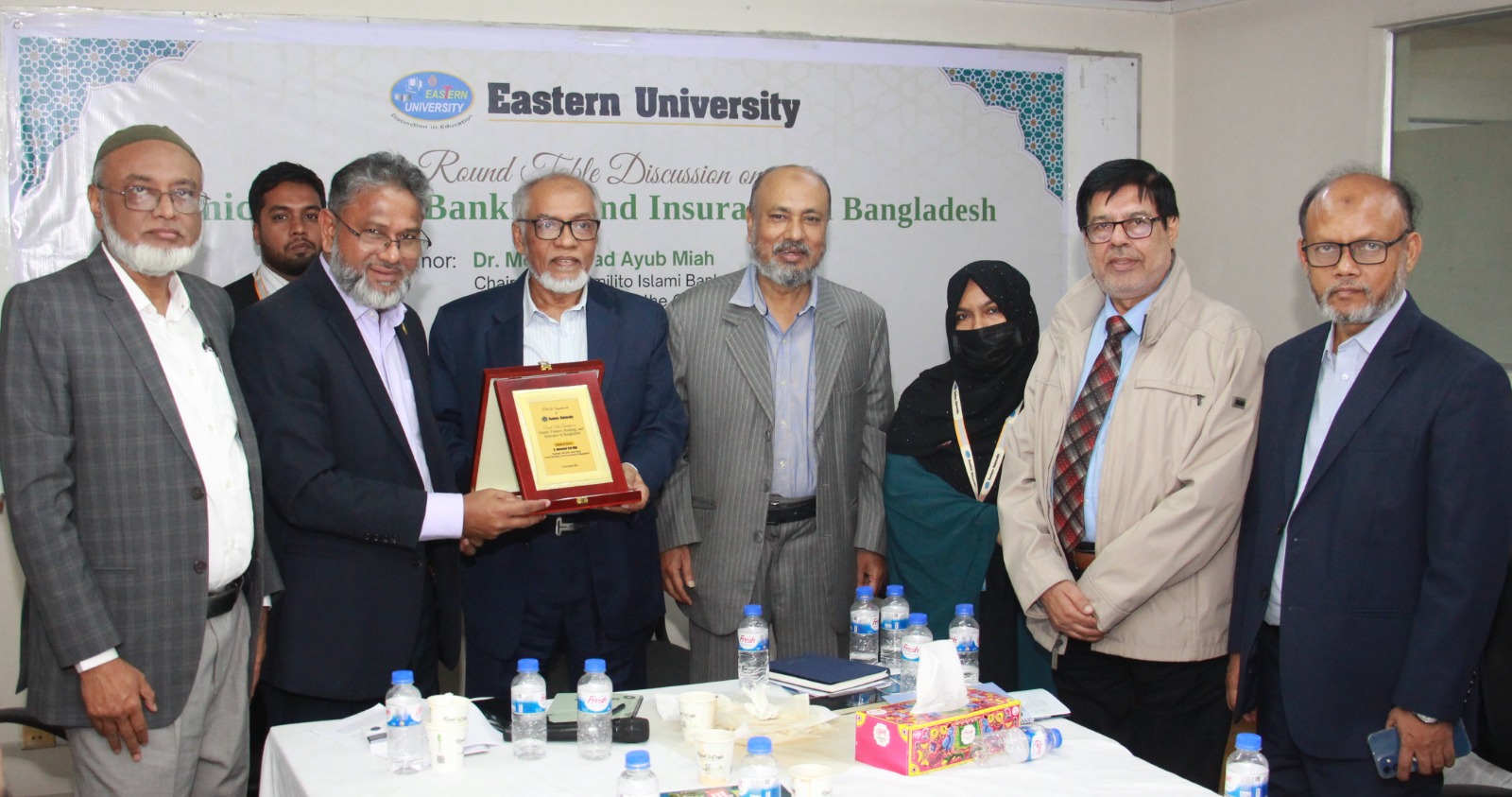
Dr Ayub also underlined the necessity of regular Shariah audits in Islamic banks and called on those involved to perform their duties with sincerity and for the sake of Allah’s satisfaction.
The chief guest further advocated for building strong institutions to advance Islamic economics, highlighting the importance of institutionalizing zakat management for poverty alleviation and social security.
He urged educational institutions like Eastern University to enhance collaboration with the banking and financial sectors and to place greater focus on research and development.
Dr. Ayub Mia also expressed his concern over the underutilization of zakat, despite it being a powerful economic tool, due to the lack of political will. He called for the expansion of Islamic banking services to reach the wider public, emphasizing its advantages over micro-credit and usurious systems. He also stressed the importance of religious scholars gaining economic knowledge to bridge the gap between Islam and economics, ultimately driving societal change.
Other speakers at the event included Professor Dr Syedur Rahman, dean of the Faculty of Business Administration at Eastern University, Mohammad Mejbah Uddin, former director of Bangladesh Bank, Farid Ahmed Fakir, vice president of AB Bank, Mohammad Munirul Haque, head of Shariah Secretariat, EBL Islamic Banking, and Mohammad Azad Rahman, EVP & deputy head of Bank Asia Islamic Banking Division, among others.
The roundtable discussions focused on the current state, challenges, and future strategies for the Islamic finance, banking, and insurance sectors in Bangladesh.
The speakers underscored the importance of creating effective connections between academia and industry, promoting research-based education, and developing skilled human resources for the sector’s growth.
The event concluded with a collective call for greater collaboration between academia, the banking industry, and policymakers to foster a robust Islamic finance ecosystem in Bangladesh.