The government is drawing a line in the sand with Islami Bank Bangladesh PLC, but economists and bankers warn the blast radius could be massive.
As Bangladesh Bank prepares for a crackdown on the financial giant, top economists are urging the state to trade its iron fist for a velvet glove, warning that a misstep could derail the nation’s entire macroeconomic outlook.
This follows allegations that the bank provided financial and logistical support to Bangladesh Jamaat-e-Islami during the 13th parliamentary elections.
Recently, a “shadow dispute” has emerged between the opposition party Jamaat-e-Islami and the government over leadership changes at the bank, specifically the appointment of a new chairman and the removal of the managing director.
Jamaat leaders and activists have staged protests outside the bank for three consecutive working days. On Monday, police used tear gas, sound grenades, and water cannons to disperse the crowd, an action the Islamist party strongly condemned in a public statement backing the demonstrators.
Zahid Hossain, former lead economist at the World Bank’s Dhaka office, warned that dragging political conflicts into the financial sector risks destabilising the economy. “Since Islami Bank is a major financial institution in Bangladesh, any crisis here could raise fresh international concerns regarding the governance of the country’s entire banking sector,” he told TIMES of Bangladesh.
Central bank officials, however, maintain that their oversight of Islami Bank remains strictly objective.

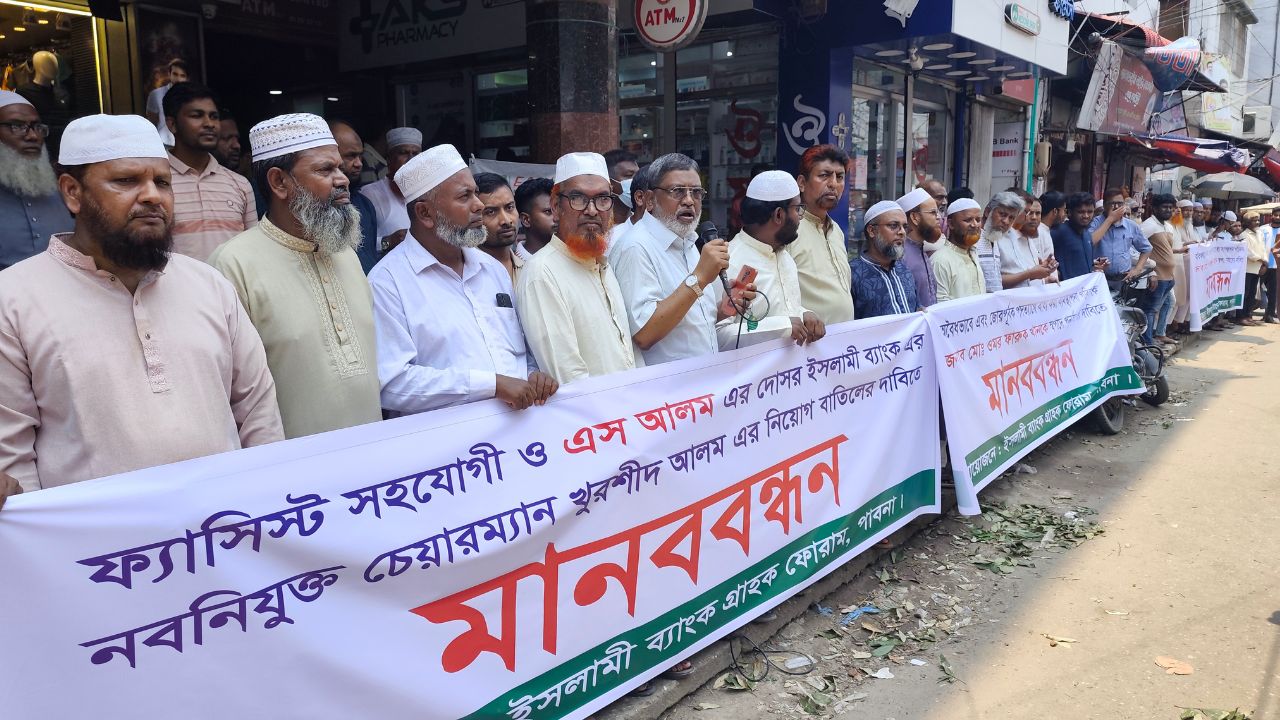
Bangladesh Bank spokesperson and executive director Arif Hossain Khan emphasised this to TIMES, “Bangladesh Bank’s decisions are not dictated by street protests. If we reverse a decision today because one group shows up, only for another group to appear tomorrow and force a 180-degree reversal, the central bank completely loses its standing as a regulatory body.”
However, economist Zahid Hossain warned that the ongoing turbulence risks triggering panic among depositors. “Following the political transition on 5 August, 2024, the bank was on the path to recovery. Unfortunately, those hard-won achievements are now being compromised. Islami Bank could have served as a blueprint for reviving a nearly collapsed financial institution, but that opportunity has slipped away.”
He urged the government to adopt a more responsible, measured approach to ensure public confidence is not entirely eroded.
Ashikur Rahman, Principal Economist at the Policy Research Institute of Bangladesh, noted: “The recent unfortunate developments at Islami Bank are likely to undermine depositors’ confidence. Meanwhile, the progress the bank had made in improving its governance could unravel.”
The unrest peaked on 24 May, just before the Eid-ul-Adha holidays, when both Islami Bank Chairman M Zubaidur Rahman and Managing Director Md Omar Faruk Khan resigned.




The central bank immediately accepted Rahman’s resignation and appointed a new chairman that evening, while the bank’s board accepted the managing director’s resignation during a subsequent virtual meeting.
Since 22 August, 2024, the bank has been governed by an independent board appointed by the central bank.

This followed years of volatile ownership. From January 2017 until the fall of the Awami League regime in August 2024, the bank was controlled by the controversial S Alam Group. Prior to that, it was under the influence of Jamaat-e-Islami through various sponsor shareholders.
Reflecting on this history, Jamaat-e-Islami Amir Shafiqur Rahman claimed at a public rally on 29 December, 2024, that the party had not taken over the bank, but rather that “the bank has returned to its mother’s lap.”
A senior Bangladesh Bank official, speaking on the condition of anonymity, provided further context to TIMES regarding the sudden management shuffle. “We received intelligence that Islami Bank funnelled massive amounts of money and manpower to support Jamaat-e-Islami during the 13th parliamentary elections.”
“Following government directives to investigate, the board initially placed MD Omar Faruk Khan on a 49-day leave. Once evidence confirmed the bank’s logistical and financial involvement in the elections, the board moved to officially accept his resignation,” he said.
According to another central bank official, Bangladesh Bank requested the resignation of Islami Bank Chairman M Zubaidur Rahman immediately after handling the managing director’s departure.
Upon receiving Rahman’s resignation, the central bank promptly issued a letter around 8:00 PM appointing former central bank deputy governor Khurshid Alam as the new chairman.

The timeline of the crisis reveals a highly coordinated effort. The board was first notified of MD Omar Faruk Khan’s resignation on 23 May. That same evening, the Jamaat-backed “Islami Bank Customers Forum” announced a demonstration to the press.
By the morning of 24 May, protesters had besieged the bank’s head office, demanding Chairman Zubaidur Rahman’s ouster and the reinstatement of Khan as MD.
While the board meeting on 24 May was adjourned following Rahman’s resignation, delaying the formal acceptance of Khan’s exit, the unrest did not stop there.
On 1 June, the first working day following the Eid holidays, the Customers Forum staged another protest outside the bank headquarters.
This time, demonstrators demanded the removal of the newly appointed chairman, Khurshid Alam, and again called for Khan to be retained.
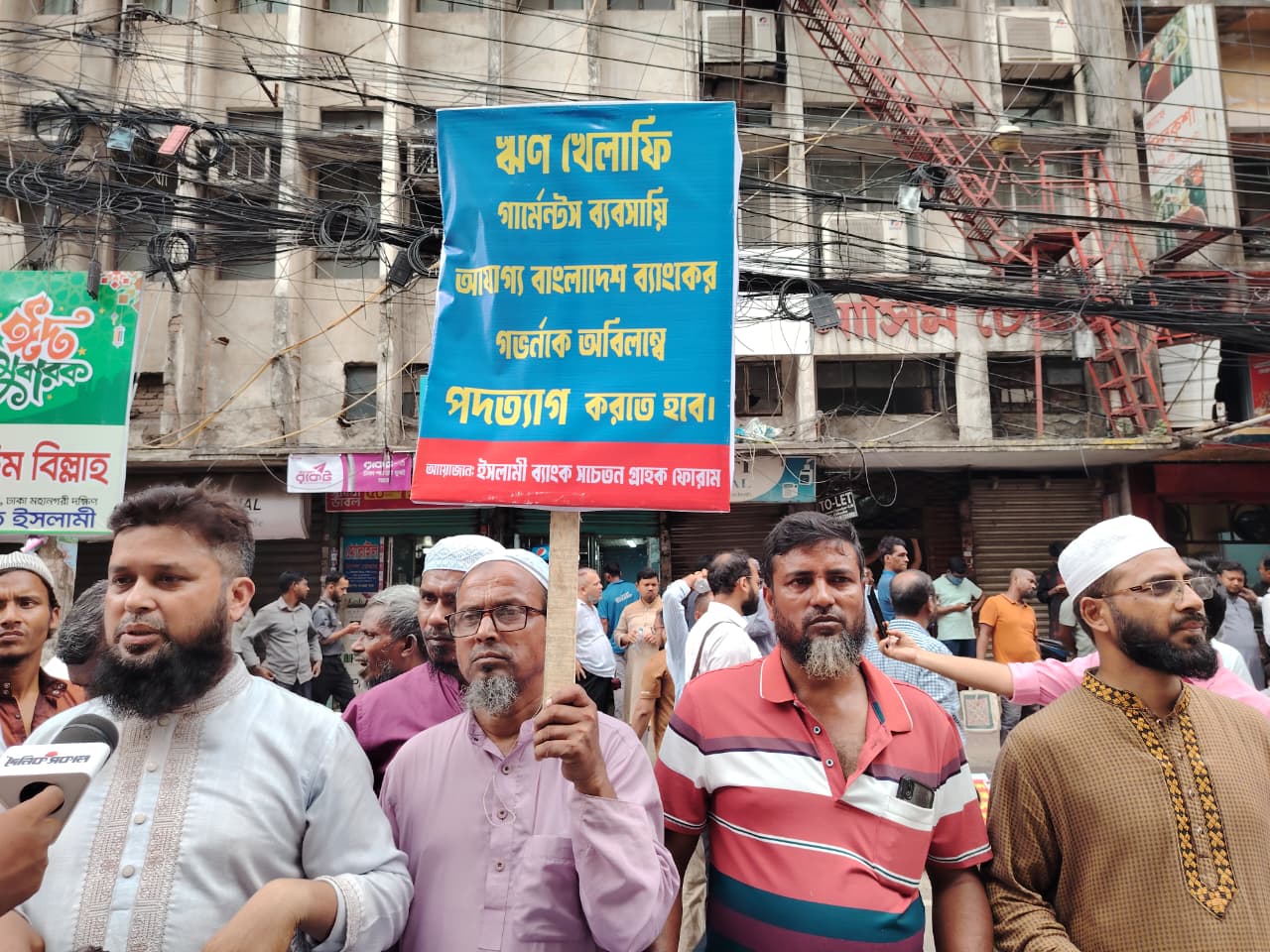
The intense disruption forced the board to cancel its scheduled afternoon meeting, instead convening virtually at 9:00 PM to officially accept the managing director’s resignation.
Protests by the Customers Forum continued at the head office into Tuesday, with sources confirming to TIMES that the demonstrations were heavily populated by activists and supporters led by Jamaat-e-Islami’s Dhaka ward unit amirs.
According to colleagues, Omar Faruk Khan was also “rukn” (top ranking full-fledged member) of Jamaat.
Highlighting the dangerous trajectory of the crisis, economist Zahid Hossain noted that the situation has transcended internal corporate governance.
“The conflict at Islami Bank is no longer confined to individuals or institutions, it has escalated into a full-blown political dispute, openly addressed by political parties,” Hossain warned, adding, “Legally and structurally, banks cannot function as the property of any political party.”
Bangladesh Bank spokesperson Arif Hossain Khan echoed this concern, stating bluntly, “From what we can see, there appears to be a deliberate attempt to transform Islami Bank into an organ of a specific political party.”