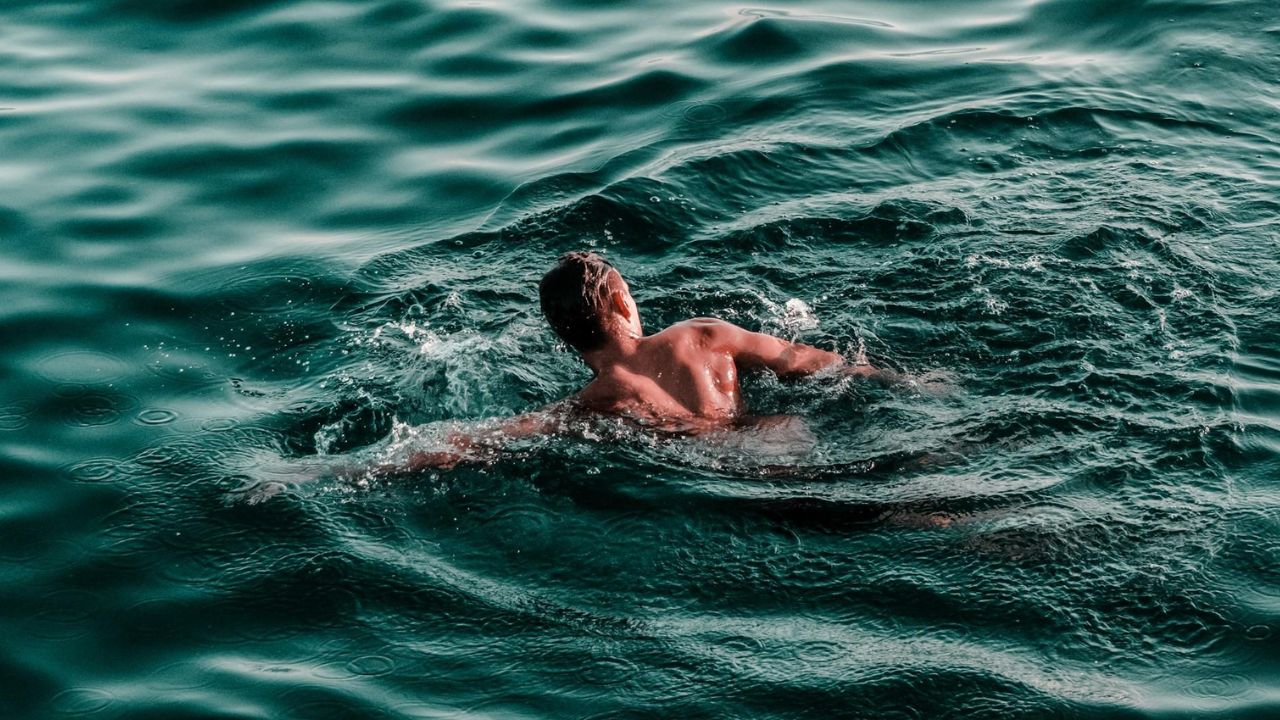



The popularity of wild swimming has grown significantly over the last decade in countries such as the United Kingdom, the United States, and Australia.
While the activity is often praised for its mental health benefits and ability to reduce stress, health experts are raising alarms regarding the dangers posed by sewage, agricultural runoff, and toxic algae, reports BBC.
Despite substantial investments in urban water infrastructure, such as London’s 25km Tideway “super sewer” and the €1.4 billion cleanup of the Seine in Paris, water quality remains vulnerable to weather events.

Isabel Douterelo Soler, a senior lecturer at the University of Sheffield, noted that heavy rain often overloads these systems, causing “combined sewer overflows” that can make rivers microbiologically unsafe for up to 72 hours.
Health consequences for swimmers can be severe. Beyond common gastrointestinal issues, there is the threat of Leptospirosis, a bacterial infection linked to animal urine that can cause organ failure. Antimicrobial resistance is a mounting concern; research suggests regular surfers are more likely to carry antibiotic-resistant E. coli in their gut.




Isobel Stanton of the UK Centre for Ecology and Hydrology attributed these “superbugs” to sources such as wastewater treatment plants.
Current testing protocols often fail to provide a real-time safety picture. In Europe and the UK, bathing water classifications are based on four years of historical data rather than immediate conditions. Similarly, in the US, results from faecal indicator bacteria tests can take 24 to 48 hours to process, meaning warnings may arrive after swimmers have already been exposed to contaminated water.
To stay safe, experts advise avoiding wild swimming for several days following heavy rainfall. Swimmers are encouraged to inspect the water for “bloomy” or cloudy appearances, brown flows, or unusual odours.
Public health guidelines also recommend covering cuts with waterproof plasters, showering immediately after swimming, and seeking medical help if symptoms like fever or headaches occur.
While inland sites often have lower water quality than coastal areas, authorities emphasize that personal judgement and local awareness are key to safely enjoying the sport.