Indian authorities are forcibly expelling ethnic Bengali residents, overwhelmingly Muslims from West Bengal, into Bangladesh without due process, leaving families stranded in no man’s land between armed border guards, Human Rights Watch said Tuesday.
The rights group documented how India’s Border Security Force (BSF) has attempted to push hundreds of people, including children and pregnant women, across the frontier since 1 June, only to be blocked by Bangladesh’s Border Guard (BGB).
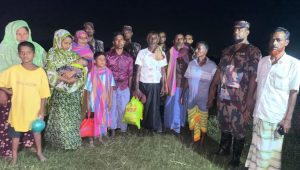
Dozens of families have been trapped for days in open fields, exposed to monsoon rains and lightning, without food, water, or shelter.
“Indian authorities are cruelly dumping families into Bangladesh or leaving them stranded at the border, ignoring their basic human rights,” said Meenakshi Ganguly, HRW’s deputy Asia director. “The government should stop unlawfully expelling people and end this dismaying animosity toward Muslims.”
The ‘detect, delete and deport’ drive
The crisis has escalated since the Hindu-nationalist Bharatiya Janata Party (BJP) seized power in West Bengal’s March elections. Chief Minister Suvendu Adhikari has championed a “detect, delete and deport” policy, claiming hundreds of “Bangladeshi infiltrators” have been detained and nearly 5,000 forced “to go back.”

HRW interviewed nine witnesses who described BSF troops bringing groups to the border at night, pushing them through cuts in barbed wire. In several cases, the BSF only allowed return after the BGB denied entry, leaving civilians trapped between two hostile forces.
In one incident on 5 June in Panchagarh, a 75-hour standoff ensued after the BSF tried to push ten people, including children, into Bangladesh. “The group had advanced approximately 50 feet inside Bangladeshi territory,” said villager Rubel Hossen, 35. The stranded group endured lightning and torrential rain the first night, received dry food only on the second day, and faced what Hossen called “a war-like standoff” until the BSF finally escorted them back.
On 6 June, six members of two Bengali Muslim families were pushed toward the Tetulbaria border. The BGB blocked entry; the BSF prevented return. They spent the night in the open before being allowed back. On 8 June, the BSF took back 11 people, including a pregnant mother and child, after nearly 48 hours at the “zero line” in Thakurgaon.


Stripped of citizenship, then expelled
The expulsions follow a controversial revision of West Bengal’s voter lists ahead of the March polls, which dropped over nine million names. In Assam, a flawed 2019 citizenship verification left 1.9 million stateless.
Assam’s BJP Chief Minister Himanta Biswa Sarma has branded Bengali-speaking Muslims “illegal immigrants,” boasting: “We take them to a convenient location near the border and literally push them across.”
Hasibur Islam, a union council member in Panchagarh Sadar, met a family from Siliguri who held Aadhaar cards but were dropped from voter rolls. Police detained them and handed them to the BSF. “The oldest member of the family has voted four times,” Islam said. “This year, none of them were able to vote, their names had been dropped.” The family was stranded three days before being allowed back.
An estimated 400 people are held in West Bengal border detention centres. “Exclusion from the rolls has become a trigger for arrest, detention, and expulsion and a source of pervasive fear,” one activist told HRW.
Political calculations
Analysts say the issue is being driven by raw domestic politics. “This is a dangerous political move,” said former diplomat Mashfee Binte Shams. “The BJP government in West Bengal, seeking to consolidate its vote bank, has resorted to rhetoric about sending back Muslims.”
Diplomat Mahbub Hassan Saleh warned that bypassing established repatriation mechanisms is “unlawful and counterproductive.” He added: “Anti-Bangladesh and anti-Muslim rhetoric have long been used in Indian domestic politics, particularly during election periods. What is concerning now is the tendency to translate that rhetoric into action.”
Bilateral relations at breaking point
The crisis is straining India-Bangladesh relations. Bangladesh insists it will not accept people pushed across outside legal channels. State Minister for Foreign Affairs Shama Obaed Islam said Bangladesh has taken a “firm position” and “will not allow any push-in.”
The BGB has quadrupled patrols along the border to block what Dhaka views as forcible displacement. Indian media claim those gathered are doing so voluntarily; Bangladeshi officials maintain they are being expelled.
HRW said India is obligated under international treaties to prevent deprivation of citizenship based on race or ethnicity. Expelling people without due process violates fundamental rights; leaving them without food, water, or shelter may amount to cruel, inhuman treatment. Children stranded at borders face violations of the Convention on the Rights of the Child.
India and Bangladesh have bilateral mechanisms for nationality verification and orderly transfer. HRW said India’s circumvention of these procedures has repeatedly trapped people between two border forces, a practice Saleh said is “contrary to India’s ‘Neighbourhood First Policy’.”
“No one, whatever their nationality, should be left to spend nights in an open field between two lines of armed border guards,” Ganguly said. “India should end these brutal expulsions.”