Industries Secretary Obaidur Rahman has said India has registered several of Bangladesh’s traditional Geographical Indication (GI) products in its own name, creating complications for Bangladesh in the international market.
The secretary added that Bangladesh’s delay in registering GI products has allowed India to take the lead, which will cause trademark disputes in the global market.
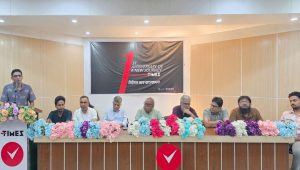
He made the remarks while speaking at a seminar titled “FGD on Branding and Marketing Challenges for CMSMEs: Unblocking Export Potentials” organised by the Dhaka Chamber of Commerce and Industry (DCCI) on Monday.
“India has registered the Tangail Saree as ‘Tangail Saree of Bengal.’ We have filed a case, which is now pending with the Madras High Court,” said Obaidur.

He stated when India published a journal claiming “Tangail Saree” as its own, Bangladesh did not register any protest. “As a result, we are now forced to take the difficult path of legal battles,” Obaidur added.
Pointing to the lack of institutional support, the secretary said, “There is no association in our country for GI product branding. As a result, the responsibility has to be handed over to the concerned ministries, whereas it should have been done by dedicated associations.”




Obaidur said that the SME Policy 2019 is being revamped to make it more modern and inclusive. “We have proposed a 25% quota for women and small entrepreneurs in government tenders,” he said, highlighting the government’s plans for small entrepreneurs.
The ministry has also urged city corporations and the Local Government Ministry to simplify the process of issuing trade licenses for e-commerce entrepreneurs.
“About 1.18 crore people are directly engaged in the SME sector, while nearly 3 crore are involved directly and indirectly. We have to think afresh about their future,” the secretary said.
He also informed that the Industrial Policy 2022 will be updated in line with the 2025 policy framework.
Expressing frustration over Bangladesh’s apparel sector, Obaidur said that while ‘Made in Bangladesh’ garments are available abroad, there are no globally recognized Bangladeshi brands.
“For 54 years we have been preoccupied with politics and elections, but we could not brand Bangladesh,” he lamented.
He said that SME entrepreneurs are struggling to survive against large corporations that dominate the market.
Going forward, the secretary said that all ministries, business leaders and the National Board of Revenue (NBR) will work together to strengthen Bangladesh’s SME sector.