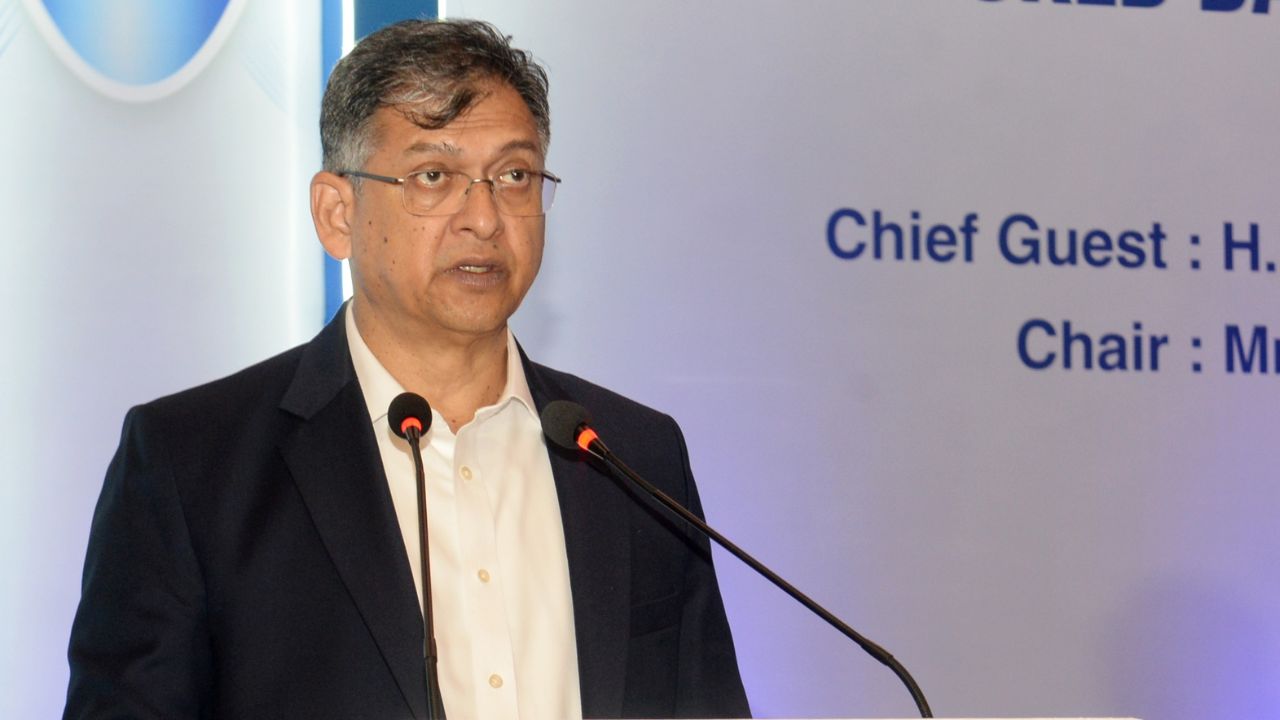



Home Minister Salahuddin Ahmed on Thursday said the current government is working with the highest priority to protect citizens from human trafficking and technology-based crimes.
He affirmed that the government remains committed to a “zero tolerance” policy against international human trafficking and scam rings that exploit technology.
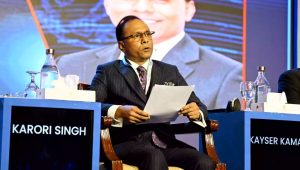
The minister made these remarks at a national dialogue titled “Trapped Behind the Scam: Ending Human Trafficking for Forced Criminality” held at a hotel in the capital to mark World Day Against Trafficking in Persons 2026.
Salahuddin noted that the nature of human trafficking is evolving and becoming increasingly complex.
He explained that criminal syndicates are no longer relying solely on traditional methods but are using digital platforms, fake online recruitment sites, and social media to lure youth and job seekers.

Victims are being taken abroad under the false promise of attractive employment only to be confined in cyber scam centres, where they face extreme torture and threats while being forced to conduct criminal activities.
To combat these threats, Salahuddin emphasised that traditional law enforcement measures are insufficient. He called for a coordinated and robust defence involving technology companies, financial institutions, private sector, and a conscious civil society.



Highlighting the government’s legislative progress, the minister announced the enactment of “Human Trafficking and Migrant Smuggling (Prevention and Suppression) Act, 2026.” This law, aligned with United Nations Convention against Transnational Organised Crime (UNTOC) and its protocols, brings modern offences such as online scams and forced criminality under strict punishment.
The “Human Trafficking Prevention and Suppression Rules, 2017” are being updated, and Ministry of Home Affairs is finalising “National Action Plan (2026-2030).” This plan is built upon four primary pillars: prevention, protection, prosecution, and partnership.
Regarding victim dignity and rehabilitation, Salahuddin said that it is the government’s moral and legal duty to ensure the protection of every trafficking victim. The “National Referral Mechanism (NRM)” is being strengthened to provide victims with immediate legal, physical, psychological, and rehabilitation support.
Additionally, a state-of-the-art “Digital Trafficking Prevention Information Management Platform” is being developed to ensure data-driven policy-making and accurate case tracking. He also urged the media and civil society to raise public awareness against fake recruitment rings.
The dialogue was chaired by Manzur Morshed Chowdhury, senior secretary of Ministry of Home Affairs.
Special guests included Md Liakat Ali Mollah, secretary of Law and Justice Division; Md Ali Hossain Fakir, inspector general of Police (IGP); Baiba Zarina, charge d’affaires of European Union; and Laura Tom Bonde, chief of Mission of IOM Bangladesh and Coordinator of UN Migration Network.
Also in attendance were Rear Admiral Md Ziaul Haq, director general of Bangladesh Coast Guard, and Brigadier General Md Sohrab Hossain Bhuiyan, additional director general of Border Guard Bangladesh (BGB).
The event commenced with a welcome address by Ziauddin Ahmed, additional secretary of the ministry, followed by a detailed discussion on this year’s theme by Sheikh Saif bin Zayed Al Nahyan, head of UNODC Program Office in Bangladesh. Rebeka Khan, joint secretary (political-1 branch) of Ministry of Home Affairs, moderated the session.
A subsequent working session featured a panel discussion moderated by Tasnim Binte Karim, national program coordinator for UNODC South Asia. Panelists included Mohammad Mosharraf Hossain, head of Criminal Investigation Department (CID) and acting additional IGP; Giuseppe di Giovanni, representative of Italian State Police at Italian Embassy in Dhaka; Shariful Hasan, associate director of BRAC’s Migration Programme and Youth Platform; and Nahid Arman, a survivor of a Cambodian online scam centre.
The programme, which included a documentary screening and a puppet show titled “Trapped in Pursuit of a Better Life,” was jointly organised by Ministry of Home Affairs, United Nations Office on Drugs and Crime (UNODC), and UN Migration Network’s Counter Trafficking Technical Working Group.