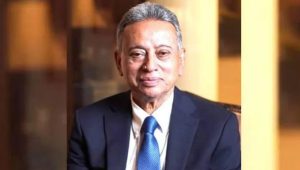
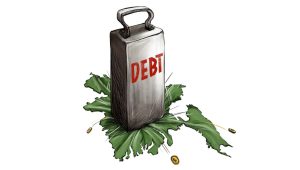
Finance Minister Amir Khosru Mahmud Chowdhury has pushed back against claims that the government returned empty-handed from the International Monetary Fund, saying Bangladesh chose to exit the previous programme on its own terms and will negotiate a new one that better serves the national interest.
“The government did not return empty-handed from the IMF,” he said. “Rather, as some conditions of the programme taken during the fascist government’s time did not seem acceptable to us in consideration of the interests of the country and the people, we ourselves exited that programme.”
He made the remarks on Monday afternoon while delivering the closing speech on the proposed budget for fiscal year 2026-27 in the National Parliament.
The minister said the government would enter into a new programme with the IMF through negotiations, keeping in view the interests of the country and its people. He did not provide a timeline for when such talks might conclude.

Khosru also pointed to Prime Minister Tarique Rahman’s recent visits to Malaysia and China as a source of economic optimism, saying the trips are expected to yield significant dividends in investment, infrastructure development, technology transfer and manufacturing capacity.
“Such partnerships will make us more confident in implementing the government’s economic plans,” he said.


The minister identified deregulation as one of the government’s principal policy reforms, framing it as a shift away from an approval-dependent state structure toward a service-oriented one. Specific timeframes have been set for government service delivery, he said, so that entrepreneurs are no longer left waiting in uncertainty.
Coordinated programmes are being implemented across industrialisation, export-oriented production, the technology sector, small and medium enterprises, and the creative economy, he added.
Acknowledging that energy security risks and unreliable power supply have long acted as a drag on industrial production, the minister outlined a multi-tiered plan to address the problem. Measures include diversifying energy sources, expanding LNG terminal capacity, strengthening state-owned Bapex, issuing international tenders for domestic gas extraction, establishing a second Eastern Refinery to boost oil refining capacity, and targeting 20 percent electricity generation from renewable sources by 2030.
“A definite period of time is required to implement these initiatives,” he said, urging the public to remain patient.
The minister stressed that employment creation would be the natural outcome of the government’s broader growth strategy. Technical and vocational training aligned with labour market demand will be expanded, financial support extended to young entrepreneurs, and the economic participation of women and marginalised communities increased.
“We want to build an economy where the primary strength of the youth will be their talent, skills and innovative capacity,” he said.