National Board of Revenue (NBR), for the first time in Bangladesh’s history, has surpassed the Tk4 lakh crore revenue collection milestone.
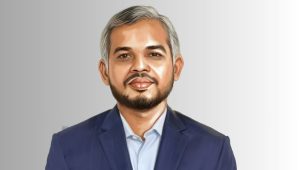
Finance Minister Amir Khosru Mahmud Chowdhury informed Parliament of this success on Monday during the budget session for 2025-27 fiscal year. He attributed this momentum to various steps taken within just four months of the current government’s tenure.
To prevent the harassment of small traders, the government has introduced a flat-rate VAT system based on their capacity. However, to ensure public relief, kitchen markets and small grocery shops will remain entirely outside the purview of this VAT.
Addressing the House, Khosru acknowledged that while the revenue target for the upcoming fiscal year is challenging, it remains achievable. He emphasised that the government aims to reach this goal by expanding the tax base rather than increasing tax rates.

A key priority is making revenue management taxpayer-friendly and transparent through the separation of revenue policy and management, automation of the tax system, and the prevention of tax evasion.
Moreover, deregulation is being pursued to ensure transparency and accountability, thereby promoting business expansion.



To curb inflation and bring comfort to citizens, the government is coordinating monetary and fiscal policies to regulate the money supply. Other measures include strengthening foreign exchange reserves, stabilising the exchange rate, and increasing productivity in agriculture and industry.
Notably, the source tax on 60 essential products has been reduced to keep prices under control. The Minister added that efforts are ongoing to remove supply chain flaws, increase market competition, and take strict action against syndicates and artificial price manipulation.
Regarding economic growth, Khosru set a GDP growth target of 6.5% for the upcoming fiscal year. He stated that this target reflects overall economic activity, investment, production, and employment.
To achieve this, the government is prioritising investment in the private and public sectors, alongside the expansion of the ICT, agriculture, and service sectors. Efforts will also focus on mainstreaming the creative economy, human resource development, and physical infrastructure while strengthening the private sector.
Finally, Khosru expressed a strong commitment to restoring discipline in budget deficits and public spending. He stated that the deficit would be kept at a tolerable level through sustainable debt management and increased efficiency in public spending.
The government aims to increase development expenditure while gradually reducing operating costs.
The proposed budget seeks to raise the development expenditure share from 27.27 per cent in FY2025-26 to 33.70 per cent in FY2026-27. Conversely, operating expenditure is proposed to be reduced from 72.73 per cent in FY2025-26 to 66.30 per cent in FY2026-27.