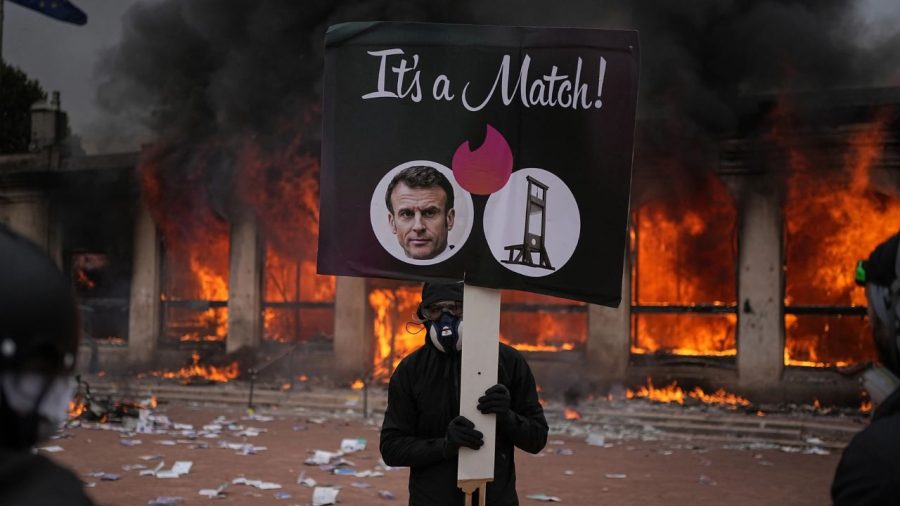



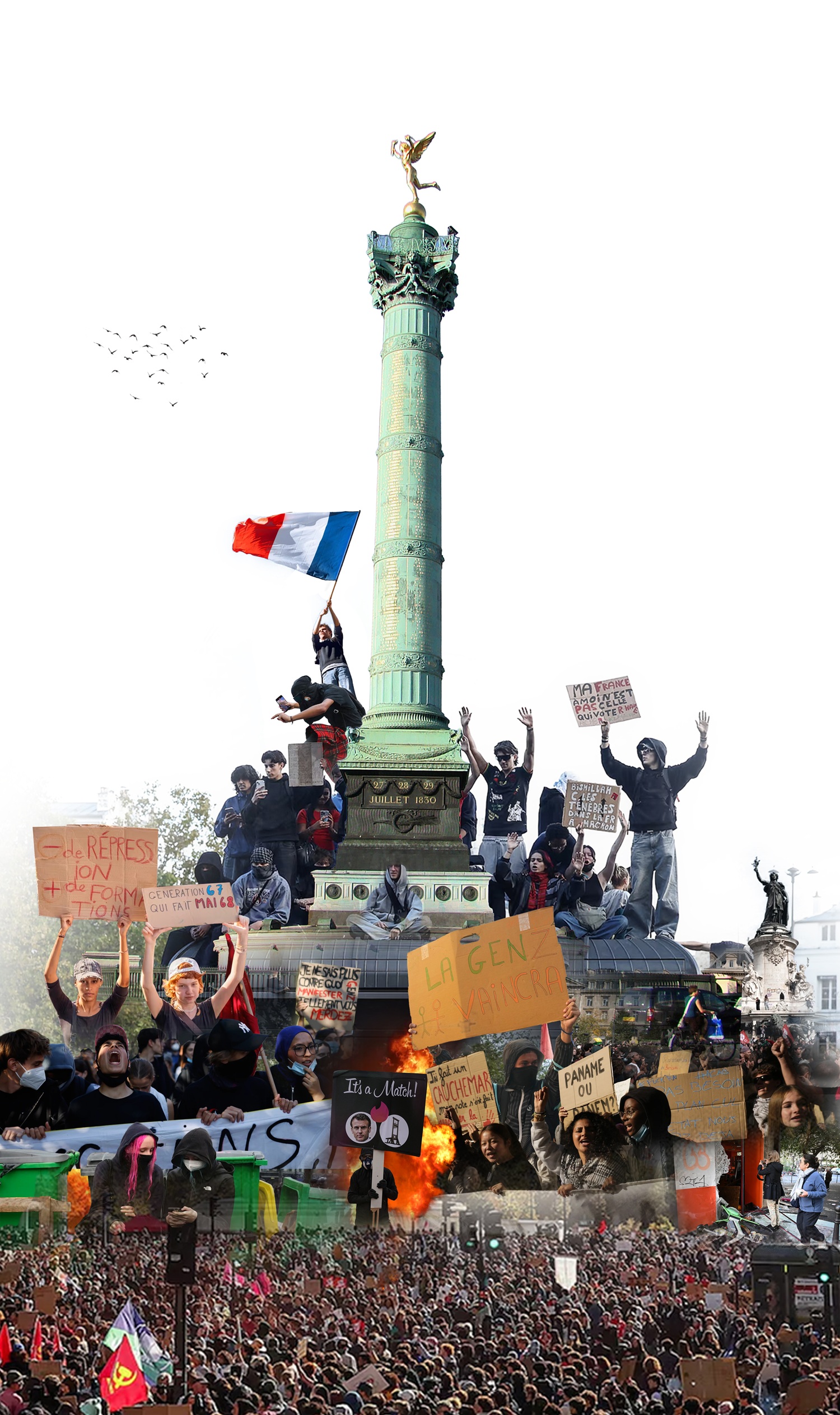
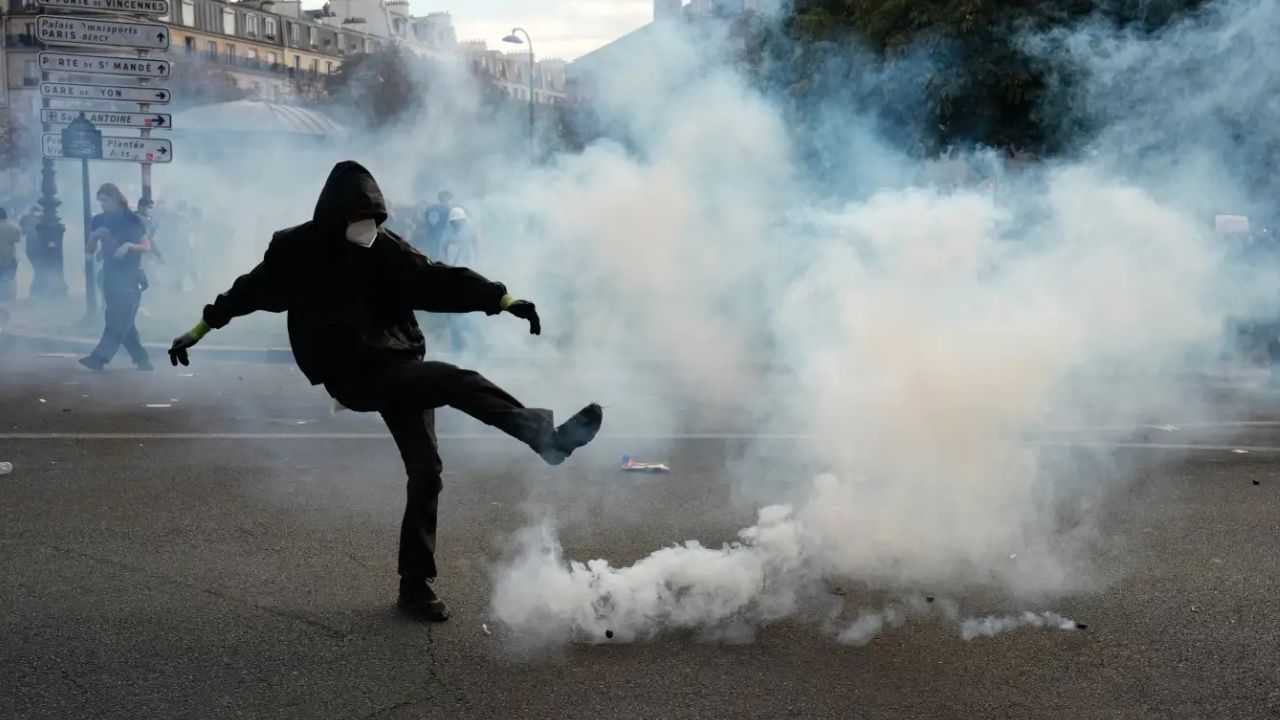
Beneath the heavy fog of tear gas hanging over the Place de la Bastille, banners carried by French teenagers bear a stark warning: “You destroy our future, we block your present”.
What began as localised schoolyard blockades in the Paris suburb of Créteil on 21 September has erupted into France’s largest youth uprising in decades, bringing hundreds of thousands of students, teachers, and workers onto the streets.
The rebellion was sparked not by grand ideology, but by decaying classrooms and systemic neglect.
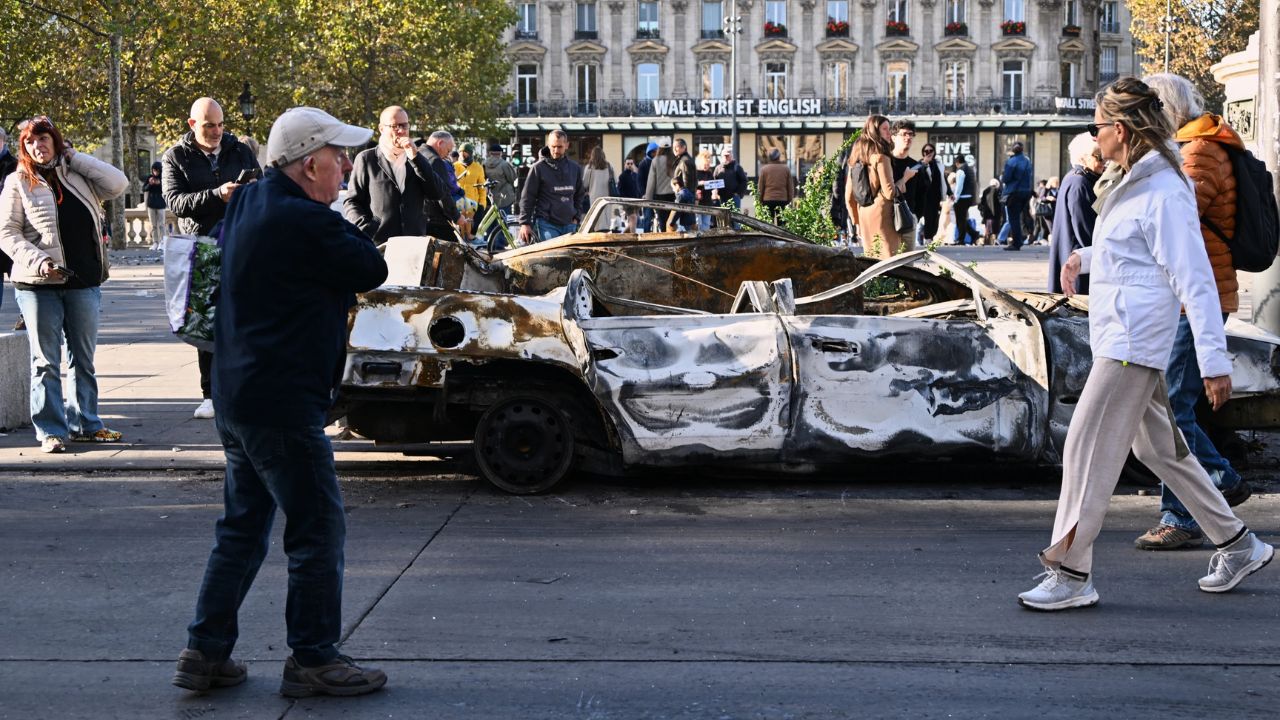
Students across France report classes crammed with up to 36 pupils, temporary classrooms sweltering at 40°C during summer heatwaves, broken sanitation facilities, and months spent without core subject teachers.

The stress of “Parcoursup” – France’s flawed university admissions web portal – has further fuelled student anxiety.
Led by student unions like the Union Syndicale Lycéenne (USL), youth leaders have demanded a €10 billion injection into public education, smaller class sizes, and an end to funding cuts.


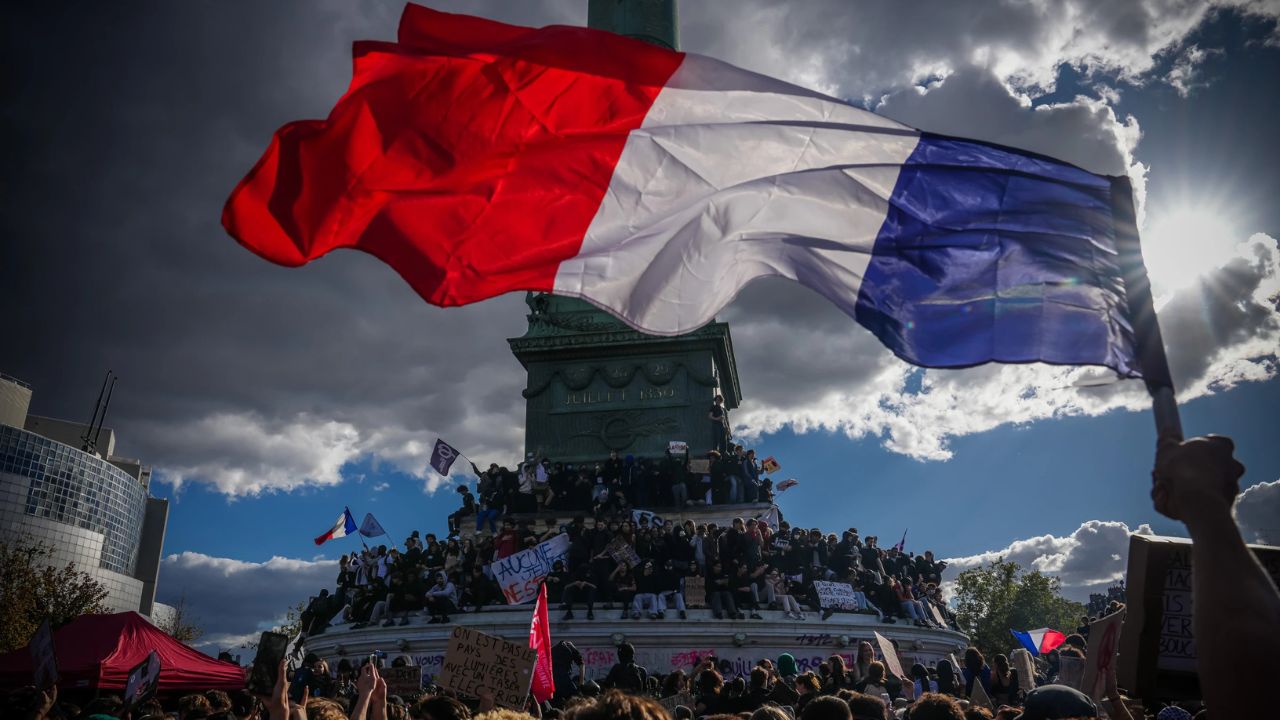
However, as the movement expanded, it converged on 17 October with trade unions and the resurrected “Yellow Vests,” transforming school gates into a broader national battleground against soaring living costs and government austerity.
Rather than meaningful dialogue, the state’s primary answer has been heavy-handed policing. Over 6,800 people – the vast majority minors – have been taken into police custody.
Human rights groups, including Amnesty International and Human Rights Watch, have denounced the “disproportionate” force deployed against high school teenagers.
The human toll is harrowing: a 14-year-old in Saint-Ouen-l’Aumône suffered a double jaw fracture and lost his teeth from a close-range tear gas grenade shot; a 15-year-old in Lens had his hand blown off by a police stun grenade; and a 16-year-old in Tours lost an eye to a rubber bullet.
Although Interior Minister Laurent Nuñez suspended stun grenades, government officials have dismissed the protests as “urban violence” orchestrated by far-left agitators.
With presidential elections approaching and political paralysis deepening, French youth remain defiant.
For a generation facing crumbling infrastructure and shrinking economic prospects, this is no longer just about repaired boilers; it is an existential battle for their collective future.