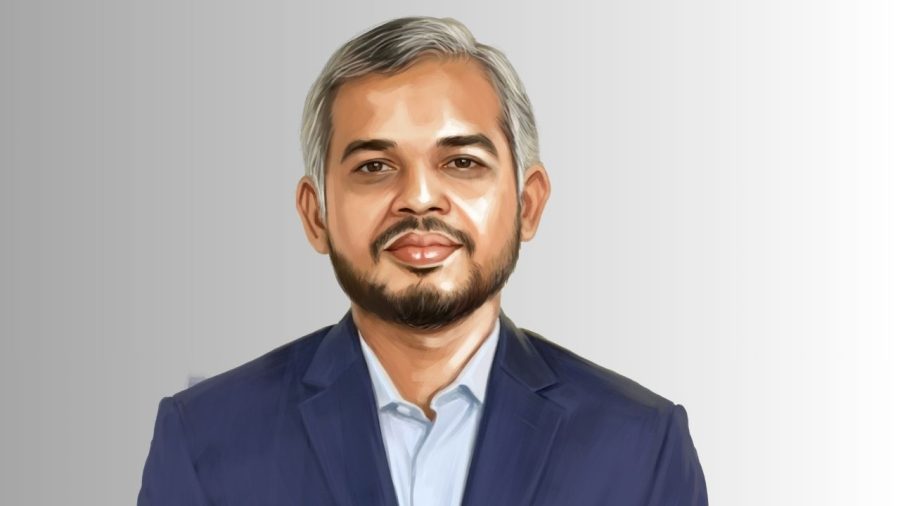



After riding Bangladesh’s high-interest-rate cycle for double-digit gains in bonds, asset manager Kazi Ahsan Maruf is shifting his preference back towards equities.
If handed Tk100 crore to invest for two years today, the Ekush Wealth Management Limited managing director said he would put 80 per cent into equity mutual funds, spreading the money across three to four asset managers rather than investing directly in individual stocks.
Another 10–15 per cent would go into fixed-income funds, while about 5 per cent would remain in cash or gold to take advantage of future opportunities.
The allocation marks a sharp reversal from the strategy Ekush followed when interest rates climbed from 2023 and Treasury yields peaked at around 12.75 per cent.
“We believe equities are now more attractive than bonds because of valuation levels,” Maruf, a Chartered Financial Analyst, said in an interview with TIMES’ Mahfuz Ullah Babu.
At the height of the rate cycle, more than 90 per cent of Ekush’s fixed-income fund was invested in fixed-income instruments. Its equity-focused funds also shifted as much exposure as regulations permitted towards bonds.
The strategy paid off when interest rates began falling and prices of older, higher-yielding bonds rose.
Maruf said the Ekush Stable Return Fund generated close to 17 per cent over the past 12 months, compared with underlying bond yields of about 12 per cent. Roughly five percentage points of the additional return came from active management.

The yields of Treasury bonds have fallen below 9 per cent, while short-term bill yields have come down to less than 8 per cent.
Some 20-year bonds generated returns of around 20–25 per cent, he said.
Rather than buying long-dated securities as soon as rates began rising, the fund initially stayed in shorter-term Treasury bills and waited for higher yields before shifting into longer-term bonds.
With that trade largely played out, Ekush has since reduced its exposure.
Its fixed-income portfolio now has roughly half its assets in government Treasury securities and around 30 per cent in floating-rate subordinated bonds issued by banks.




Some of those bonds offer 2.5 to three percentage points above six-month fixed-deposit rates at third-generation banks. The fund has also locked in some deposits at higher rates.
The diversification is designed to protect returns if interest rates reverse direction again.
For equity investors, Maruf said the attraction now lies mainly in valuation.
Bangladesh’s stock market remains fragile, retail-driven and offers relatively few companies he considers investible, he said. But valuations among selected fundamentally strong companies have fallen far enough to offer potential upside.
The average price-to-earnings ratio of Ekush’s equity funds is around six, according to Maruf.
He sees potential returns of 15–20 per cent from selected quality companies if economic and geopolitical conditions remain broadly stable, although he said that could take a year or longer.
His approach is to own a relatively small group of businesses capable of compounding earnings rather than trade frequently around short-term market movements.
Ekush has held BRAC Bank for about seven years and also has exposure to Jamuna Bank and Prime Bank. Its portfolio includes BSRM, Rex Pharma and Square Pharmaceuticals, while it also has some exposure to Robi.
“If you find that kind of business, you do not need to buy and sell all the time,” Maruf said.
He argues that companies with strong underlying businesses and capable management should eventually reflect earnings growth in their share prices even if the broader market remains volatile for extended periods.
Maruf said that logic becomes particularly important if Bangladesh eventually returns to the growth trajectory seen over much of the two decades to 2020.
He also expects equity financing to become increasingly important as raising money through banks becomes more difficult.
Regulatory efforts to bring stronger companies to the stock market through changes to initial public offering rules could help, he said, but lower tax rates alone may not be enough to persuade established businesses to list.
Companies also need credible valuations and other benefits from becoming public, including stronger corporate structures and easier succession planning.
If the market can provide those incentives, Maruf expects more quality companies to consider IPOs.
Fixed income, meanwhile, still has a role in diversified portfolios.
Maruf said professionally managed fixed-income funds can move among government securities, corporate bonds and deposits as rates change, while also offering tax advantages.
But the investment equation has shifted.
When Treasury yields were above 12 per cent, bonds offered both high income and the prospect of capital gains if rates declined.
With much of that decline already realised and equity valuations still depressed, Maruf now sees the stronger opportunity in equities.