



Habibur Rahman Insan spent Tk7 lakh to go to Saudi Arabia, for the first few months had no job and could not send any money back home.
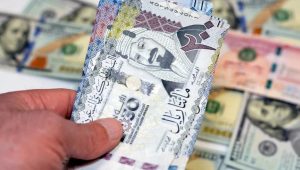
His brother, Mohammad Minhajul Islam told TIMES that Insan, working as a driver now, sends home Tk30,000-40,000 a month, equivalent to 900-1,200 Saudi riyals, but has to pay 500 riyals a month to the kafil, the person through whom the work permit was obtained.
“There is no company visa in Saudi Arabia; one goes on a free visa. While staying under a kafil, one has to find work,” said Minhajul.
A man named Rikap Hossain went to Saudi Arabia with Insan, did not get work for several months and, had to survive on money brought from Bangladesh.
The sufferings and problems of workers in Saudi Arabia, Bangladesh’s main labour market, are not widely discussed.
As a result, no state initiative is seen to resolve them.
According to Insan, excessive migration costs, lack of skills and dependence on middlemen are deepening workers’ crisis.
He said many workers spend huge sums to go abroad but do not get the expected work and income.
For some, a large part of their income goes on the iqama and other expenses.

He said that even after going abroad legally, expatriates often face complications related to the iqama and employment. In some cases, the cost of making an iqama and related expenses can reach 16,000-18,000 riyals, which is close to Tk5-6 lakh.
The iqama is a legal identity document, allowing expatriates to live and work in Saudi Arabia.
It is like a plastic smart ID card carrying the expatriate’s photo, profession and other information.
Although an iqama is usually valid for five years, it must be renewed every year.
Sometimes, it is issued for one year but given for only three or six months, after which it must be renewed.




Renewal is mainly the responsibility of the employer, known as the kafil, who does it in exchange for money.
Many expatriates also fall into iqama-related complications because of fraud by Bangladeshi broker syndicates.
Although they take the full visa money from workers, brokers often do not pay the Saudi sponsor or kafil as per the contract. As a result, the kafil cancels the iqama.
Another expatriate, Alamin Hossain, said small establishments, or “muassasa”, in Saudi Arabia were once able to make iqamas for up to four workers in exchange of a fee of 100 riyals.
If there were more than four workers, the fee rose to around 9,600 riyals. Taking advantage of this, many Saudi sponsors or kafils opened multiple small establishments, keeping four workers in each. But this facility has been closed for the past five to six months.
He said making his iqama for the first time cost 18,000 riyals but after being transferred to a small establishment, the cost fell to around 9,000 riyals.
Uncertainty has arisen among expatriates over the validity of the iqama and the renewal process.
Alamin said some sponsors are advising expatriates to wait until February.
On the other hand, some intermediaries are making three-month iqamas for 5,000 riyals while talking of one year.
As a result, expatriates have to spend money afresh every three months.
While professionals with comparatively higher salaries can bear the additional cost, it is extremely difficult for ordinary workers.
Insan said many expatriates work not directly under the employing establishment but through manpower supply or rental companies and end being defrauded.
Although the main company pays 12-14 riyals per hour for a worker’s labour, only 6-7 riyals reach the worker.
In many cases, workers also have to work on the condition that they will be paid three to four months after starting work.
According to the Bureau of Manpower, Employment and Training (BMET), around 29.4 lakh workers went to Saudi Arabia from Bangladesh in the five years from 2021 to 2025.
However, despite the rise in the number of workers, remittance has seen a very slight increase.
The iqama-related complications came to light as soon as the investigation into the matter began.
Expatriates said being in Saudi Arabia does not mean everyone is working since many establishments remain closed because of the war in Iran.
Fakhrul Islam, former secretary of the Bangladesh Association of International Recruiting Agencies (Baira), has called for stronger oversight of the process of recruiting workers for Saudi Arabia.
He said before a visa is approved, it is crucial to make verification through the Saudi authorities mandatory to establish the employer’s financial capacity, workers’ accommodation arrangements and the actual existence of the relevant project.
“This would help reduce workers’ woes, including unnecessary migration costs, fraud and uncertainty over employment.”
Bangladesh’s ambassador to Saudi Arabia, Delwar Hossain, told The Times, “After a worker is brought to Saudi Arabia, it is the employer’s responsibility to make his iqama. But in many cases, employers do not make the iqama on time, and workers fall into complications.”
Emphasising the need for a written contract between worker and employer, he said, “If the nature of the worker’s job, salary, responsibility for the iqama and the obligations of both parties are clearly mentioned in the contract, it becomes easier to establish the worker’s rights. If workers are sent without following the proper process, there is a risk of not getting work after going abroad or falling into irregular status.”