Academics have proposed constitutional amendments to prevent authoritarianism, establish a balance of power among state institutions, ensure judicial accountability and protect equal rights for women and other sections of society.
They warned that concentrating power through parliamentary majorities could lead to authoritarian rule, making effective constitutional checks and balances essential.
Home Minister Salahuddin Ahmed, meanwhile, acknowledged that the constitutional amendment process could face controversy if the opposition stayed away, although he said he was unsure whether such controversy would arise.
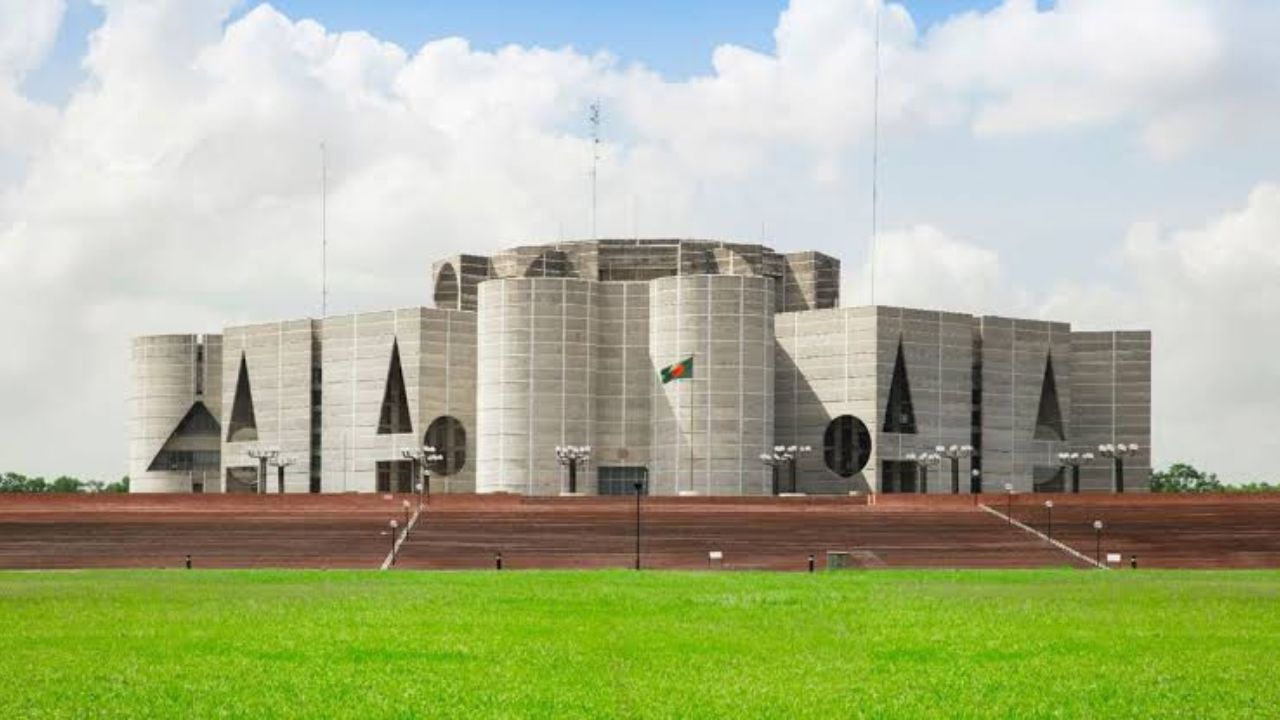
The proposals emerged during a meeting between academics and the Special Committee on Constitutional Amendment in parliament on Tuesday. Of the 45 academics invited, 17 attended the meeting, which lasted from 2:30pm until around 6pm.
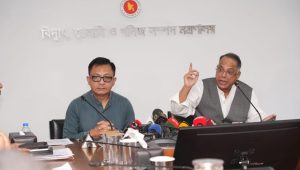
Afterwards, committee chairman Salahuddin Ahmed, National Professor Mahbub Ullah, University of Dhaka Vice-Chancellor ABM Obaidul Islam, Samina Luthfa, Mohammad Tanzimuddin Khan, Rajshahi University’s Abdullah Al Mamun and Jahangirnagar University’s Shamima Sultana spoke to journalists.
Salimullah Khan, Geetiara Nasreen, Abdul Latif Masum and University Grants Commission (UGC) Chairman Mamun Ahmed also attended.
Asked whether the opposition’s non-participation would make the amendment process controversial, Salahuddin said, “I do not know whether controversy will arise, but there will be an opportunity for controversy. We will always urge the opposition to participate in our Special Committee on Constitutional Amendment and provide their opinions.”
He expressed hope that the opposition would participate when a constitutional amendment bill was placed before parliament after the committee submitted its report.
“If they do not fulfil their role properly, the nation will see that. However, we will fulfil our commitments and promises,” he said.

Responding to former vice-chairman of the National Consensus Commission Ali Riaz’s comment that amendments without opposition participation would become a partisan agenda, Salahuddin said, “We are working precisely to implement the July Charter. We have urged opposition leaders to nominate members to the committee. They have not yet submitted any names. Whenever they do, they will be welcomed. However, even if the opposition does not participate, we must take the initiative to amend the constitution. This is the nation’s expectation, and implementing the July Charter is our commitment.”
Participants emphasised judicial independence and the need to define constitutionally the judiciary’s authority over constitutional interpretation and the constitution’s basic structure.
Salahuddin said safeguards were needed to prevent one state institution from dominating another. Judicial independence must be preserved while the judiciary’s jurisdiction must be clearly defined so that public expectations are not disregarded in constitutional interpretation.
The caretaker government system and the process of forming such a government were also discussed, with several participants expected to submit written opinions. No specific proposal was finalised.
During the drafting of the July National Charter, a consensus had been reached on excluding the president’s role as the final option for forming a caretaker government. Participants on Tuesday suggested involving the judiciary if agreement could not be reached on the preceding alternatives.
Academics also discussed establishing an upper house, including which groups and regions it should represent, how members would be elected and whether district-based and proportional representation could be introduced.




Other proposals included incorporating certain principles of state policy into fundamental rights, subject to the state’s capacity, and defining popular sovereignty more explicitly in Article 7.
Sources said one academic cited the First Amendment to the United States Constitution, arguing that preventing authoritarianism should be a constitution’s primary objective.
He questioned the democratic character of Bangladesh’s 1972 Constitution, arguing that it had been drafted by a Constituent Assembly elected for Pakistan rather than Bangladesh and that the country could not continue under it.
He proposed placing the legislature in the first part of the constitution, arguing that elected lawmakers’ views should take precedence in governing the state.
Describing the existing system as an “oligarchy”, he called for changes to the powers and character of the head of the executive.
Another academic warned that preventing constitutional amendments altogether would create a dead constitution. While changes must remain possible, safeguards were needed against arbitrary amendments.
He also questioned the two-thirds majority requirement, arguing that it had contributed to the downfall of certain political parties.
Another participant highlighted the higher judiciary’s powers to interpret the constitution and proposed provisions to hold courts accountable if they themselves violated it, citing the “Hasmatullah versus Azmiri” judgment.
Proposals also included protecting the constitution’s basic structure and establishing a separate constitutional court to interpret it.
Participants stressed that constitutional reform should not remain an elite exercise. With public awareness of and interest in the constitution limited, ordinary people’s views and expectations must be reflected in the process.
National Professor Mahbub Ullah called for amendments or a new constitution that would reflect the views of most political parties, political forces, intellectuals, professionals and ordinary citizens.
Although complete consensus was impossible, broader agreement would make the constitution more sustainable and acceptable to the public, he said.
“The definition of the state in the current constitution does not include the judiciary. It should also be included,” he said.
He also proposed introducing accountability mechanisms for state agencies that exercise coercive powers, including intelligence services, to strengthen human rights protection.
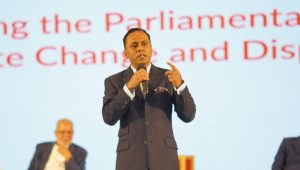
Mohammad Tanzimuddin Khan warned that discriminatory politics driven by majority strength and a “winner-takes-all” approach repeatedly created crises in the state system and paved the way for authoritarianism.
He said they had proposed checks, balances and accountability to counter the tendency of political parties to become indistinguishable from the state after forming a government.
He also criticised the existing Liberation War narrative for failing to recognise its character as a people’s war.
The academics proposed recognising the Liberation War as a people’s war and constitutionally acknowledging the contributions of those who had played a role from before Bangladesh’s independence through the Liberation War.
Samina Luthfa said they had submitted several proposals, including legal amendments, to secure equal rights for women.
They recommended replacing “Mahila” with “Nari”, “Upajati” with “Bhinna Jatisatta” and “Upasampradaya” with “Dharmiya Sampradaya” throughout the constitution, referring respectively to women, distinct ethnic identities and religious communities.
She argued that the existing terminology reflected discrimination.
Abdullah Al Mamun called for constitutionally guaranteed academic freedom and a review of legislation governing public and private universities, including the University of Dhaka’s 1973 Act.
He said the laws allowed government control, executive authority and excessive concentration of power in the hands of vice-chancellors, undermining democratic practices and education.
The academics also submitted specific recommendations on these issues and proposals concerning the industrial sector.