Following the assassination of Inqilab Moncho spokesperson Sharif Osman Hadi, the government has assured the provision of armed guards to individuals facing high security risks in the upcoming 12 February national election.
Home ministry sources said these armed guards will not be drawn from the police force. Instead, they will be selected from highly trained Ansar members, and recipients will have to pay for the special security service, say officials at Police Headquarters.
As the 13th parliamentary election draws nearer, concerns and anxieties are rising, along with fears over the safety of MP candidates. Although a special operation titled Operation Devil Hunt Phase-2 is ongoing nationwide, the desired and optimal sense of security has not yet returned to the public.
With increased movement by armed terrorists and outlawed snipers, field-level police and administrative officers have already expressed their concerns to the Election Commission. Currently, lists of terrorists are being updated across the country, while intelligence agencies have prepared a separate list of candidates facing potential security threats.
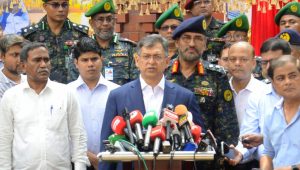
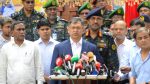
During a Border Guard Bangladesh programme yesterday, Home Adviser Jahangir Alam Chowdhury said that illegal weapons were entering the country through the borders, targeting the upcoming national election.
“I will not say that two to four weapons are not coming in. They are coming in, and they are also being seized. One or two are being recovered every day,” he said.

Enhanced personal security
As part of enhanced security measures, the government has initiated a move to provide armed Ansar members as guards to selected individuals. Additional IGP (Crime and Operations) at Police Headquarters Khondker Rafiqul Islam said candidates can apply and pay a designated fee to obtain an armed guard.
He added that not everyone would be provided with guards; only those deemed to be at high risk would receive the service. He further mentioned that there is a manpower shortage in the police force. The workload, he said, is extremely high during election periods, making it impossible to provide police personnel as personal guards.
Although many candidates have availed themselves of this opportunity, some have not. In addition, many have applied to the government for armed guards and personal weapon licences for their own security and that of their workers. However, doubts remain over how much protection armed guards and licensed weapons can realistically provide to candidates and voters on the election field.

After questions arose regarding candidate security following the shooting of Osman Hadi in Paltan on 12 December, the government began compiling a list of at-risk individuals and providing guards and weapon licences.
Police sources said eligible candidates for armed guards include former caretaker government adviser Nahid Islam, NCP leader Akhtar Hossain, Hasnat Abdullah, Sarjis Alam, Nasiruddin Patwari, independent candidate Tasnim Zara, Gono Odhikar Parishad leader Nurul Haque Nur, and recently joined BNP leader Rashed Khan. However, Nur and Rashed have expressed their unwillingness to accept armed guards.
Meanwhile, an application has been submitted for Jamaat-e-Islami Ameer Shafiqur Rahman for a full-time personal armed guard and armed police at his residence. Former minister Anwar Hossain Manju, Andalib Rahman Parth, Colonel (retd) Oli Ahmed, Zunayed Saki, Mufti Syed Muhammad Rezaul Karim, Faizul Karim, BNP candidate for Meherpur-1 Masud Arun, Gopalganj-1’s Selimuzzaman Selim, Gopalganj-3’s SM Zilani, and independent candidate Muhammad Shakhawat Hossain Hiru, among others, have also applied for security.
BNP candidates for Dhaka-4 Tanvir Ahmed Robin and Pabna-3 Hasan Jafir Tuhin, along with around 25 government officials, have applied for weapon licences.
Law and order risks
During a meeting with the Election Commission on 23 December, field-level officials highlighted various security challenges to holding a fair election. These included illegal weapons, misuse of social media to spread disinformation and smear campaigns, the spread of rumours, indiscriminate bail for identified terrorists, and weak border security at certain points.
To bolster the law and order, officials recommended discussions with the judiciary to prevent identified terrorists from obtaining bail, stopping mobile phone use by inmates in prisons, increasing surveillance at borders, and completely eliminating political interference in official duties.
A total of 226 officials, including divisional commissioners, DIGs, deputy commissioners (DCs), and superintendents of police (SPs), took part in the briefing held at Nirbachan Bhaban in Agargaon.
Security concerns
Crime specialist Professor Md Touhidul Haque of Dhaka University believes that, given the current realities, unpleasant incidents surrounding the election cannot be ruled out. Terrorists released on bail and fugitives at large could pose significant risks ahead of the election.
He said that while armed guards and weapon licences are being provided to individuals at risk, it is essential to address the root causes of insecurity. If candidates cannot campaign without fear, it is natural for workers, supporters, and voters to feel panicked.
“No one will want to participate in election activities while risking their own lives,” he added.
Red zones in Dhaka
Detective police have earmarked several areas in the capital—including Mirpur, Mohammadpur, Motijheel, Shyampur, and Jatrabari—as “red zones” due to the movement of highly active armed individuals.
According to DMP data, more than 450 listed terrorists across eight divisions possess nearly 1,500 illegal weapons. Police are preparing to conduct special operations to apprehend armed terrorists and snipers.
DMP Additional Commissioner SN Md Nazrul Islam said Operation Devil Hunt-2 has been intensified to curb terrorist activities and maintain an environment conducive to a free and fair election.