Bangladesh’s education sector has passed the year amid repeated movements by teachers and students pressing various demands, disrupting academic activities nationwide and leaving around 4 crore students to bear the brunt of prolonged uncertainty.
In the aftermath of the July Uprising last year, many had hoped for a renewed push to rebuild the country, but that optimism found little reflection in the education sector this year.
From primary schools to universities, the academic environment remained largely unstable, while learning gaps among students became evident in the results of this year’s Higher Secondary Certificate examinations. Out of 12.45 lakh HSC examinees this year, at least 5.20 lakh failed, marking the largest examination setback in the past one and a half decades.
Although the interim government formed 11 reform commissions in the post-uprising period to overhaul different sectors of the state, it did not establish any commission to address education reform.
Educationists have described the omission as a sign of “neglect towards education,” arguing that meaningful reform in the sector was essential for national reconstruction. They say sustainable development cannot be achieved while sidelining improvements in the quality of education.
“There were many expectations in 2025, but they were not met. Neglect towards education has been evident under successive governments,” said Manzur Ahmed, emeritus professor of BRAC University, and head of the committee on improving the quality of primary and secondary education.
“I hope that whoever forms the next government after the election will work to change the overall environment of the education sector,” he added.

Towards the end of the year, however, the government moved to restructure the country’s higher education system by initiating the formation of a higher education commission.
On 15 December, the Ministry of Education published a draft of the Bangladesh Higher Education Commission Ordinance, with a final decision expected after feedback is collected from relevant stakeholders.
Protests dominate university campuses
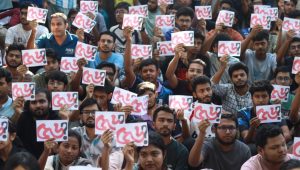
According to the University Grants Commission (UGC), around 45.78 lakh students are enrolled across 53 universities in the country, including the National University. Yet campuses remained mired in protests throughout the year.
Recurrent unrest and incidents of teacher harassment repeatedly disrupted academic life, while student representatives elected on promises of depoliticised and inclusive campuses failed to break free from partisan politics.
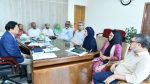
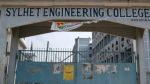

Educationists warn that such recklessness among student leaders could have long-term negative consequences for Bangladesh’s future.
Tensions surfaced early in the year over whether student politics should be allowed on campuses, culminating in clashes between rival student groups at Khulna University of Engineering and Technology (KUET) on 18 February.
As a result of the clashes academic activities at the university came to a standstill for 160 days.
Protests also intensified over the proposed formation of a separate “Dhaka Central University” through the restructuring of the capital’s seven government colleges currently affiliated with the University of Dhaka. The issue repeatedly placed teachers and students in direct confrontation, with several incidents of teacher harassment reported during the year.
Teachers take to the streets, boycott classes, exams
The capital repeatedly witnessed protests by teachers demanding higher pay, allowances and housing benefits, disrupting academic activities for months. After sustained agitation, the government issued a gazette on 23 December upgrading the posts of head teachers at government primary schools to Grade 10, while the process of upgrading assistant teachers to Grade 11 remains under way.
At one stage, police fired sound grenades and used water cannons on protesting teachers at Shahbagh on 8 November, injuring more than 150 teachers. One of the injured later died while undergoing treatment.
At one point, more than 3.5 lakh assistant teachers from 65,567 government primary schools across the country boycotted annual examinations. Incidents of protesting teachers being beaten and left bloodied were also reported from several areas, including Pabna, Pirojpur and Tangail.
After more than a decade without a single promotion, lecturers from the 32nd to 37th batches of the BCS General Education Cadre launched a “no promotion, no work” protest on 16 November. The movement drew support from teachers at other government colleges, effectively paralysing academic activities at 708 institutions nationwide. The standoff ended on 20 November, when the ministry issued a gazette promoting 1,870 lecturers to assistant professor in a single batch.
Assistant teachers at 691 government secondary schools also boycotted annual examinations, seeking inclusion in the BCS General Education Cadre. The move triggered widespread criticism, and the programme was later withdrawn.
Upazila assistant education officers, stuck in Grade 10 for more than two decades, continued their year-long campaign for promotion to Grade 9. Of the 1,727 officers currently in the post, all but 267 have already secured higher grades.
Teachers of MPO-enlisted non-government educational institutions likewise took to the streets to press their demands. In October, academic activities for at least 94 lakh students were disrupted as 26,104 MPO-enlisted schools, colleges and madrasas shut down following their call. Under mounting pressure, the government issued a gazette increasing house rent by 15% of the basic salary.
Separately, nearly fifty teachers of independent ibtedayi madrasas were injured on 29 October when police used water cannons and sound grenades during a work stoppage demanding job nationalisation. In response, recommendations to bring 1,089 independent ibtedayi madrasas under the MPO system—signed by the education adviser and the secretary—have already been sent, leaving only the approval of the head of government pending.
Fifth-grade scholarship test halted
The Directorate of Primary Education abruptly announced on 17 July that students from non-government educational institutions would not be allowed to take the fifth-grade scholarship examination. The decision sparked nationwide protests by teachers, students and guardians of private kindergartens.
As the matter is now sub judice, the scholarship examination has been suspended altogether. As a result, the fifth-grade scholarship examination for 2025 could not be held in December. Students will instead be required to sit the examination after classes for Grade 6 begin in 2026.
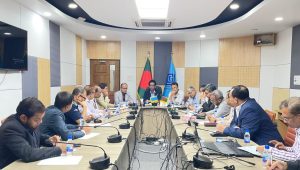
Restoring stability tops priority list
To address the ongoing situation, the UGC, with support from Unesco, is working to provide mental health support services for students. So far, 10,000 students from 22 public and private universities across the country have received mental health care and counselling.
Educationists have called on parents to play a more active role in guiding students’ behaviour and encouraging their return to classrooms. They have also urged teachers to prioritise students’ interests over partisan political considerations in order to help restore a stable and constructive academic environment.